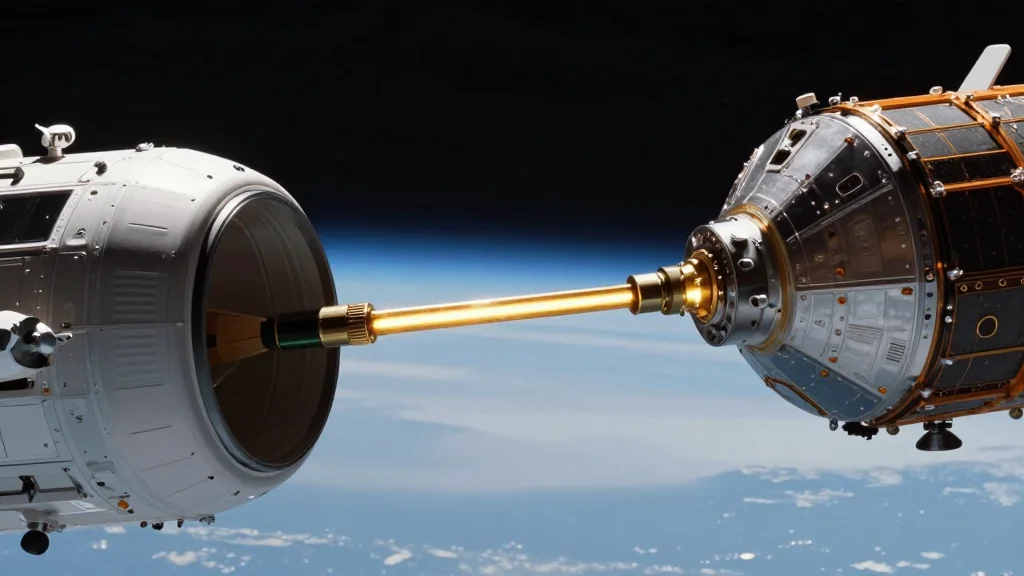
AIAA Public Review
Companies Mentioned

Why It Matters
A unified interface standard reduces integration risk, cuts costs, and accelerates the growing on‑orbit servicing market, directly supporting NASA’s lunar missions and commercial ventures.
Key Takeaways
- •AIAA S‑159 draft released for public comment, deadline 30 June 2026.
- •Standard defines power and data interface norms for servicing spacecraft.
- •Guidance aims to lower integration risk and accelerate on‑orbit servicing.
- •Stakeholders can submit comments to Michele Dominiak at aiaa.org.
Pulse Analysis
The AIAA’s newly released S‑159 draft tackles a critical gap in the emerging on‑orbit servicing ecosystem. By codifying power‑delivery and data‑exchange requirements, the standard gives engineers a clear reference point for designing refueling, repair, and upgrade modules that will dock with client satellites or lunar landers. As NASA’s Artemis III program moves toward a sustainable lunar presence, reliable interface specifications become essential for both government and commercial partners seeking to extend mission lifespans.
Industry players stand to gain significant efficiencies from a common set of interface rules. SpaceX, Blue Origin, and a host of newer servicing firms have already signaled interest in standard‑based designs that can reduce integration testing time and lower launch‑vehicle penalties. AIAA’s guidance promises to harmonize hardware architectures, enabling plug‑and‑play servicing kits that can be rapidly fielded across diverse platforms. This alignment not only curbs development costs but also accelerates the commercialization of satellite refuel‑and‑reuse services, a market projected to exceed $10 billion by the early 2030s.
The public‑review window closes on 30 June 2026, giving stakeholders a limited period to influence the final language. Comments submitted to Michele Dominiak will shape technical nuances, ensuring the standard reflects real‑world operational constraints. Once ratified, S‑159 is expected to become a reference for future NASA contracts and commercial servicing agreements, reinforcing space‑sustainability goals and fostering a more interoperable orbital economy.
AIAA Public Review
Comments
Want to join the conversation?
Loading comments...