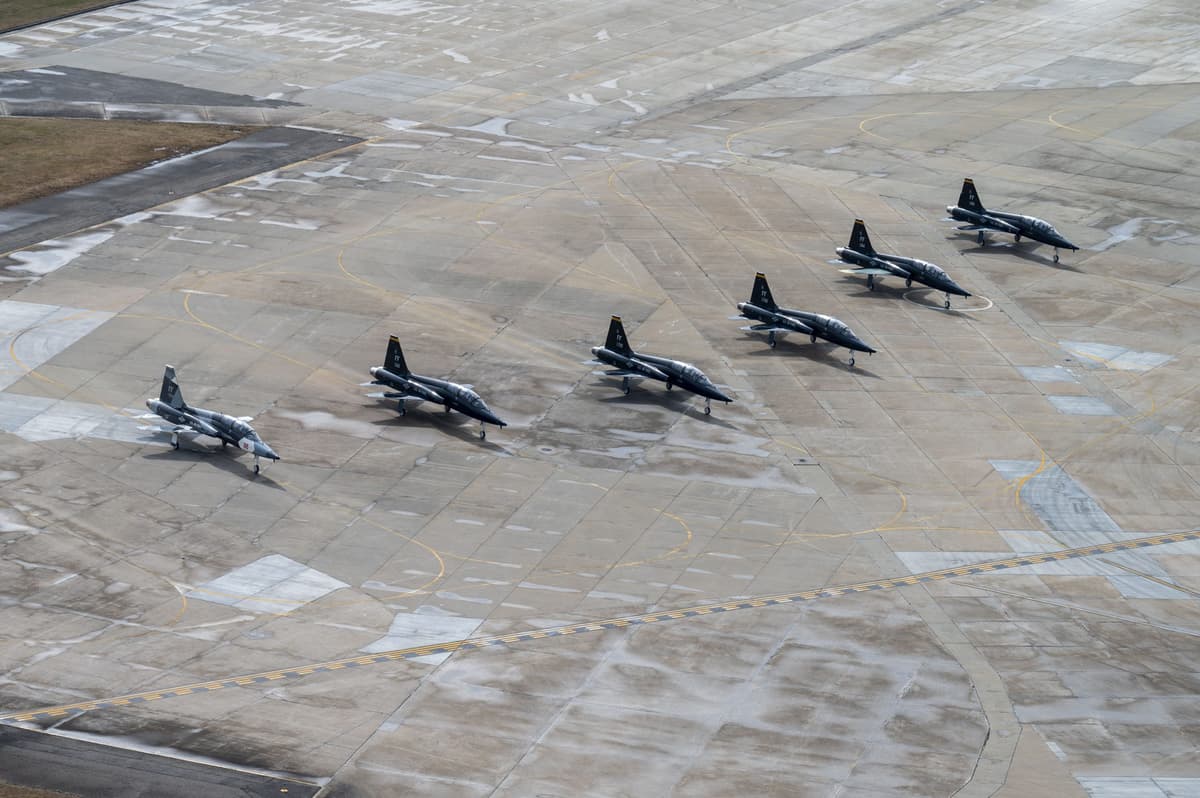
Air Force Lifts Pause on T-38 Flights, Jets to Fly After Inspections
Companies Mentioned
Why It Matters
Restoring T‑38 flight capability safeguards short‑term pilot training continuity, while the shift toward the T‑7 signals a long‑term modernization of the Air Force’s fighter pipeline.
Key Takeaways
- •Operational pause ended after safety inspections completed
- •First inspected T‑38s expected to fly within days
- •475 T‑38s remain in service, aging and maintenance‑intensive
- •Simulators used to mitigate training gaps during grounding
- •Transition to Boeing T‑7 Red Hawk accelerates modern trainer adoption
Pulse Analysis
The Air Force’s decision to end the T‑38 grounding reflects a rapid response to a safety incident that threatened a cornerstone of pilot training. After a fatal‑free crash on May 12, the service halted all flights, prompting a comprehensive inspection regime across Air Education and Training Command, Air Combat Command, Air Materiel Command, and Global Strike Command. Engineering crews coordinated a fleet‑wide review, ensuring each aircraft meets stringent airworthiness standards before returning to the sky. This swift action underscores the service’s commitment to safety while maintaining operational tempo.
In the short term, the resumption of T‑38 flights helps preserve the continuity of undergraduate pilot training, a critical pipeline for the Air Force’s combat readiness. While the fleet undergoes inspections, commands have leaned heavily on high‑fidelity simulators to keep pilots current, mitigating the risk of skill degradation. The aging T‑38, first introduced in the 1960s, faces increasing maintenance challenges and limited relevance for modern fifth‑generation platforms, prompting the Air Force to supplement training with advanced virtual environments until newer aircraft are fielded.
Looking ahead, the T‑38’s gradual phase‑out aligns with the rollout of Boeing’s T‑7 Red Hawk, a modern, digitally‑enabled trainer designed to bridge the gap between basic flight instruction and fifth‑generation fighters like the F‑22 and F‑35. The accelerated return of T‑38s buys time for the T‑7 production line to ramp up, ensuring the Air Force does not experience a capability gap. By balancing immediate safety concerns with long‑term modernization, the service reinforces its strategic training architecture and sustains a ready pipeline of combat‑ready pilots.
Air Force Lifts Pause on T-38 Flights, Jets to Fly After Inspections
Comments
Want to join the conversation?
Loading comments...