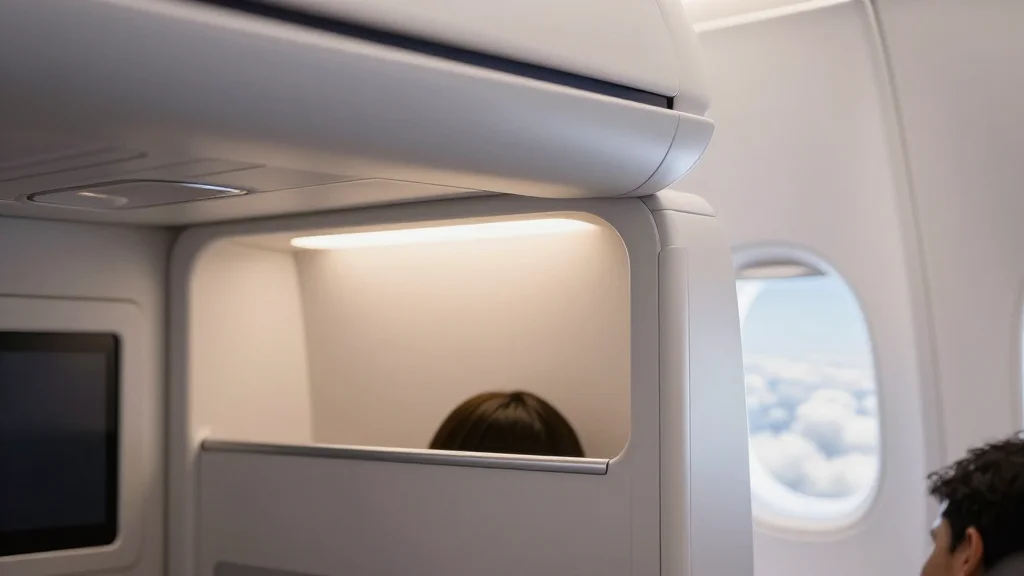
Air New Zealand Rolls Out $495 ‘Skynest’ Bunk‑Bed Pods for Economy on Long‑Haul Flights

Companies Mentioned
Why It Matters
The Skynest initiative tackles a long‑standing pain point for ultra‑long‑haul travelers: sleep deprivation. By monetising a sleep experience in economy, Air New Zealand creates a new ancillary revenue stream that could become a template for other carriers facing thin margins on long routes. The product also forces aircraft manufacturers and cabin designers to rethink modularity, potentially accelerating the development of flexible interior architectures that can be re‑configured for varying market demands. If widely adopted, economy‑sleep pods could shift passenger expectations, making lie‑flat seats a baseline rather than a premium, and could reshape competitive dynamics among airlines that operate the longest routes. Furthermore, the Skynest may influence regulatory standards for safety and emergency egress in re‑purposed cabin spaces. As airlines experiment with paid‑for comfort features, regulators will need to ensure that modifications do not compromise evacuation procedures or structural integrity. The outcome will affect how quickly similar concepts can be certified and deployed across fleets worldwide. Overall, the Skynest represents a convergence of passenger experience innovation, revenue diversification, and cabin design flexibility—three forces that together could redefine the economics of long‑haul aviation.
Key Takeaways
- •Air New Zealand will install six bunk‑bed ‘Skynest’ pods per Boeing 787‑9, serving twelve economy passengers per flight.
- •Pods are priced at $495 (≈ Rs 46,200) for a four‑hour sleep session, with bookings opening May 18.
- •Implementation removes five economy seats and repurposes galley space, raising questions about seat‑count versus revenue trade‑offs.
- •CEO Nikhil Ravishankar says the pods will make ultra‑long‑haul travel more manageable and could spark a revolution in economy class.
- •Success could prompt other airlines to adopt similar economy‑sleep solutions, reshaping cabin design and ancillary revenue models.
Pulse Analysis
Air New Zealand’s Skynest is a bold bet on monetising comfort in a segment traditionally defined by price competition. Historically, airlines have protected lie‑flat seats for business and first class, using them as a differentiator for high‑yield customers. By moving a sleep product into economy, Air New Zealand is attempting to capture a slice of that premium without the full cost of a higher‑class ticket. The $495 price point is high for an economy ancillary, but it aligns with the airline’s long‑haul revenue strategy, where ancillary income can offset the high operating costs of 17‑hour flights. Early adoption will likely be driven by business travelers who can claim the expense as a work‑related cost, as well as leisure passengers seeking a more rested arrival.
From a competitive standpoint, the Skynest could force rivals like Qantas, Singapore Airlines and Emirates to reconsider their cabin configurations. Those carriers have already experimented with premium economy and extra‑legroom seats, but few have offered a dedicated sleep pod for economy. If Air New Zealand reports strong utilization and positive Net Promoter Scores, we may see a cascade of similar offerings, especially on routes where airlines struggle with passenger fatigue and low load factors. However, the limited capacity—only twelve pods per aircraft—means the revenue uplift will be modest unless the price is raised or the product is expanded to more flights.
The broader aerospace implication lies in aircraft interior modularity. Boeing and Airbus have been promoting flexible cabin designs that can be re‑configured between seasons. The Skynest could accelerate demand for plug‑and‑play pod modules that meet safety certifications without extensive redesign. This could open a new market for interior suppliers, driving innovation in lightweight, fire‑retardant materials and rapid‑install systems. In the short term, the Skynest will be a litmus test for whether passengers are willing to pay a premium for sleep in economy, and whether airlines can recoup the lost seat revenue. The outcome will shape the next wave of cabin innovation and ancillary revenue strategies across the ultra‑long‑haul segment.
Air New Zealand Rolls Out $495 ‘Skynest’ Bunk‑Bed Pods for Economy on Long‑Haul Flights
Comments
Want to join the conversation?
Loading comments...