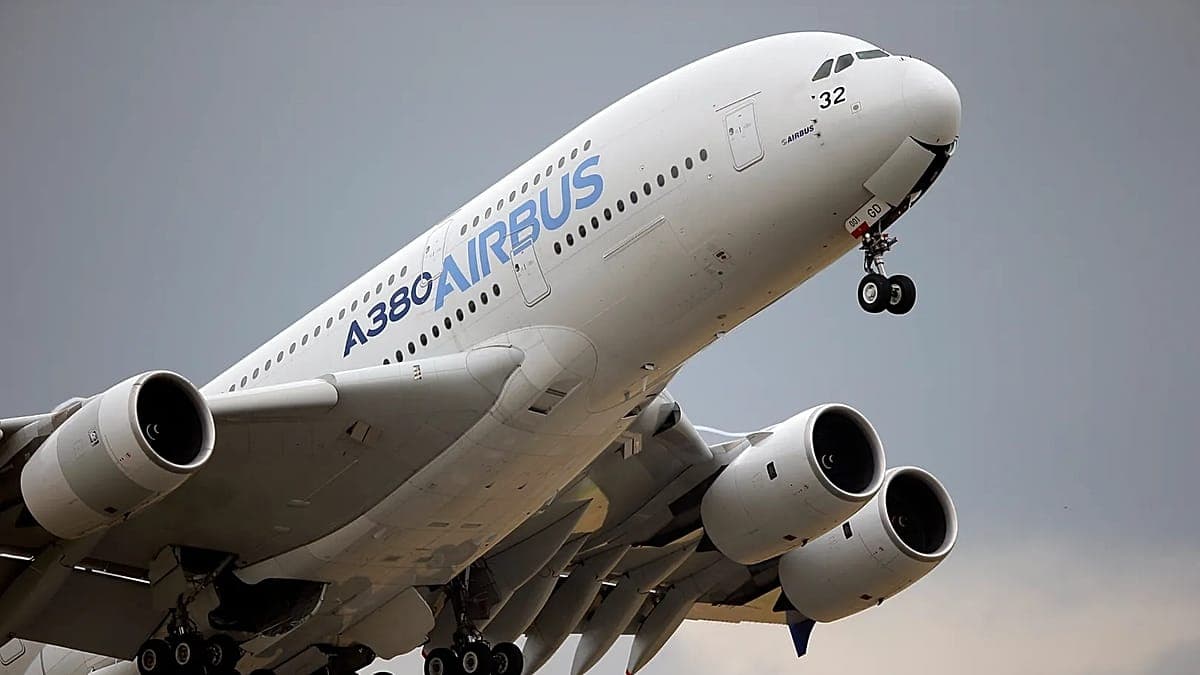
Airbus Posts Record Year — but Washington Still Prefers the Boeing 'Home' Team
•February 19, 2026
0
Companies Mentioned


Why It Matters
The contrast between Airbus’s commercial strength and U.S. policy favoring Boeing illustrates how political leverage can reshape competitive dynamics in the global aerospace market.
Key Takeaways
- •Airbus delivered 793 aircraft in 2025.
- •Revenue rose 6% to €73.4 bn, profit €7.1 bn.
- •Order backlog reached 8,754 jets, €619 bn value.
- •US government secured $244 bn in Boeing contracts.
- •Engine shortages threaten Airbus A320 production ramp‑up.
Pulse Analysis
Airbus’s 2025 performance marks a milestone for the European manufacturer, with deliveries approaching 800 units and a revenue surge that outpaced most peers. The company’s order book, now valued at €619 bn, provides a multi‑year runway that cushions against short‑term volatility. Strong demand for narrow‑body aircraft, especially the A320 family, has driven the backlog to nearly nine thousand jets, positioning Airbus to capitalize on airlines’ fleet‑renewal cycles.
Meanwhile, Washington’s trade‑for‑diplomacy strategy has amplified Boeing’s overseas footprint, channeling $244 bn in government‑backed contracts into markets ranging from the Gulf to Southeast Asia. High‑profile deals, such as Qatar Airways’ $96 bn wide‑body order, showcase how political capital can translate into commercial wins. This state‑driven advantage complicates the competitive landscape, forcing Airbus to rely on market fundamentals rather than diplomatic leverage.
Supply‑chain constraints remain Airbus’s Achilles’ heel, with Pratt & Whitney engine shortages threatening the planned 2026 delivery target of 870 aircraft. The manufacturer’s blunt criticism of its U.S. supplier underscores the fragility of long‑standing partnerships in an era of capacity crunches. Mitigating these bottleneities will be crucial for Airbus to sustain its growth trajectory and defend market share against a politically favored Boeing.
Airbus posts record year — but Washington still prefers the Boeing 'home' team
0
Comments
Want to join the conversation?
Loading comments...