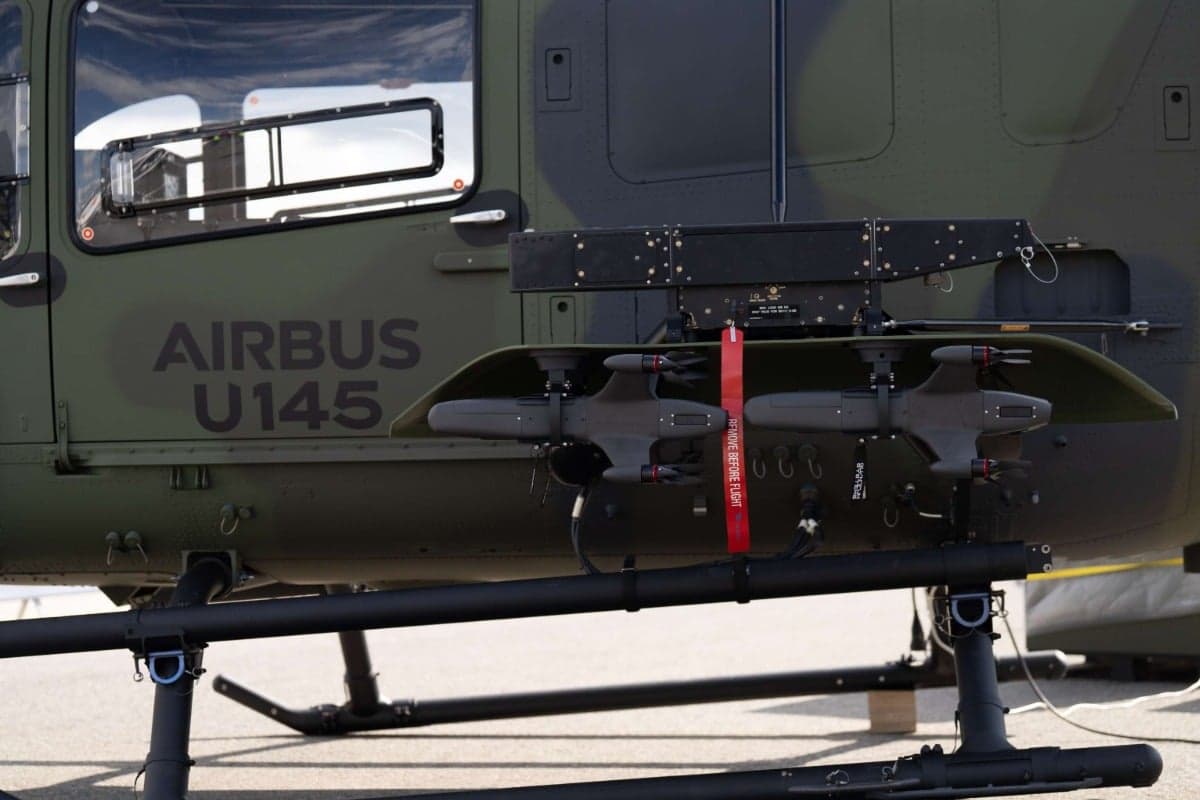
Airbus to Add Drone Interceptors to H145M Helicopters
Companies Mentioned
Why It Matters
Counter‑drone capability could close a critical vulnerability for military helicopters, enhancing survivability in contested airspace and strengthening Europe’s defense industrial base.
Key Takeaways
- •Airbus, Quantum to test drone interceptors on H145M.
- •H145M’s open architecture chosen for payload flexibility.
- •No prototype timeline or customer commitments announced.
- •Small UAVs increasingly threaten low‑altitude helicopter missions.
- •European firms collaborating to address emerging aerial threats.
Pulse Analysis
The rapid proliferation of commercial and purpose‑built drones has created a new threat vector for rotary‑wing aircraft, especially during take‑off and landing phases when helicopters are most exposed. Traditional air‑defence suites, designed for larger aircraft, lack the speed and precision to neutralise sub‑20‑kilogram UAVs. By partnering with Quantum Systems—known for its Vector reconnaissance platform and emerging counter‑UAS interceptors—Airbus aims to embed a dedicated drone‑killing capability directly onto the H145M, a move that could set a precedent for other light attack and utility helicopters worldwide.
Integrating a counter‑drone system onto a light helicopter presents unique engineering challenges. The H145M’s open‑system architecture offers modular payload bays, but weight, power, and cooling margins remain tight. Quantum’s interceptor concepts, ranging from miniature kinetic missiles to directed‑energy lasers, must be miniaturised without compromising the aircraft’s range or manoeuvrability. Moreover, sensor fusion—combining radar, electro‑optical, and acoustic inputs—to detect low‑RCS drones in cluttered environments adds software complexity. The collaboration will likely focus on a scalable package that can be fielded as an add‑on kit, preserving the H145M’s core mission flexibility while delivering a credible defensive layer.
Strategically, the Airbus‑Quantum initiative signals Europe’s intent to develop indigenous counter‑UAS solutions rather than rely on U.S. or Israeli systems. Successful integration could open a new export market for both firms, as NATO allies and partner nations seek to retrofit existing fleets against asymmetric aerial threats. It also reinforces the broader trend of multi‑domain operations, where air, land, and cyber assets must be protected from swarm‑style attacks. If the prototype proves viable, it may accelerate procurement cycles for armed forces confronting drone‑rich battlefields, reshaping the economics of helicopter survivability in the next decade.
Airbus to add drone interceptors to H145M helicopters
Comments
Want to join the conversation?
Loading comments...