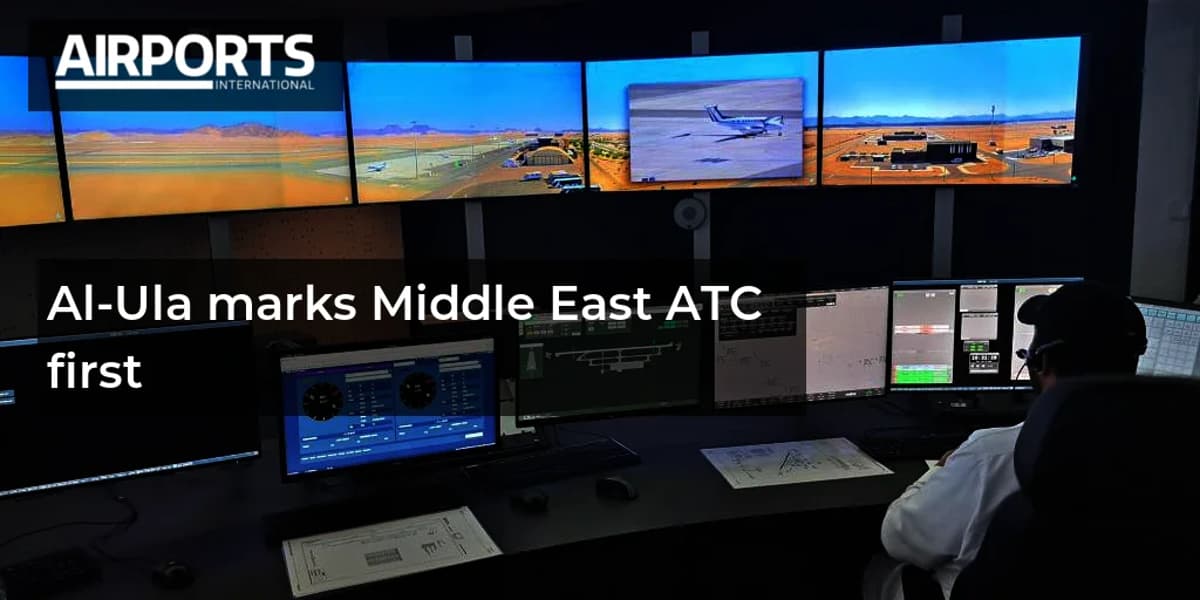
Al-Ula Marks Middle East ATC First
•February 11, 2026
0
Why It Matters
This remote‑tower model cuts infrastructure costs and enhances sustainability while maintaining safety, setting a new benchmark for air traffic management in the region. It enables scalable, multi‑airport operations that support the rapid growth of Gulf aviation markets.
Key Takeaways
- •First Middle East airport with remote digital tower.
- •550 km remote control centre located in Jeddah.
- •4K 360° videowall with AI, AR, night vision.
- •ManagAir integration cuts fuel use and emissions.
- •Enables multi‑airport operation from single control hub.
Pulse Analysis
The launch of a fully remote air traffic control (ATC) tower at Al‑Ula International Airport marks a watershed moment for Middle Eastern aviation. By relocating the control centre to Jeddah, 550 km away, the airport eliminates the need for a traditional on‑site tower, reducing construction costs and land use. High‑definition cameras and sensors feed a 4K, 360° videowall that gives controllers a real‑time, panoramic view of the runway and surrounding airspace. This digital‑tower model leverages low‑latency data links to maintain safety standards while offering unprecedented operational flexibility.
Indra’s solution combines artificial intelligence, night‑vision imaging and augmented‑reality overlays to enhance situational awareness. Integrated with the company’s ManagAir automation platform, the system can calculate optimal flight paths, trimming fuel burn and lowering CO₂ emissions across the network. The AI engine continuously analyses sensor data, flagging potential conflicts before they materialise and supporting decision‑making in adverse weather. By centralising multiple airports under a single control hub, airlines benefit from smoother traffic flow, while regulators gain a scalable framework that can be replicated across the Kingdom’s expanding airport portfolio.
The Al‑Ula remote tower sets a precedent for the broader Gulf region, where rapid airport growth has strained traditional infrastructure. Operators can now consider virtual towers as a cost‑effective path to meet capacity demands without compromising safety. For Saudi Arabia’s Vision 2030, the technology aligns with sustainability goals and the push toward a smarter, data‑driven aviation ecosystem. As Indra expands its footprint across the Arabian Peninsula, the partnership with Saudi Air Navigation Services signals a shift toward collaborative, technology‑led air navigation services that could redefine regional standards.
Al-Ula marks Middle East ATC first
0
Comments
Want to join the conversation?
Loading comments...