Amazon Unveils Leo Aviation Antenna, Promising Gigabit In‑Flight Connectivity

Companies Mentioned
Why It Matters
The Leo Aviation Antenna marks the first time a major tech retailer has introduced a dedicated LEO inflight connectivity terminal, signaling a shift from traditional satellite operators to cloud‑centric players. By promising gigabit‑class speeds, Amazon could redefine passenger expectations for in‑flight Wi‑Fi, prompting airlines to prioritize high‑bandwidth services as a differentiator in a crowded market. If Amazon’s rollout proceeds on schedule, the competitive pressure on SpaceX’s Starlink and legacy GEO providers like Viasat will intensify, potentially accelerating the deployment of denser LEO constellations and driving down costs for airlines. The move also underscores the broader trend of vertical integration, where companies that control both the satellite network and the end‑user platform can bundle services, data analytics, and commerce opportunities across the travel ecosystem.
Key Takeaways
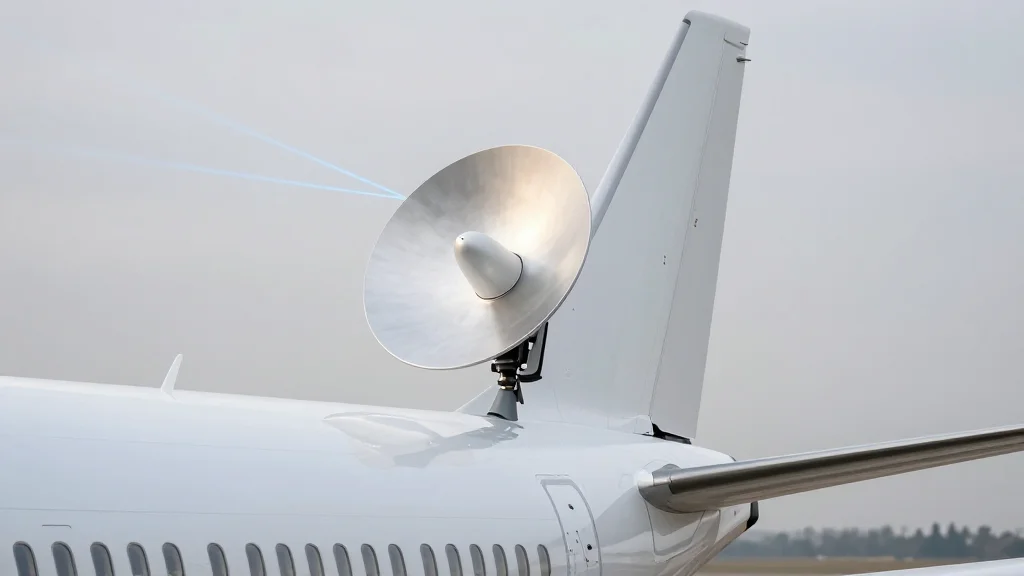
- •Amazon unveiled the Leo Aviation Antenna, a 147 × 76 × 6.6 cm phased‑array terminal delivering up to 1 Gbps down/400 Mbps up.
- •The antenna is Ka‑band, low‑drag, and has no moving parts, reducing maintenance and fuel penalties.
- •JetBlue targets 25% of its 300+ fleet for Leo service by 2027; Delta plans 500 aircraft from 2028.
- •Amazon has deployed 241 of a planned 3,232 LEO satellites; service rollout slated for mid‑2026.
- •Starlink Aviation currently offers up to 310 Mbps down/44 Mbps up, using Ku‑band frequencies.
Pulse Analysis
Amazon’s foray into inflight connectivity is more than a hardware launch; it’s a strategic play to embed the company’s cloud and commerce services into the travel experience. By controlling the antenna, the satellite network, and the downstream data pipeline, Amazon can offer airlines bundled solutions that include passenger Wi‑Fi, real‑time analytics, and even in‑flight retail. This vertical integration could erode the value proposition of pure‑play satellite operators, who must now compete on price, latency, and ecosystem services.
Historically, inflight connectivity has been dominated by GEO providers whose high latency and limited bandwidth constrained the passenger experience. The shift to LEO, pioneered by SpaceX, unlocked low‑latency, higher‑throughput links, but the market remains fragmented. Amazon’s entry raises the stakes, especially given its deep pockets and ability to subsidize network build‑out through its broader e‑commerce margins. The Ka‑band choice, while offering higher data rates, introduces weather‑related reliability challenges that Amazon will need to mitigate through advanced error‑correction and adaptive coding.
Looking ahead, the decisive factor will be airline adoption speed. JetBlue’s early commitment provides a testbed, but Delta’s larger fleet commitment could be a game‑changer if the airline can align its legacy GEO contracts with the new LEO service. Regulators will also play a pivotal role; Ka‑band spectrum allocation and launch licensing could either accelerate or stall Amazon’s timeline. If Amazon meets its mid‑2026 service goal, the competitive landscape will likely see a wave of price competition, accelerated satellite launches, and a rapid upgrade cycle for airline cabin Wi‑Fi, ultimately delivering a consumer experience that rivals ground‑based broadband.
Amazon Unveils Leo Aviation Antenna, Promising Gigabit In‑Flight Connectivity
Comments
Want to join the conversation?
Loading comments...