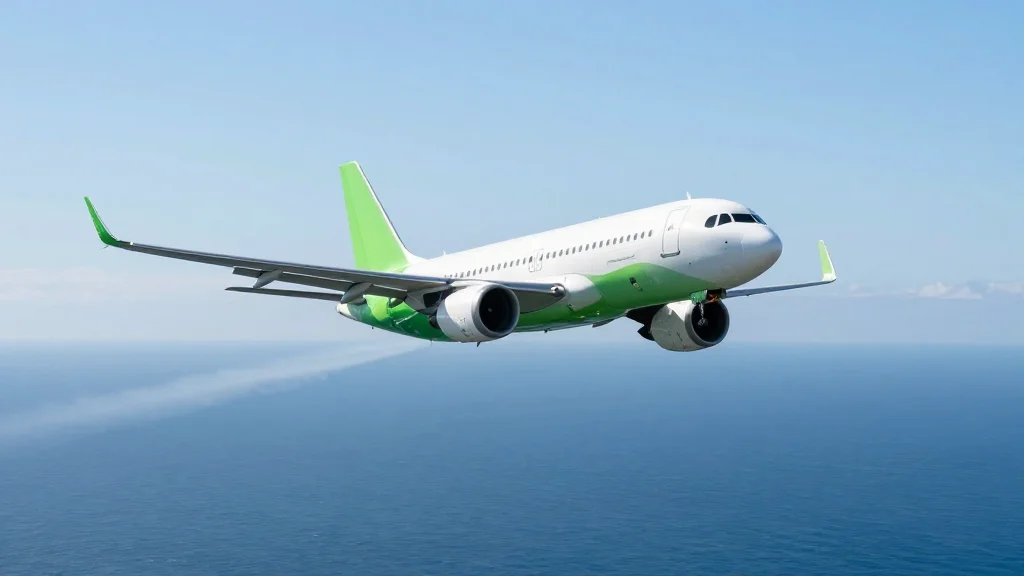
American Airlines, Google Reduce Contrails By 62%
Companies Mentioned

Why It Matters
Cutting contrails tackles the largest, yet under‑addressed, source of aviation‑related warming while adding only a marginal fuel cost, delivering fast‑track climate benefits for airlines and regulators.
Key Takeaways
- •AI‑driven forecasts cut contrail formation 62% on 2,400 flights
- •Tool adjusts altitude or route, similar to turbulence avoidance
- •Fuel penalty could be under 0.3% when scaled fleet‑wide
- •Contrails represent ~66% of aviation’s total warming impact
Pulse Analysis
Contrail formation has emerged as a hidden driver of aviation’s climate footprint, contributing roughly two‑thirds of the sector’s total warming. Unlike CO₂ emissions, which are directly tied to fuel burn, contrails arise when hot exhaust meets cold, moisture‑rich air, creating ice‑crystal clouds that trap heat. Recent studies predict contrail‑induced warming could surpass CO₂ effects by 2050 if unchecked, making mitigation essential for meeting industry‑wide net‑zero goals.
Google’s solution sidesteps hardware upgrades by embedding a predictive intelligence layer into existing dispatch software. By fusing satellite observations, high‑resolution weather forecasts and real‑time flight paths, the model pinpoints atmospheric slices prone to persistent contrails. Planners then receive simple recommendations—fly a few hundred feet higher or lower, or shift a segment of the route—mirroring how airlines already avoid turbulence or icing. This low‑cost, software‑only approach contrasts sharply with sustainable‑fuel initiatives that demand new supply chains and higher ticket prices.
From a business perspective, the technology offers a compelling cost‑benefit balance. Early trials recorded a 2% fuel increase for avoidance flights, but broader adoption could shrink the penalty to under 0.3% fleet‑wide, translating to a modest rise in fuel spend relative to American Airlines’ $10.7 billion annual fuel budget. The climate payoff—cutting a major share of non‑CO₂ warming—positions airlines to meet tightening regulatory expectations without sacrificing passenger comfort. As more carriers join the Contrail Impact Task Force, the path is set for industry‑wide standards that embed contrail avoidance into routine flight planning, turning a simple forecasting tweak into a scalable climate solution.
American Airlines, Google Reduce Contrails By 62%
Comments
Want to join the conversation?
Loading comments...