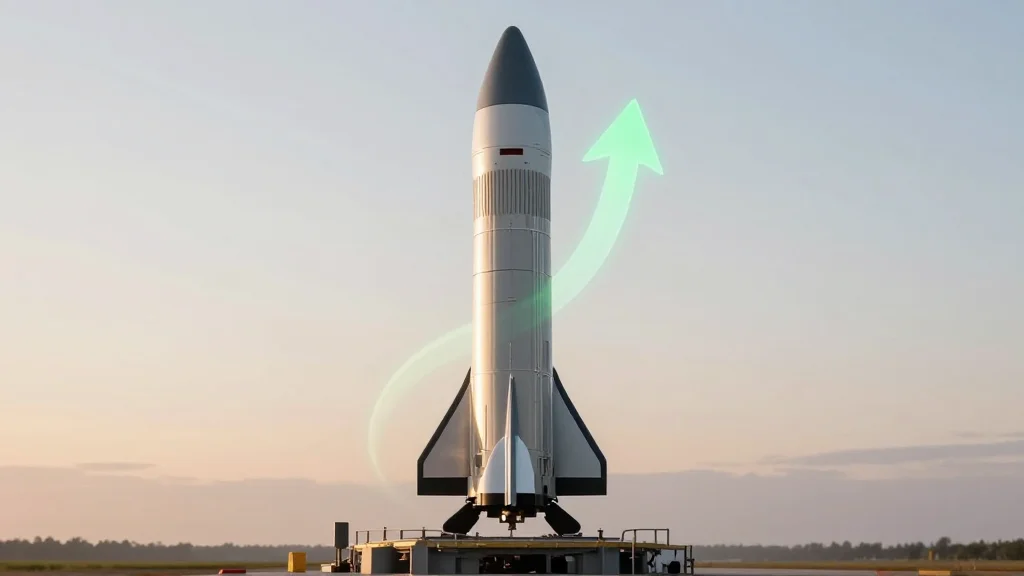
Analysts Warn SpaceX $75 B IPO Could Swallow 2026 US Listing Market

Companies Mentioned

Why It Matters
SpaceX’s potential $75 billion IPO could redefine the scale of private‑to‑public transitions in the aerospace sector, setting a new benchmark for valuation and capital‑raising expectations. If the offering proceeds, it would inject unprecedented liquidity into a company that already dominates satellite broadband and is poised to become a cornerstone of NASA’s lunar program, potentially reshaping competitive dynamics with rivals like Amazon’s Leo, Viasat, and emerging LEO constellations. For the broader market, the IPO could compress the pipeline of other high‑profile listings, forcing companies to either delay their own offerings or accept reduced investor attention. This crowding effect may also influence underwriting capacity and pricing strategies across the sector, compelling smaller aerospace firms to seek alternative financing routes or strategic partnerships to sustain growth. Overall, the SpaceX IPO serves as a litmus test for investor appetite for high‑risk, high‑reward aerospace ventures in a climate of macro‑economic uncertainty, with implications that will reverberate through capital markets, technology development, and the competitive landscape for years to come.
Key Takeaways
- •SpaceX aims for a $75 billion IPO, potentially the largest private‑company listing ever.
- •Analysts warn the mega‑deal could absorb a disproportionate share of investor demand, squeezing out other 2026 IPOs.
- •Starlink now operates ~10,000 satellites serving 9 million+ customers, bolstering SpaceX’s revenue outlook.
- •Starship’s latest booster redesign highlights rapid iteration, supporting the company’s lunar lander contract for Artemis III.
- •Competing aerospace firms, including Rocket Lab, may face valuation pressure and delayed listings as a result.
Pulse Analysis
The SpaceX IPO represents a watershed moment not just for the company but for the entire capital‑raising ecosystem. Historically, mega‑IPOs have acted as market catalysts—Facebook’s 2012 debut, for instance, reshaped tech valuations and set a precedent for large‑scale public offerings. SpaceX, however, brings a unique blend of operational depth (Starlink, Starship) and brand cachet that could amplify that effect. The $75 billion target dwarfs even the combined proceeds of the 2025‑26 IPO wave, meaning underwriting banks will need to allocate a sizable portion of their syndicate capacity to this single deal. This concentration risk could force smaller issuers to compete for a thinner pool of institutional capital, potentially driving down pricing multiples and increasing the cost of capital for emerging aerospace players.
From a strategic perspective, the IPO could also accelerate SpaceX’s vertical integration ambitions. With a public market valuation exceeding $1 trillion, the firm can leverage equity to fund the next generation of Raptor engines, expand the Starlink constellation, and invest in orbital AI data centers—a synergy highlighted by Musk’s recent Terafab partnership with Intel. Such capital infusion may widen the technology gap between SpaceX and rivals, especially those still reliant on external launch services or limited satellite fleets. In turn, this could spur consolidation, as smaller operators seek acquisition or joint‑venture opportunities to stay competitive.
Finally, the broader market impact hinges on investor sentiment toward high‑growth, capital‑intensive aerospace ventures amid macro‑economic headwinds. While the allure of Musk’s brand and the promise of a multi‑planetary future are compelling, the sheer scale of the offering introduces valuation uncertainty. If the IPO is priced aggressively, it could set a lofty benchmark that other aerospace firms struggle to meet, potentially stalling a wave of public listings and nudging capital toward alternative sectors. Conversely, a more modest pricing could temper expectations and preserve a healthier pipeline of aerospace IPOs. In either scenario, the SpaceX listing will be a litmus test for how much risk the market is willing to allocate to the next frontier of space commercialization.
Analysts Warn SpaceX $75 B IPO Could Swallow 2026 US Listing Market
Comments
Want to join the conversation?
Loading comments...