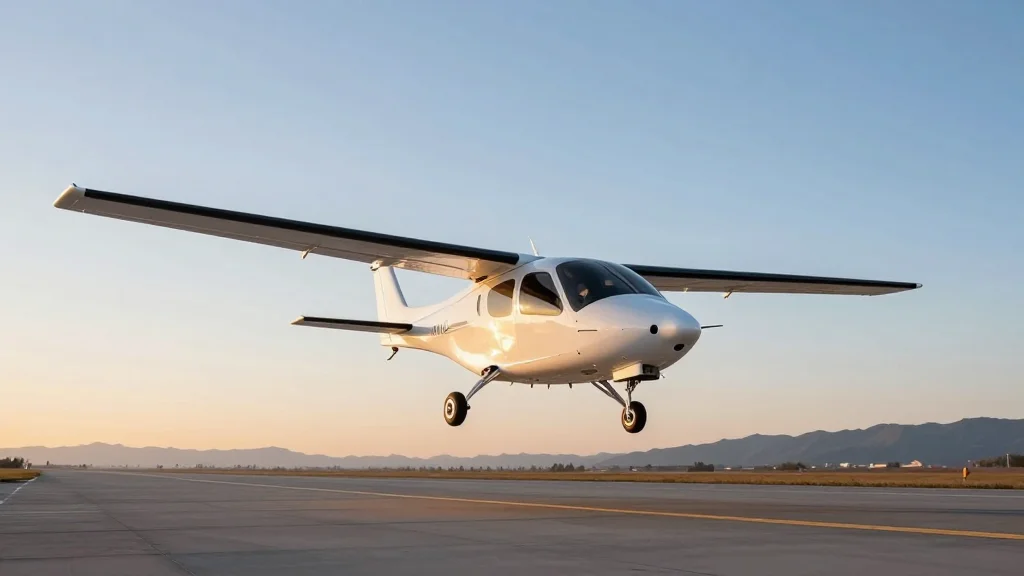
Archer Aviation Shares Surge 18.6% as eVTOL Certification Nears

Companies Mentioned
Why It Matters
Archer Aviation’s certification progress signals that the eVTOL industry is moving from prototype demonstrations to regulatory reality, a transition that could unlock sizable capital flows and infrastructure investment. Successful FAA approval would not only validate Archer’s technology but also set a precedent for other urban air mobility firms, potentially accelerating the rollout of air‑taxi services in dense cities. The company’s sizable cash reserve mitigates the typical cash‑burn concerns that have plagued many deep‑tech startups, offering a buffer to sustain R&D, manufacturing scale‑up, and partnership development. If Archer can demonstrate commercial flights at the 2028 Olympics, it would provide a high‑visibility proof point that could catalyze broader public acceptance and policy support for eVTOL operations worldwide.
Key Takeaways
- •Archer Aviation shares jumped 18.6% in May after reporting Phase 3 FAA certification completion.
- •The company holds $1.8 billion in cash and short‑term investments to fund further development.
- •Archer burned $615 million in free cash flow over the past year while building manufacturing capacity.
- •Phase 4 certification remains the final hurdle before commercial flights, targeted for 2028 Olympic showcase.
- •A partnership with Anduril aims to adapt the Midnight eVTOL for defense contracts, diversifying revenue potential.
Pulse Analysis
Archer Aviation’s recent stock surge reflects a market that is beginning to reward concrete regulatory milestones over speculative hype. The eVTOL sector has been characterized by lofty valuations and aggressive cash burn, but investors are now demanding evidence that companies can navigate the FAA’s rigorous certification pathway. Archer’s ability to complete Phase 3 and announce a clear timeline to Phase 4 provides a tangible narrative that differentiates it from peers still stuck in early‑stage testing.
Financially, Archer’s $1.8 billion liquidity cushion is a strategic advantage. In an industry where runway is often measured in months, a multi‑year cash reserve allows the firm to absorb the high upfront costs of battery technology, avionics, and production tooling without resorting to dilutive financing. However, the $615 million cash burn underscores the capital intensity of scaling eVTOL manufacturing. The company must translate its engineering progress into a cost‑effective production model; otherwise, the cash runway could erode faster than anticipated, reigniting investor concerns.
From a competitive standpoint, Archer’s focus on a high‑profile event—the 2028 Los Angeles Olympics—offers a unique marketing lever. A successful demonstration could generate a cascade of commercial contracts, both civilian and military, and accelerate vertiport development in host cities. Yet the same spotlight also raises the stakes: any delay or technical setback could amplify negative sentiment across the sector. In the broader aerospace landscape, Archer’s trajectory may serve as a bellwether for how quickly the industry can transition from experimental prototypes to regulated, revenue‑generating services.
Overall, Archer’s progress illustrates the narrowing gap between visionary eVTOL concepts and operational reality. The next few quarters will be critical: clearing Phase 4, securing FAA approval, and delivering a commercial flight at a global event could cement Archer’s position as a leader in urban air mobility. Conversely, failure to meet these milestones could reinforce the narrative that eVTOLs remain a distant promise, keeping the sector’s valuations in check.
Archer Aviation shares surge 18.6% as eVTOL certification nears
Comments
Want to join the conversation?
Loading comments...