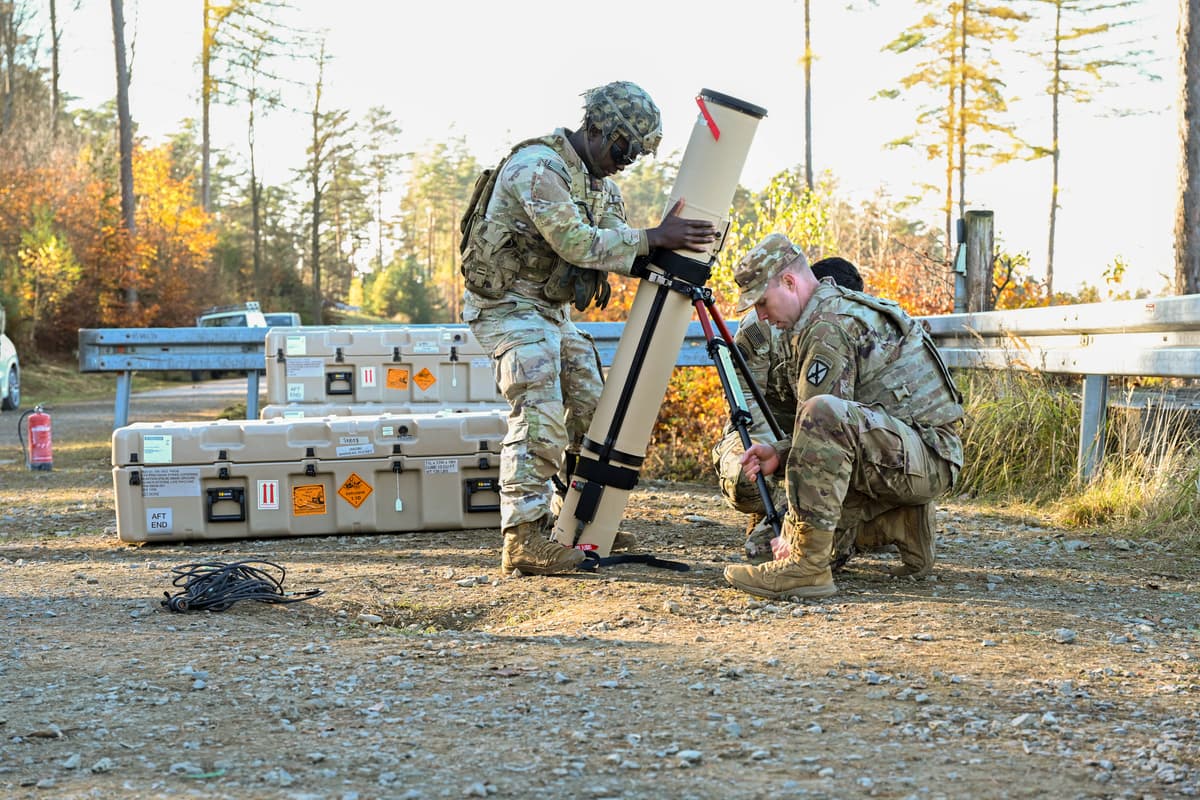
Army Orders $186 Million in Switchblade Kamikaze Drones, Tank Killers
•February 26, 2026
0
Why It Matters
The procurement accelerates the Army’s shift toward autonomous, precision strike capabilities, enhancing small‑unit lethality against armored threats in high‑risk theaters.
Key Takeaways
- •$186 M order for Switchblade 600 and 300 loitering munitions.
- •600 Block 2 adds AI targeting, sea‑borne capability.
- •300 Block 2 equipped with Explosively Formed Penetrator.
- •Portable design fits backpack, supports small‑unit operations.
- •Accelerated production meets demand from U.S. and allies.
Pulse Analysis
Loitering munitions have moved from experimental concepts to core components of modern warfare, and AeroVironment’s Switchblade family sits at the forefront of that transition. By blending the persistence of a drone with the precision of a missile, these systems give commanders a flexible, low‑cost option for striking time‑sensitive targets. The Army’s $186 million order underscores a broader procurement trend that favors autonomous weapons capable of operating in denied or contested airspaces, reducing reliance on traditional manned platforms.
The Switchblade 600 Block 2 introduces artificial‑intelligence algorithms that accelerate target acquisition and lock‑on, a capability honed with U.S. Special Operations Command input. Its sea‑borne certification expands operational envelopes to littoral zones, where rapid response is critical. Meanwhile, the Switchblade 300 Block 2’s integration of an Explosively Formed Penetrator transforms a compact, backpack‑carried drone into a potent anti‑armor tool, extending engagement ranges beyond line of sight. This combination of AI‑driven targeting and armor‑piercing warheads equips small units with a decisive edge against mechanized threats.
Strategically, the accelerated production schedule signals confidence that these loitering munitions will become standard issue for both U.S. forces and NATO partners. As peer competitors invest heavily in counter‑UAS and electronic warfare, the Army’s emphasis on autonomous strike platforms aims to preserve overmatch in future high‑intensity conflicts. The delivery order not only bolsters immediate battlefield readiness but also lays groundwork for iterative upgrades, ensuring the Switchblade line remains adaptable to evolving threat environments.
Army orders $186 million in Switchblade kamikaze drones, tank killers
0
Comments
Want to join the conversation?
Loading comments...