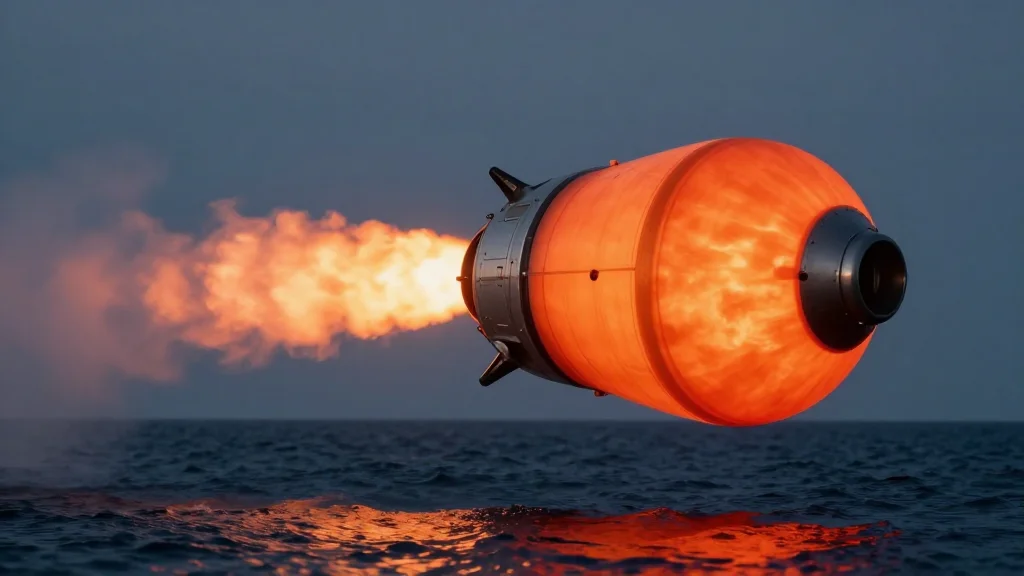
Artemis II Crew Begins Fiery Return to Earth, Splashdown Planned for Pacific Ocean

Why It Matters
Artemis II’s safe return validates the Orion spacecraft’s heat‑shield redesign, a prerequisite for the Artemis III lunar landing slated for 2026. Demonstrating that a publicly funded, internationally partnered mission can overcome the technical hurdles of deep‑space re‑entry bolsters political and budgetary support for the broader Artemis program, which aims to establish a sustainable presence on the Moon. The mission also reignites the debate over the environmental footprint of splashdowns. While NASA maintains that ocean recoveries pose negligible risk to marine life, emerging studies suggest that cumulative acoustic and chemical impacts merit closer scrutiny, especially as the cadence of crewed launches increases.
Key Takeaways
- •Orion capsule Integrity began re‑entry at 7:53 p.m. ET, targeting a Pacific splashdown near San Diego at 8:07 p.m.
- •Crew: NASA’s Reid Wiseman, Victor Glover, Christina Koch and CSA’s Jeremy Hansen.
- •Re‑entry speed: ~23,840 mph (Mach 32); peak heating up to 5,000 °F.
- •Heat‑shield integrity remains the mission’s single point of failure; officials kept a “no‑plan‑B” stance.
- •Splashdown recovery by USS John P. Murtha; data release scheduled for April 12.
Pulse Analysis
Artemis II’s return marks a watershed for NASA’s lunar roadmap, proving that the Orion capsule can survive a high‑velocity, deep‑space re‑entry after a major redesign. The heat‑shield’s performance will be dissected by engineers for months, shaping the risk calculus for Artemis III’s lunar landing. A successful splashdown also provides political ammunition for Congress, which has faced increasing pressure to justify the program’s multi‑billion‑dollar budget amid competing private‑sector initiatives.
From a market perspective, the mission’s high‑visibility public outreach reinforces the value proposition for commercial partners that rely on NASA’s launch infrastructure and data. Companies like SpaceX and Blue Origin watch closely; any Orion shortfall could shift confidence toward alternative crew‑transport solutions. Conversely, a clean return underscores the viability of a mixed‑fleet approach, where NASA’s deep‑space capsule coexists with commercial low‑Earth‑orbit vehicles, diversifying risk and fostering competition.
Looking ahead, the environmental concerns raised about splashdowns could drive NASA to explore alternative recovery methods, such as land‑based touchdowns or offshore platforms with enhanced mitigation measures. As the agency plans an increasing cadence of lunar missions, balancing operational safety, public perception, and ecological stewardship will become a defining challenge for the next decade of human spaceflight.
Artemis II Crew Begins Fiery Return to Earth, Splashdown Planned for Pacific Ocean
Comments
Want to join the conversation?
Loading comments...