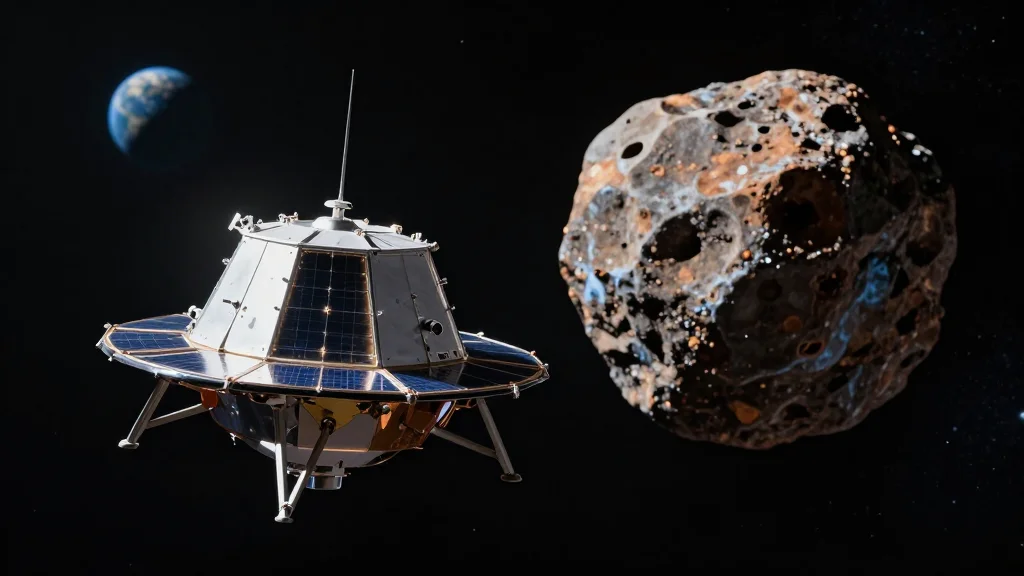
Asteroid Apophis: A Commercial Mission to Help Spur Interest in Planetary Defense
Why It Matters
The project shows private industry can augment planetary‑defense capabilities, potentially speeding technology development and lowering costs. Successful data collection could inform future asteroid monitoring and deflection strategies.
Key Takeaways
- •Exploration Labs launches first commercial deep‑space rideshare to Apophis.
- •Mission targets 2029 close approach, enhancing early‑warning data.
- •Private sector involvement could reduce costs of planetary‑defense missions.
- •Multinational observation plans align with commercial data from Apophis EX.
- •Former astronaut Edward Lu advocates deflection techniques at industry panel.
Pulse Analysis
The 2029 flyby of asteroid 99942 Apophis has become a focal point for planetary‑defense planners worldwide. At roughly 370 meters in diameter, Apophis will pass within 31,000 kilometers of Earth—closer than many geostationary satellites—providing a rare, high‑resolution test case for impact‑risk assessment. Governments, including NASA, ESA, and the Japanese space agency, have already drafted observation campaigns to refine the object's trajectory and evaluate mitigation options. The heightened media attention underscores a broader shift: asteroid threats are moving from academic curiosity to a tangible security concern that demands coordinated scientific and policy responses.
Enter Exploration Labs, a California‑based startup that is turning that urgency into a commercial opportunity. Its Apophis EX mission leverages a rideshare architecture, hitching a small scientific payload to a larger deep‑space launch vehicle, thereby slashing the price tag that traditionally limits private participation. The spacecraft will conduct optical and radar mapping during the months leading up to the 2029 encounter, delivering high‑frequency data streams to both commercial partners and governmental agencies. By operating under a commercial contract, ExLabs can iterate faster, incorporate off‑the‑shelf components, and potentially offer a repeatable service model for future near‑Earth object (NEO) surveillance.
If Apophis EX succeeds, it could reshape the economics of planetary defense, encouraging more firms to enter the niche market of asteroid monitoring and, eventually, deflection. Lower‑cost data improves the fidelity of impact probability calculations, which in turn informs decision‑makers about when—and whether—to deploy kinetic impactors or other mitigation techniques. Moreover, the mission’s public‑facing narrative helps build societal support for funding larger, government‑led deflection projects. As the private sector proves its ability to deliver critical space‑based observations, policymakers may be more inclined to forge public‑private partnerships that accelerate the development of a full‑scale planetary‑defense architecture.
Asteroid Apophis: A Commercial Mission to Help Spur Interest in Planetary Defense
Comments
Want to join the conversation?
Loading comments...