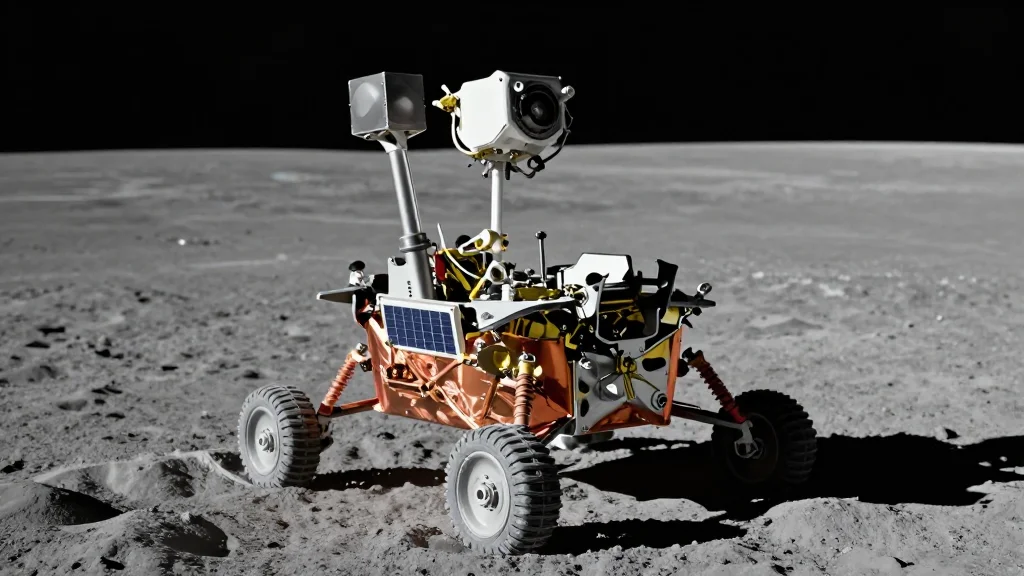
Astrolab’s Flip Lunar Rover Will Carry 4 NASA Payloads
Why It Matters
Embedding four NASA instruments on a commercial rover revives a stalled lunar science mission and demonstrates the viability of private‑sector hardware for NASA’s deep‑space objectives. It also keeps the commercial lunar lander market active despite repeated schedule slips.
Key Takeaways
- •NASA purchases payload space on Astrolab’s FLIP rover.
- •Four distinct science instruments from separate NASA centers will fly.
- •FLIP replaces canceled Viper rover on Astrobotic’s Griffin lander.
- •Griffin will land ~100 miles from Moon’s south pole.
- •Launch pushed to late 2026 after several schedule slips.
Pulse Analysis
The shift from NASA’s in‑house Viper rover to Astrolab’s FLIP prototype reflects a broader trend of leveraging commercial agility for deep‑space missions. After the 2024 cancellation, Astrolab quickly secured a slot on the Griffin lander, a payload‑rich vehicle developed by Astrobotic under a 2020 NASA contract. By integrating four distinct instruments—each sourced from a different NASA center—the FLIP rover transforms a commercial delivery platform into a multi‑disciplinary science asset, preserving valuable research objectives that would have otherwise been delayed.
The payload suite targets the Moon’s south‑pole region, an area of intense scientific interest due to its permanently shadowed craters and potential water ice deposits. Instruments aboard FLIP will conduct regolith analysis, radiation measurements, and subsurface imaging, providing data crucial for future crewed missions and in‑situ resource utilization. Positioning the lander roughly 100 miles from the pole aligns with NASA’s strategy to map and characterize the polar environment, complementing earlier attempts by Intuitive Machines that suffered hard‑landing failures in the same vicinity.
Commercially, the Griffin‑FLIP partnership signals resilience in the lunar transport ecosystem despite a history of launch postponements. The new launch window, now set for late 2026, follows multiple schedule revisions that have tested stakeholder confidence. Yet the commitment of both NASA and Astrolab suggests that the market is maturing, with private firms increasingly shouldering risk and delivering scientific payload capacity. Success could accelerate the pipeline for subsequent commercial landers, cementing a collaborative model that balances governmental oversight with entrepreneurial innovation.
Astrolab’s Flip lunar rover will carry 4 NASA payloads
Comments
Want to join the conversation?
Loading comments...