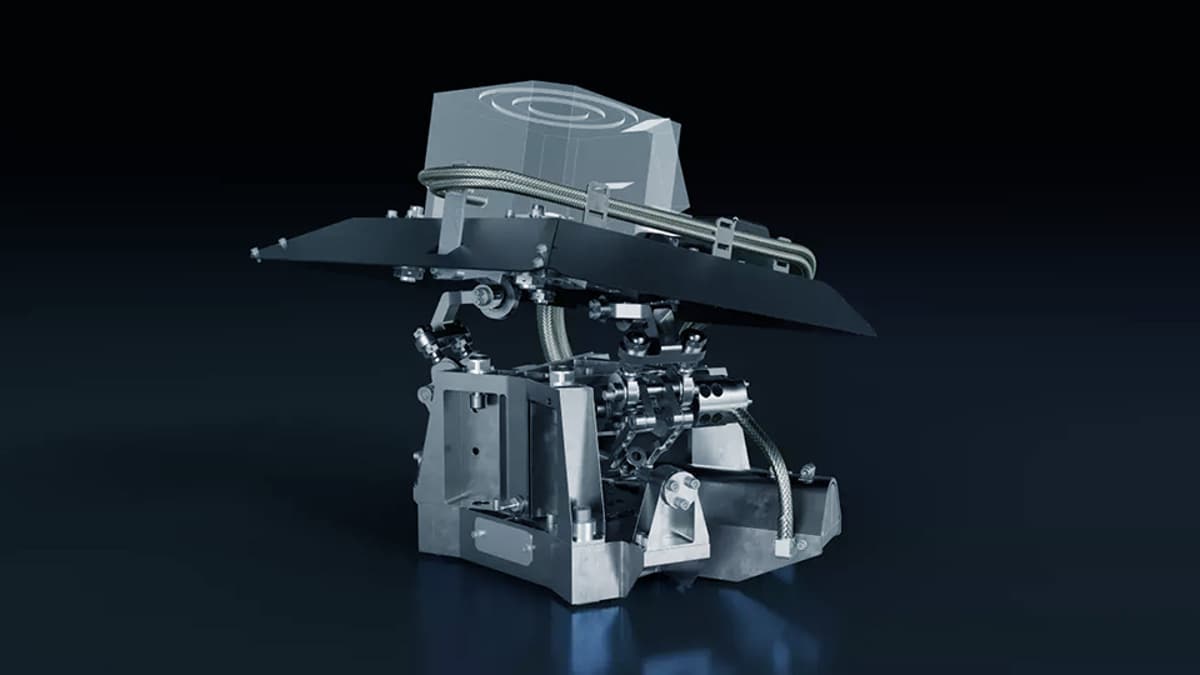
Beyond Gravity Launches Advanced Propulsion Pointing Mechanism for LEO Constellations
Why It Matters
By cutting mass, cost, and propellant consumption, the APPMAX2‑XS lowers barriers for agile LEO constellations, accelerating deployment and revenue cycles for operators.
Key Takeaways
- •APPMAX2‑XS weighs under 7 kg, enabling ultra‑light small‑sat designs.
- •Two‑axis thrust vectoring cuts propellant use, adding up to two years life.
- •Commercial‑off‑the‑shelf parts drive <6‑month lead time for delivery.
- •Available 2027, targeting fast‑growing US and European LEO constellations.
Pulse Analysis
The small‑sat segment has become the engine of growth in low‑Earth‑orbit services, from broadband to Earth observation. Operators constantly wrestle with the trade‑off between payload capacity and propulsion hardware, where every kilogram saved translates into additional revenue‑generating instruments. Traditional fixed thrusters add weight and limit maneuverability, forcing constellations to carry excess fuel to compensate for attitude‑control inefficiencies. In this context, a lightweight, two‑axis pointing mechanism offers a strategic advantage, enabling tighter formation control and longer mission durations.
Beyond Gravity’s APPMAX2‑XS tackles these challenges head‑on. At under seven kilograms, the unit is among the lightest pointing solutions on the market, and its use of commercial‑off‑the‑shelf components streamlines production. The two‑axis electric thrust vectoring reduces propellant burn during attitude adjustments, which can extend a satellite’s operational life by as much as two years. Moreover, the company promises a lead time of less than six months from order to shipment, a stark contrast to the year‑plus cycles typical of bespoke space hardware. This rapid‑delivery model aligns with the fast‑paced launch cadence demanded by mega‑constellation builders.
Looking ahead, the APPMAX2‑XS is positioned to capture demand from both U.S. and European operators planning large LEO constellations slated for launch after 2027. Its low cost, compact footprint, and flexible integration with various electric propulsion systems make it a compelling enabler for new‑space ventures seeking to minimize upfront capital expenditures while maximizing on‑orbit performance. As competition intensifies, manufacturers that can deliver such turnkey, high‑efficiency components are likely to secure a decisive edge in the burgeoning satellite‑as‑a‑service ecosystem.
Beyond Gravity Launches Advanced Propulsion Pointing Mechanism for LEO Constellations
Comments
Want to join the conversation?
Loading comments...