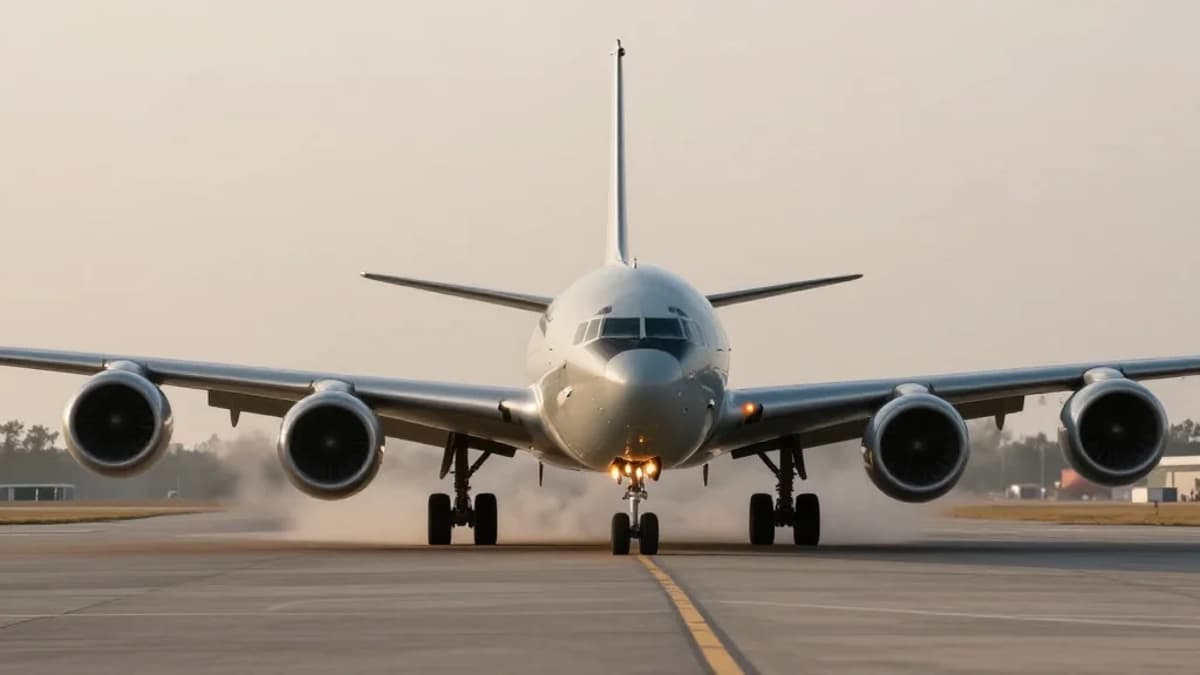
Big Wing Bird: NASA's WB-57 Gets Grounded
•March 9, 2026
0
Why It Matters
The grounding reduces NASA’s high‑altitude sensor capacity, potentially delaying critical atmospheric and launch‑monitoring missions until a replacement or repair is secured.
Key Takeaways
- •NASA WB‑57F 927 gear‑up landed Jan 27, 2026.
- •Aircraft suffered major damage, now grounded.
- •Fleet provides unique high‑altitude payload capability for NASA.
- •Repair decision hinges on cost versus mission demand.
- •Spare airframes stored for future use.
Pulse Analysis
The WB‑57F traces its lineage to the 1950s RB‑57 reconnaissance series, a large‑wing evolution of the B‑57 bomber that once flew above 80,000 ft for atmospheric sampling and intelligence gathering. NASA inherited three of these aircraft in the late 1960s, adapting them for Earth‑science research, shuttle‑launch tracking, and even battlefield communications in Afghanistan. Their ability to loft a 2,700‑kg sensor pallet while cruising at near‑stratospheric altitudes makes them indispensable for vertical profiling of atmospheric chemistry, climate monitoring, and real‑time observation of re‑entry vehicles.
The recent gear‑up landing of N927NA underscores the operational challenges of maintaining a fleet built on 1960s airframes. With limited spare parts—down to a single tire size compatible with F‑15s—and aging structural components, each incident forces NASA to weigh repair costs against the strategic value of the platform. The aircraft’s unique payload capacity cannot be fully replicated by higher‑flying but lighter ER‑2s, meaning a prolonged outage could constrain multi‑altitude campaign designs and delay data collection for programs such as the WB‑57F Ascent Video Experiment (WAVE) that supports Artemis and commercial launch monitoring.
Looking ahead, NASA’s decision will hinge on budget allocations, projected mission demand, and the condition of the stored WB‑57Fs at Davis‑Monthan. If N927NA proves too costly to restore, the agency may accelerate the refurbishment of a reserve airframe or explore partnerships with the Air Force to acquire newer high‑altitude platforms. Maintaining a functional WB‑57F fleet remains critical for delivering the high‑resolution, high‑altitude observations that underpin climate research, space‑flight safety, and national‑security sensor testing.
Big wing bird: NASA's WB-57 gets grounded
0
Comments
Want to join the conversation?
Loading comments...