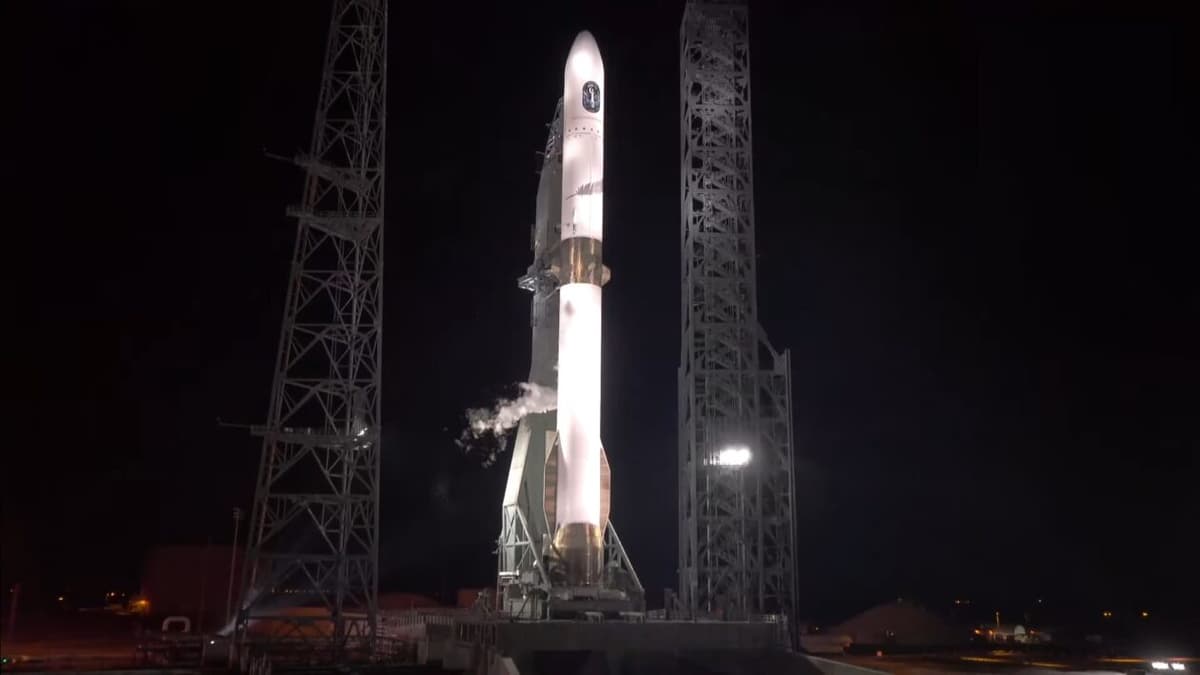
Blue Origin Garners National Security Launch Hours After New Glenn Explosion
Companies Mentioned

Why It Matters
The award underscores the Pentagon’s confidence in Blue Origin’s commercial‑launch capabilities, but the explosion jeopardizes its ability to secure future high‑value national‑security contracts and could reshape the competitive landscape for U.S. heavy‑lift launch services.
Key Takeaways
- •Blue Origin awarded first NSSL mission despite New Glenn explosion
- •Explosion damaged SLC‑36A pad, recovery could take up to 18 months
- •Lane 1 award requires only one successful launch, Lane 2 needs four
- •Investigation will involve Space Force, could delay New Glenn’s certification
Pulse Analysis
The Space Force’s decision to award Blue Origin a Lane 1 National Security Space Launch contract on the same day its New Glenn vehicle suffered a catastrophic hot‑fire failure highlights the thin line between opportunity and risk in the emerging commercial launch market. While the contract signals confidence in Blue Origin’s long‑term potential to deliver heavy‑lift capability for defense payloads, the explosion—one of the most powerful ever recorded for a rocket—has immediate operational repercussions. Damage to launch complex 36‑A not only halts the current test schedule but also forces a costly pad‑reconstruction effort that industry analysts estimate could stretch to 18 months, depending on structural assessments.
Beyond the physical damage, the incident raises questions about New Glenn’s readiness for the more stringent Lane 2 missions, which require four consecutive successful flights before the Department of Defense entrusts the vehicle with its most sensitive satellites. Blue Origin is currently on its third test flight, meaning the anomaly could reset its certification timeline and give competitors like SpaceX and United Launch Alliance additional breathing room to capture additional NSSL contracts. The Space Force’s dual‑lane architecture is designed to balance risk tolerance with reliability, and a setback in one lane can shift procurement dynamics across the entire program.
For the broader aerospace sector, the mishap serves as a reminder that rapid commercialization of heavy‑lift rockets carries inherent technical challenges. Investors and policymakers will be watching how quickly Blue Origin can diagnose the failure, repair the pad, and resume testing, as these milestones will influence future funding, partnership opportunities, and the strategic positioning of U.S. launch providers in a market increasingly driven by national‑security imperatives. The outcome will likely shape the pace at which the United States diversifies its launch portfolio beyond the current incumbents.
Blue Origin Garners National Security Launch Hours After New Glenn Explosion
Comments
Want to join the conversation?
Loading comments...