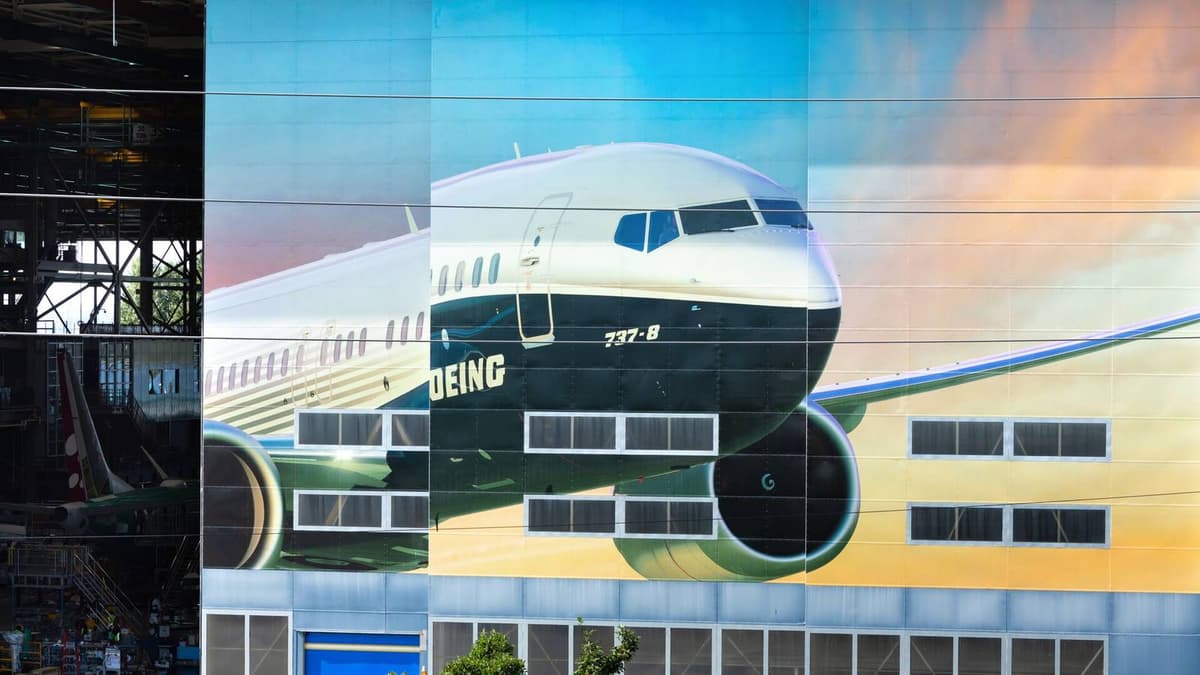
Boeing Beats Airbus On Deliveries For First Time Since MAX Crisis
Companies Mentioned
Why It Matters
The delivery gap highlights Boeing’s regained production momentum and Airbus’ supply‑chain vulnerability, reshaping the competitive dynamics of the narrow‑body market for the coming years.
Key Takeaways
- •Boeing delivered 143 aircraft in Q1, 29 more than Airbus.
- •737 MAX made up 114 deliveries, 80% of Boeing's Q1 output.
- •Airbus deliveries fell 16% as Pratt & Whitney engine shortages persisted.
- •United Airlines ordered 25 737 MAX 9s, boosting Boeing's quarterly pace.
- •Boeing plans fourth 737 line to reach 63 units/month by summer.
Pulse Analysis
Boeing’s Q1 delivery surge signals a pivotal shift in the commercial‑aircraft rivalry that has been dominated by Airbus since the 737 MAX grounding. By moving 143 jets to customers, Boeing not only reclaimed a quarterly lead but also demonstrated the resilience of its supply chain and the effectiveness of its production ramp‑up. The 737 MAX’s dominance—accounting for roughly four‑fifths of the output—reflects airlines’ appetite for high‑efficiency narrow‑bodies amid volatile fuel prices and a post‑pandemic travel rebound. This momentum is further amplified by United Airlines’ sizable order of 25 MAX 9s, which pushes the carrier’s 737 fleet toward 600 aircraft and reinforces Boeing’s market positioning.
The underlying driver of Boeing’s success is its aggressive expansion of the 737 production footprint. A fourth assembly line slated for mid‑summer in Everett is designed to lift the monthly output to 63 aircraft, a capacity that could sustain a double‑digit growth trajectory through 2027. Simultaneously, Boeing is accelerating 787 freighter production, targeting ten units per month by year‑end, diversifying its revenue streams beyond the narrow‑body segment. These operational investments aim to lock in a supply advantage and mitigate the risk of future disruptions, such as the wiring repairs that delayed about ten MAX deliveries at quarter’s end.
Conversely, Airbus grapples with a pronounced engine bottleneck. Pratt & Whitney’s inability to meet agreed delivery volumes for A320neo family engines has forced Airbus to trim its 2026 delivery outlook, translating into an estimated $3 billion in missed list‑price revenue. The engine shortfall, affecting roughly 40% of the global A320 fleet, underscores the strategic risk of over‑reliance on a single supplier. As Airbus works to resolve the shortage, its narrow‑body cadence may remain constrained, giving Boeing a window to consolidate market share. The unfolding supply‑chain dynamics will likely dictate the competitive balance in the narrow‑body arena for the next several years.
Boeing Beats Airbus On Deliveries For First Time Since MAX Crisis
Comments
Want to join the conversation?
Loading comments...