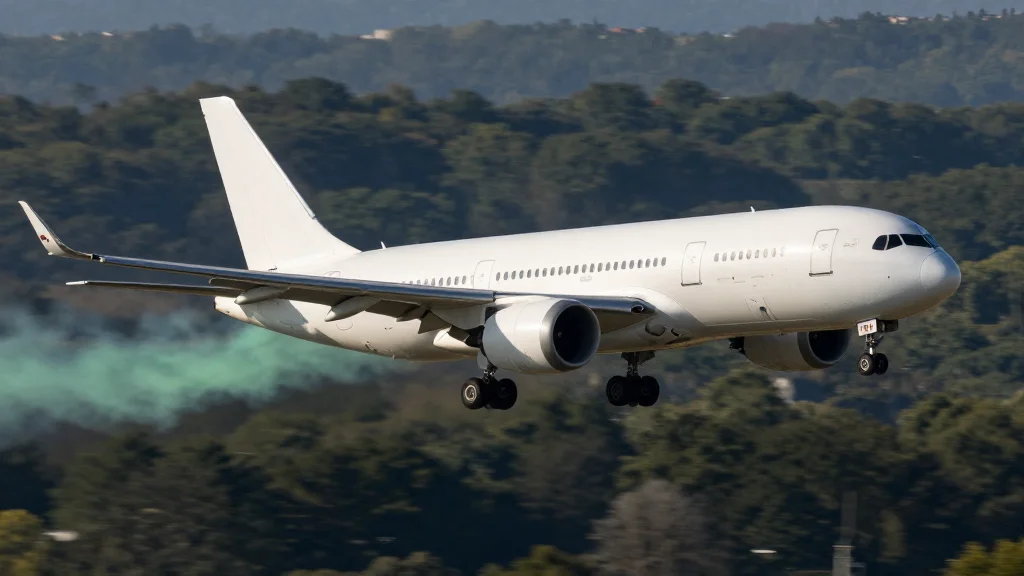
Boeing Secures 20,000 Tonnes of High‑Quality Carbon‑Removal Credits to Tackle Aviation Emissions

Companies Mentioned
Why It Matters
Boeing’s purchase signals that large aerospace firms are moving beyond conventional offsetting toward scientifically vetted carbon‑removal solutions, a shift that could reshape how the industry meets increasingly stringent climate regulations. By applying credits to Scope 3 emissions, the deal addresses a loophole that has traditionally limited airlines’ ability to claim net‑zero status, potentially prompting regulators to recognize such purchases in compliance frameworks. The transaction also highlights supply constraints in the emerging carbon‑removal market. With 89 percent of premium biochar already pledged, demand may outstrip supply, prompting more companies to adopt criteria‑led procurement or invest directly in project development. This dynamic could spur a wave of new biochar and enhanced rock weathering projects, expanding the global removal capacity needed to meet the Paris Agreement’s net‑zero goals.
Key Takeaways
- •Boeing purchases 20,000 tonnes of permanent carbon‑removal credits via Supercritical
- •Credits sourced from six vetted suppliers across Brazil, Bolivia, Namibia and India
- •Portfolio combines biochar and enhanced rock weathering technologies
- •Boeing screened >200 projects using a 118‑point scientific framework
- •Supercritical reports 89% of premium biochar for 2024 already committed
Pulse Analysis
Boeing’s high‑integrity carbon‑removal procurement marks a watershed for the aviation sector’s climate strategy. Historically, airlines have relied on SAF blends and fleet efficiency improvements to claim emissions reductions, but Scope 3 emissions—particularly business travel—have remained a blind spot. By retiring 20,000 tonnes of vetted removals, Boeing not only narrows that blind spot but also creates a market signal that quality‑first purchasing can be operationalized at scale. This could catalyze a virtuous cycle: as more OEMs and carriers adopt similar frameworks, demand will incentivize new biochar farms and rock‑weathering sites, gradually easing the current scarcity highlighted by Supercritical.
From a competitive standpoint, Boeing’s move may pressure rivals such as Airbus and emerging low‑cost carriers to accelerate their own carbon‑removal strategies. If regulators begin to incorporate verified removal credits into airline carbon‑budget calculations, early adopters could gain a compliance advantage and improve their ESG ratings, attracting sustainability‑focused investors. Moreover, the procurement underscores the growing importance of third‑party platforms like Supercritical that can aggregate fragmented projects, apply rigorous vetting, and deliver diversified portfolios—functions that traditional carbon‑credit brokers have struggled to provide.
Looking ahead, the key question is scalability. The 20,000‑tonne purchase is sizable, yet the aviation industry’s total Scope 3 emissions run into the hundreds of millions of tonnes annually. To bridge that gap, the market will need a surge in new removal projects, clearer standards, and perhaps policy incentives that de‑risk capital deployment. Boeing’s action is a proof‑point that the infrastructure for such a market exists; the next few years will determine whether it can expand fast enough to keep pace with the sector’s growth.
Boeing Secures 20,000 Tonnes of High‑Quality Carbon‑Removal Credits to Tackle Aviation Emissions
Comments
Want to join the conversation?
Loading comments...