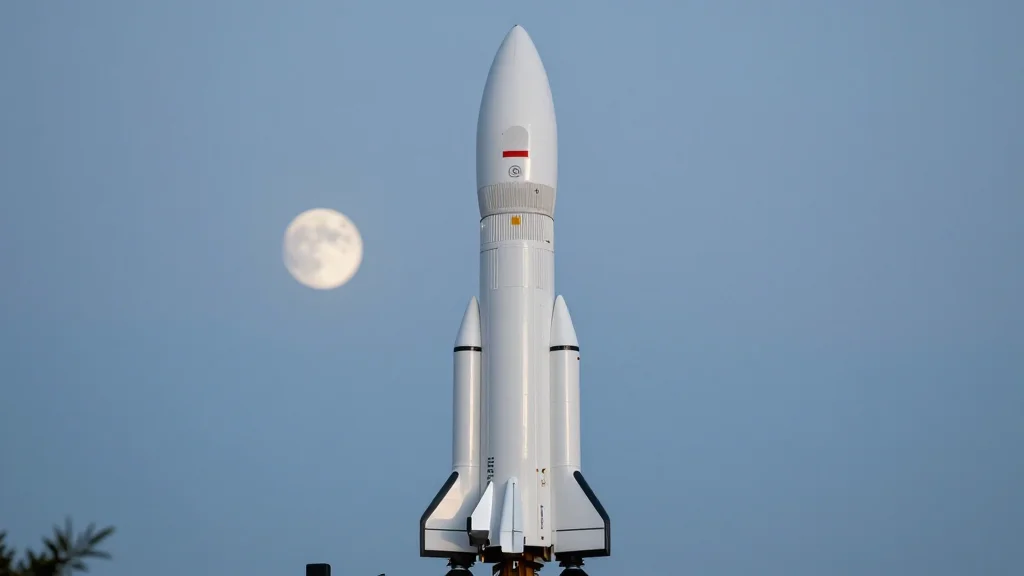
Boeing’s $24 Billion Space Launch System Faces Uncertain Future Under Trump Administration

Companies Mentioned

Why It Matters
The Trump administration’s budget request introduces a policy lever that could alter the balance between government‑run and commercial deep‑space launch solutions. A shift away from the SLS would not only affect Boeing’s financial outlook but also signal a broader strategic move toward a more diversified launch ecosystem, potentially accelerating the commercialization of lunar missions. For the aerospace industry, the decision will shape investment flows, workforce allocation, and the competitive dynamics among legacy contractors and newer entrants. Moreover, the SLS’s future has implications for U.S. leadership in deep‑space exploration. If the program is scaled back, NASA may rely more heavily on commercial partners to meet its Artemis timeline, affecting the pace and scope of lunar surface operations and subsequent Mars objectives.
Key Takeaways
- •NASA asked rival launch providers for alternatives about a week before the Artemis II SLS flight
- •The White House budget request echoed NASA’s outreach, signaling political pressure on the SLS
- •SLS development has spanned roughly a decade with a total cost of $24 billion
- •Potential shift could reduce Boeing’s guaranteed SLS contracts and benefit competitors like SpaceX
- •Outcome depends on Congress’s approval of the administration’s budget and NASA’s subsequent decisions
Pulse Analysis
The Trump administration’s early budget signal reflects a growing appetite for a more market‑driven approach to deep‑space launch. Historically, NASA’s heavy‑lift capability has been anchored by government‑funded programs like the Saturn V, but the rise of commercial heavy‑lift providers has altered the strategic calculus. By publicly questioning the SLS, the administration is nudging NASA toward a hybrid model that blends legacy hardware with private‑sector innovation.
From a competitive standpoint, Boeing’s SLS faces a dual challenge: sustaining a costly, schedule‑laden development while defending its market share against agile commercial rivals. If the budget request translates into reduced funding, Boeing may need to accelerate cost‑reduction measures or seek new commercial opportunities to offset potential losses. Meanwhile, firms such as SpaceX, with its Starship system, could leverage any policy shift to secure a larger slice of NASA’s human‑spaceflight contracts, potentially reshaping the industry’s hierarchy.
Looking forward, the key variable is congressional response. A bipartisan consensus on maintaining a robust government‑led heavy‑lift capability could preserve the SLS’s role, whereas a budget that trims SLS funding would accelerate the transition to a more commercially oriented launch architecture. The decision will reverberate through the supply chain, influence future workforce planning, and set the tone for America’s approach to returning humans to the Moon and eventually reaching Mars.
Boeing’s $24 Billion Space Launch System Faces Uncertain Future Under Trump Administration
Comments
Want to join the conversation?
Loading comments...