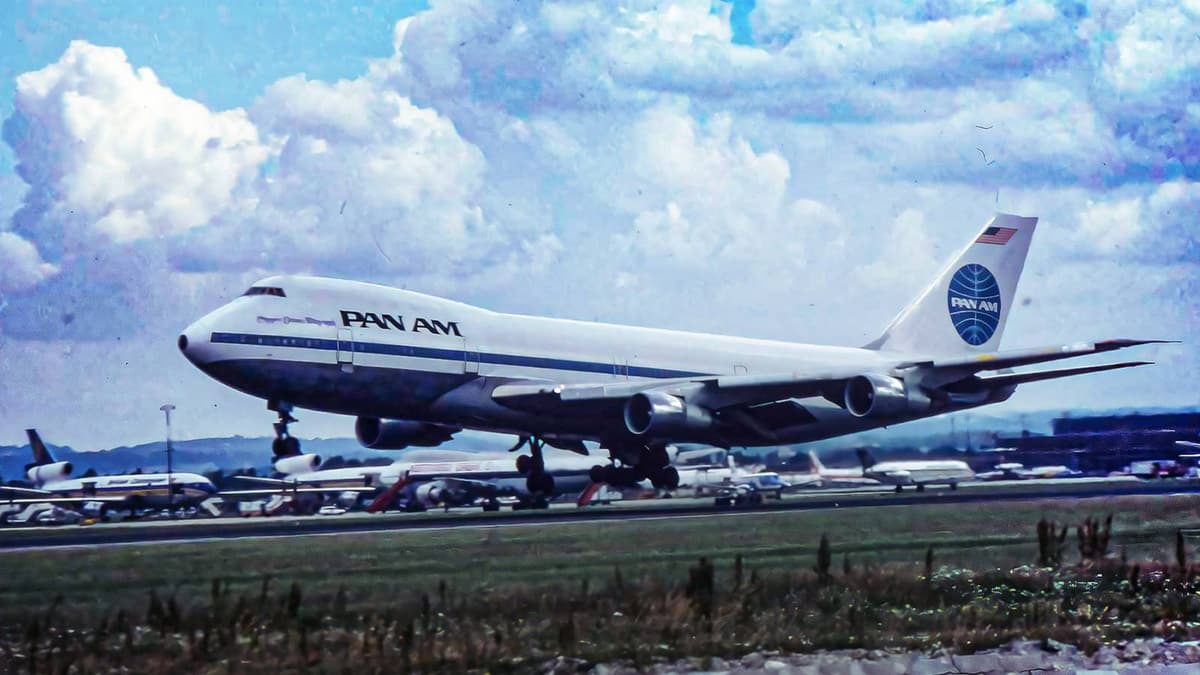
Boeing’s Forgotten Jumbo Jet Is Now Worth Less Than $150 Million
Companies Mentioned
Why It Matters
The steep depreciation highlights the shift toward more efficient twin‑engine aircraft and signals the end of the four‑engine jumbo’s commercial viability. Investors and airlines must reassess legacy fleet values and future acquisition strategies.
Key Takeaways
- •747‑100 original price $25 M, now worth under $150 M
- •Only three airlines still operate passenger 747s in 2026
- •64 hull losses caused over 3,700 fatalities across variants
- •777X positioned as fuel‑efficient successor to the 747
- •747‑100 production ended after 167 units, shaping mass‑market travel
Pulse Analysis
The Boeing 747‑100 reshaped aviation when it debuted in 1970, offering unprecedented capacity—up to 452 passengers in an all‑economy layout—and a distinctive upper deck that became a symbol of luxury and global connectivity. Its four‑engine design enabled long‑range routes that opened new markets, accelerating the democratization of air travel and cementing the 747’s place in popular culture. Over its 57‑year production run, the 747‑100 helped airlines transition from niche premium services to mass‑market carriers, laying the groundwork for today’s global network.
Decades later, the 747‑100’s residual value has plummeted to less than $150 million, a stark contrast to its inflation‑adjusted $190 million launch cost and the $418 million list price of the latest 747‑8. The decline reflects a broader industry pivot toward twin‑engine, fuel‑efficient aircraft that meet stricter emissions standards and lower operating costs. With only three airlines—Lufthansa, Air China, and Korean Air—still flying passenger 747s, the market for spare parts and conversions has become niche, driving down resale prices and prompting owners to retire or repurpose the airframes.
Looking ahead, Boeing’s 777X aims to inherit the 747’s high‑capacity niche while delivering up to 15 percent better fuel efficiency thanks to its twin‑engine architecture and innovative folding wingtips. The 777X’s delayed entry into service underscores the challenges of developing next‑generation wide‑bodies, but its design promises to meet airlines’ demand for long‑haul capability without the cost penalties of four‑engine jets. As the 747 era fades, its legacy endures in the market’s emphasis on efficiency, capacity, and the enduring allure of iconic aircraft.
Boeing’s Forgotten Jumbo Jet Is Now Worth Less Than $150 Million
Comments
Want to join the conversation?
Loading comments...