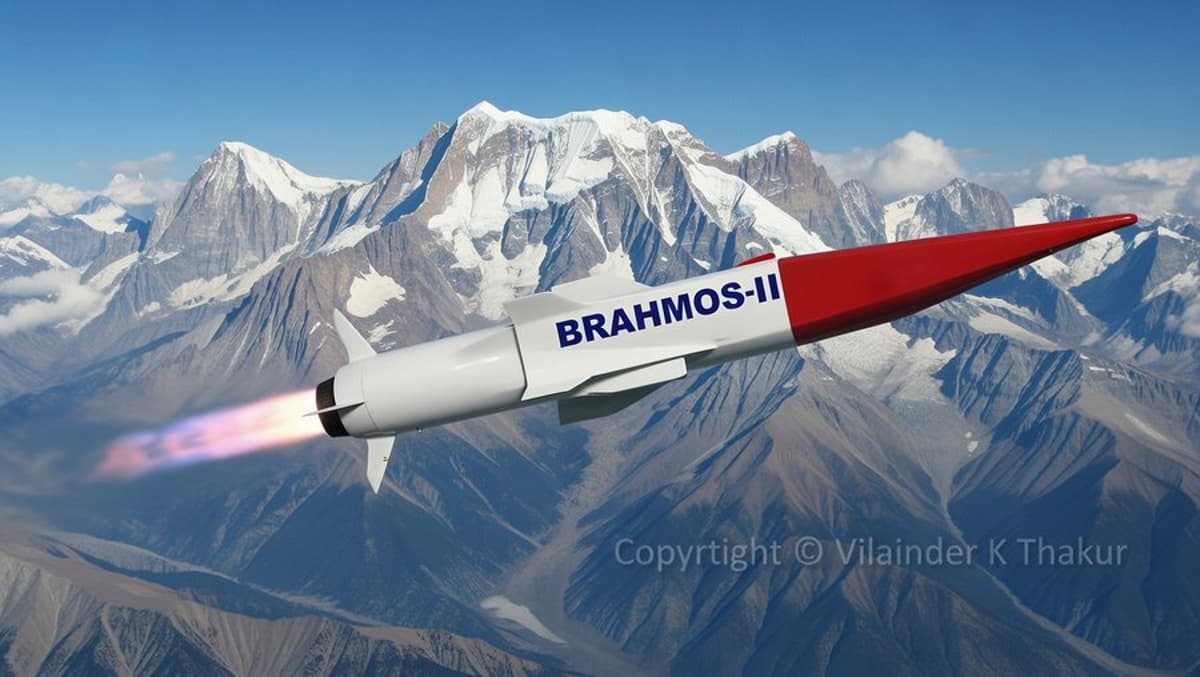
BrahMos Production Crashes Over 50% Due to Staff Exodus, BrahMos-NG Delays, Report Claims; Will India Lose Its Missile Edge?
Why It Matters
A slowdown in BrahMos output and stalled NG development could weaken India’s strategic deterrence and force reliance on foreign missile solutions, reshaping regional power balances.
Key Takeaways
- •Production dropped below 50% after relocating 56 employees
- •Navy’s 220‑missile order may face years‑long delay
- •BrahMos‑NG lacks MoD approval despite Lucknow test facility
- •Development timeline pushed from 2019 to post‑2025 flight tests
- •Miniaturization needed for compatibility with Su‑57 and future AMCA
Pulse Analysis
The BrahMos missile, a joint Indo‑Russian project, has long been the cornerstone of India’s high‑speed strike capability, fielded on ships, submarines and land platforms. Recent reports indicate that output at the Hyderabad‑based production line has slumped to less than half of its 2023 volume, a contraction traced to the transfer of about 56 engineers and technicians to new integration sites in Lucknow and Pilani. Such moves disrupted personal lives, sparked disgruntlement and prompted a wave of resignations, directly curtailing the steady flow of missiles that the Indian Navy relies on for its 220‑missile order placed earlier this year. The supply gap threatens to create a capability vacuum at a time when regional naval competition is intensifying.
Compounding the production woes is the stalled BrahMos‑NG program, envisioned as a lighter, Mach 3.5‑plus missile suitable for fighter‑jet internal bays and even submarine torpedo tubes. Despite a foundation stone laid in December 2021 and a dedicated testing facility under construction in Lucknow, the Ministry of Defence has yet to green‑light full‑scale development. Optimistic timelines—initially promising a 2019 debut—have slipped repeatedly, with the latest statement from BrahMos’s export director pushing first flight tests to the end of 2025 and design work only beginning in late 2025. Without MoD endorsement, the project risks further delays, jeopardizing integration with prospective platforms such as Russia’s Su‑57 and India’s indigenous AMCA, both of which demand compact, low‑weight missiles.
The broader strategic implication is clear: a faltering BrahMos pipeline could erode India’s deterrent posture and compel the services to look abroad for comparable high‑speed cruise missiles. Importing alternatives would entail higher costs, longer lead times and potential technology transfer constraints. To preserve its missile edge, India must address the human‑resource challenges at its production hubs, accelerate MoD approval for the NG variant, and align development schedules with the acquisition timelines of next‑generation fighter and submarine fleets. Failure to do so may shift the regional balance in favor of rivals possessing more reliable supersonic strike options.
BrahMos Production Crashes Over 50% Due to Staff Exodus, BrahMos-NG Delays, Report Claims; Will India Lose Its Missile Edge?
Comments
Want to join the conversation?
Loading comments...