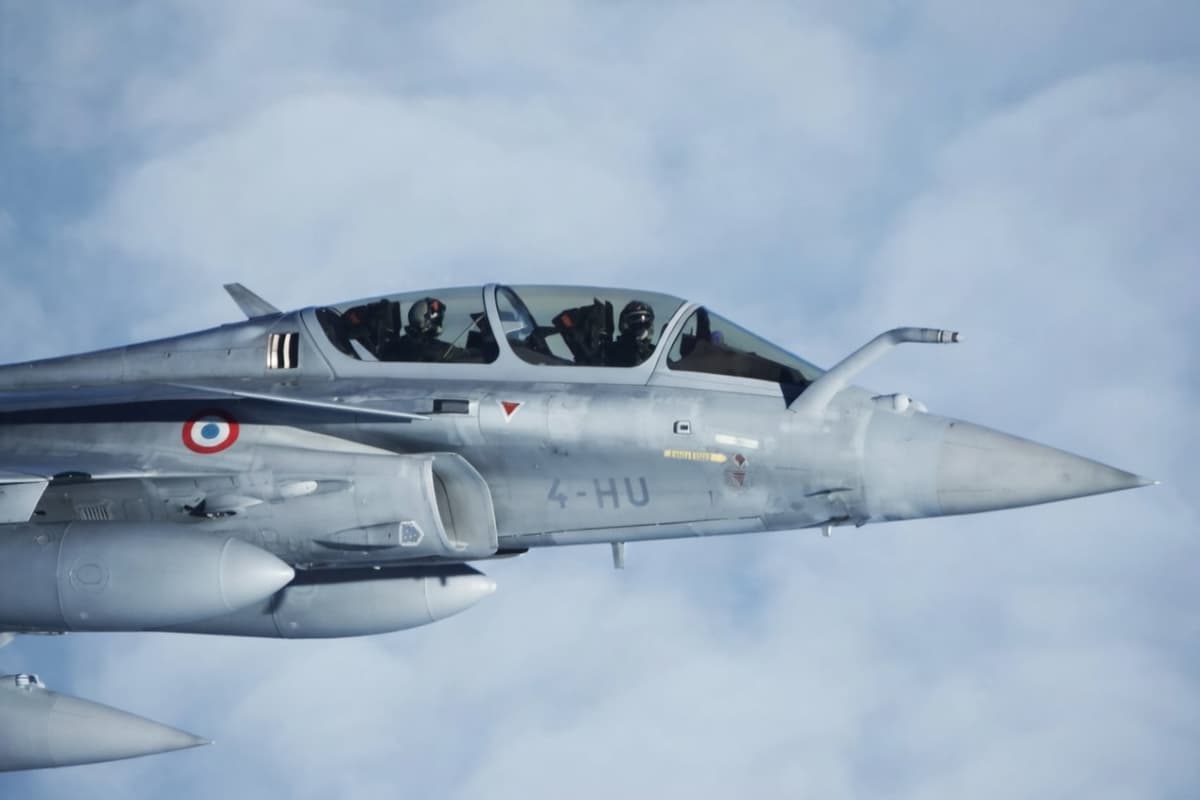
Brand New Rafale Jets Boost Indonesia’s Defenses as Prabowo Vows Stronger Deterrence Amid Global Uncertainty
Companies Mentioned
Why It Matters
The acquisition strengthens Indonesia’s air‑defense capability, signaling a more assertive posture in a region marked by rising great‑power competition, while also testing the country’s fiscal resilience amid economic headwinds.
Key Takeaways
- •Six Rafale jets delivered, part of $8.1 bn 42‑jet contract
- •President Prabowo links jet acquisition to deterrence amid geopolitical uncertainty
- •Additional hardware includes four Falcon 8X jets and an Airbus A400M
- •Indonesia pauses further Rafale orders, reviewing budget and strategic needs
- •Analysts say Rafale performance cannot be judged by isolated incidents
Pulse Analysis
Indonesia’s latest defense milestone came on Monday when six Rafale multirole fighters touched down at a Jakarta air base, completing the first tranche of a $8.1 billion agreement for 42 aircraft signed in 2022. The Rafale, renowned for its versatility across air‑to‑air, air‑to‑ground, and reconnaissance missions, adds a modern, fourth‑generation capability to a fleet that has relied heavily on aging platforms. By pairing the jets with four Falcon 8X business aircraft and an Airbus A400M strategic transport, Jakarta signals a comprehensive upgrade aimed at extending reach, improving logistics, and enhancing rapid response capacity across its sprawling archipelago.
The procurement arrives at a time when Indonesia grapples with fiscal strain from rising crude oil prices, a consequence of the Middle‑East conflict, and a broader economic slowdown. Although the government has earmarked emergency savings for defense, officials remain cautious about expanding the Rafale order, citing budget discipline and the need to assess the long‑term sustainability of such high‑cost assets. Analysts note that while the initial outlay is substantial, the Rafale’s lower operating costs relative to some Western peers could offset expenses over its service life, provided maintenance and spare‑parts pipelines are secured.
Strategically, the Rafale deal deepens Jakarta’s defense partnership with France, diversifying Indonesia’s military suppliers beyond traditional U.S. and Russian sources. This diversification aligns with the nation’s non‑aligned stance, offering leverage in diplomatic negotiations and a hedge against supply disruptions. In a region where China’s naval expansion and the U.S. re‑engagement are reshaping security dynamics, a modern air force serves as a credible deterrent, reinforcing Indonesia’s claim to protect its sovereign waters and airspace. The next phase will hinge on whether the government can balance defense ambitions with fiscal realities, a calculus that will shape Southeast Asia’s power equilibrium for years to come.
Brand New Rafale Jets Boost Indonesia’s Defenses as Prabowo Vows Stronger Deterrence Amid Global Uncertainty
Comments
Want to join the conversation?
Loading comments...