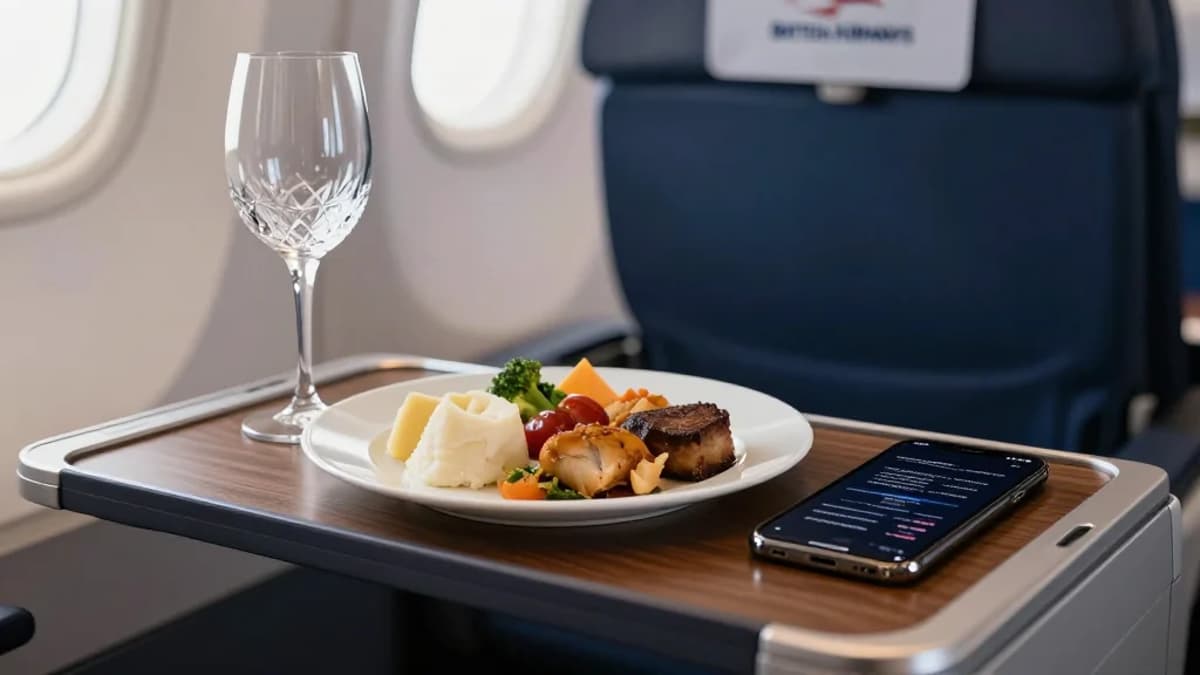
British Airways Rolling Out New Electronic Meal Ordering System In Club World But The Reason Is Baffling
•February 7, 2026
0
Why It Matters
The shift to digital ordering signals a broader push for data‑driven cabin operations, potentially boosting efficiency and passenger satisfaction across premium cabins.
Key Takeaways
- •BA introduces iOrder app for Club World meals.
- •Goal: improve first‑choice meal accuracy via data.
- •App replaces pen‑paper after nine‑year industry lag.
- •Digital divide concerns among older cabin crew.
- •Pre‑order service still suspended, limiting passenger benefit.
Pulse Analysis
Airlines have been modernising in‑flight service tools for years, with Emirates and Qatar Airways pioneering smartphone‑based meal ordering to replace pen‑and‑paper. Those systems promise faster crew workflows, reduced errors, and the ability to capture granular consumption data. As passengers increasingly expect seamless digital experiences, carriers view electronic ordering as a competitive differentiator that aligns cabin service with broader digital transformation strategies.
British Airways’ iOrder app aims to harness that data advantage by tracking real‑time meal selections in Club World. The airline argues that detailed ordering metrics will fine‑tune meal loading ratios, addressing the 20,000 mis‑matched meals reported last year. However, the app arrives after BA halted its pre‑order service, meaning passengers still cannot guarantee their preferred dishes before boarding. Crew members have also raised concerns about a digital divide, fearing older staff may struggle with the new interface, which could offset efficiency gains.
If BA can integrate iOrder smoothly, the airline could see reduced waste, tighter inventory control, and higher premium‑cabin satisfaction scores. Success may prompt a revival of pre‑order options, leveraging the app’s data to offer personalized menus ahead of flight. Conversely, a rocky rollout could reinforce skepticism about tech‑first solutions that overlook passenger‑centred design. Competitors watching BA’s experiment will gauge whether digital meal ordering truly delivers operational savings and a measurable uplift in the premium travel experience.
British Airways Rolling Out New Electronic Meal Ordering System In Club World But The Reason is Baffling
0
Comments
Want to join the conversation?
Loading comments...