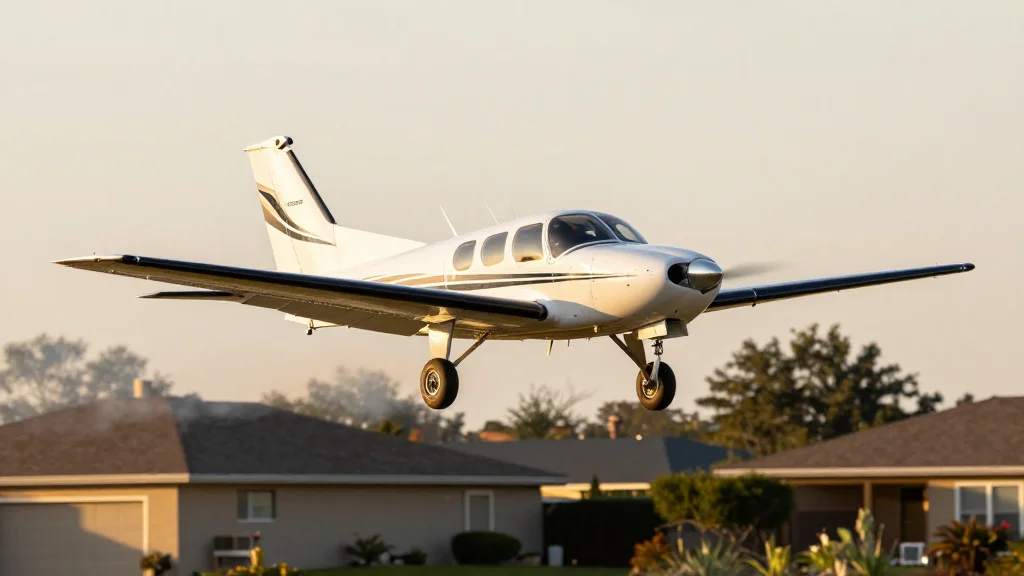
Cessna 401B Crashes Into Florida Home, Pilot Killed and Yard Ignites

Why It Matters
The crash underscores persistent safety challenges in general aviation, where small aircraft account for a high proportion of U.S. aviation fatalities despite representing a tiny fraction of total flight hours. A fatal incident in a densely populated suburb amplifies public concern about flight‑path planning and emergency response capabilities. The NTSB and FAA investigations will likely examine maintenance records, pilot training, and possible mechanical anomalies, findings that could influence future regulatory actions, aircraft certification standards, and community outreach programs aimed at mitigating risk near airports. Moreover, the incident may prompt local governments to reassess zoning regulations around small airports, balancing economic benefits of general‑aviation activity with the safety of nearby residents. The outcome of the probe could also affect insurance premiums for owners of similar Cessna models and shape industry best practices for pre‑flight checks and pilot decision‑making in low‑altitude environments.
Key Takeaways
- •Cessna 401B crashed into a Wesley Chapel yard at ~8:35 a.m. Sunday, killing the pilot.
- •Fire was extinguished by 10:30 a.m.; residence sustained minor damage.
- •NTSB and FAA are leading the investigation; preliminary report due within 30 days.
- •Neighbor captured footage; described the pilot’s apparent intentional nose‑dive.
- •Incident highlights safety concerns for small‑plane operations near residential areas.
Pulse Analysis
The Florida crash arrives at a time when the FAA and NTSB are under pressure to improve safety outcomes for the general‑aviation sector, which historically lags behind commercial aviation in accident rates. While the Cessna 401B is a workhorse for charter and training, its twin‑engine configuration adds complexity to pilot workload, especially during takeoff and low‑altitude maneuvering. If investigators uncover a mechanical fault—such as an engine failure or control‑system anomaly—it could trigger airworthiness directives affecting hundreds of similar aircraft.
Conversely, if pilot error or a deliberate emergency maneuver is identified, the focus may shift to training standards and decision‑making protocols. Recent FAA initiatives, like the General Aviation Safety Initiative, aim to reduce fatal accidents by emphasizing recurrent training and stricter maintenance oversight. This crash could serve as a catalyst for tightening those measures, especially around airports embedded in suburban landscapes.
From a market perspective, insurers may reassess risk models for twin‑engine Cessnas, potentially raising premiums for owners operating near populated zones. Aircraft manufacturers could also see renewed interest in advanced avionics that provide better situational awareness and automated safety features. Ultimately, the investigation’s findings will ripple through regulatory bodies, operators, and manufacturers, shaping the next wave of safety reforms in an industry where each fatality prompts a call for systemic change.
Cessna 401B Crashes into Florida Home, Pilot Killed and Yard Ignites
Comments
Want to join the conversation?
Loading comments...