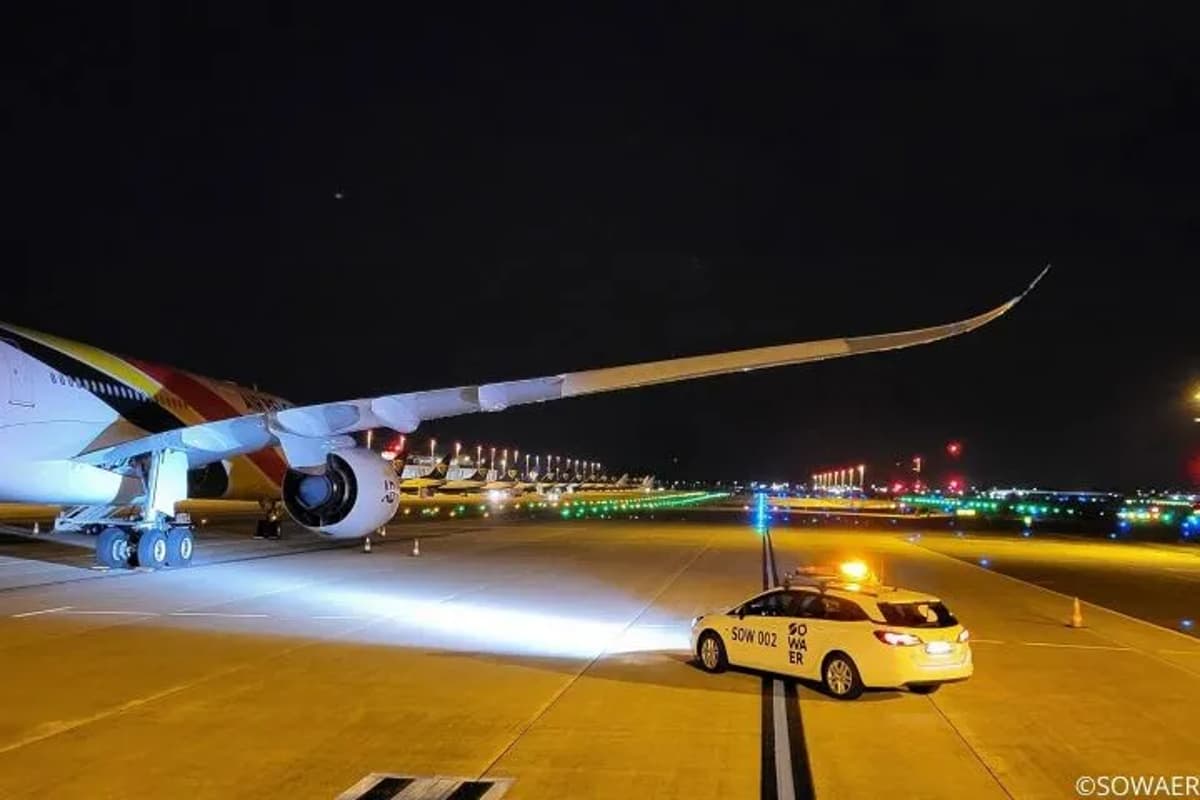
Charleroi Airport Completes Major Lighting Upgrade to Enhance Runway Safety
•February 11, 2026
0
Why It Matters
The upgrade dramatically improves runway safety, cuts operating expenses and advances the airport’s sustainability agenda, strengthening its market position among European low‑cost carriers.
Key Takeaways
- •95% runway lighting now LED.
- •Energy use dropped 80‑85% to 25 kW.
- •200 km of cabling replaced, 15‑20‑year lifespan.
- •No technical incidents since upgrade.
- •Night‑time work avoided flight disruptions.
Pulse Analysis
Airfield lighting, though invisible to passengers, is a critical safety component that guides aircraft during taxi, take‑off and landing. Across Europe, airports are shifting from halogen to LED systems to meet stricter environmental standards and reduce maintenance burdens. LEDs offer higher luminous efficiency, longer service intervals, and lower carbon footprints, aligning with the aviation sector’s broader decarbonisation targets.
Charleroi’s recent programme exemplifies this transition. By swapping out aging high‑voltage and secondary cabling with modern, 15‑20‑year‑rated conductors, the airport eliminated frequent cable faults that previously caused several annual incidents. The installation of 2,650 LED lights cut electricity consumption by up to 85%, translating into substantial cost savings and a five‑to‑eight‑fold reduction in energy use per fixture. The night‑time execution strategy ensured uninterrupted commercial operations on the airport’s sole runway, showcasing meticulous project planning.
The successful rollout positions Charleroi as a benchmark for midsize European airports seeking to balance safety, efficiency and sustainability. Reduced energy bills free capital for service enhancements, while the extended asset lifespan lowers long‑term capital expenditures. As airlines and passengers increasingly prioritize green credentials, airports that demonstrate measurable environmental gains gain a competitive edge in route negotiations and brand perception. The five‑year guarantee and proactive maintenance framework further reinforce operational resilience, suggesting that similar LED retrofits will become a standard investment for airports aiming to future‑proof their infrastructure.
Charleroi Airport completes major lighting upgrade to enhance runway safety
0
Comments
Want to join the conversation?
Loading comments...