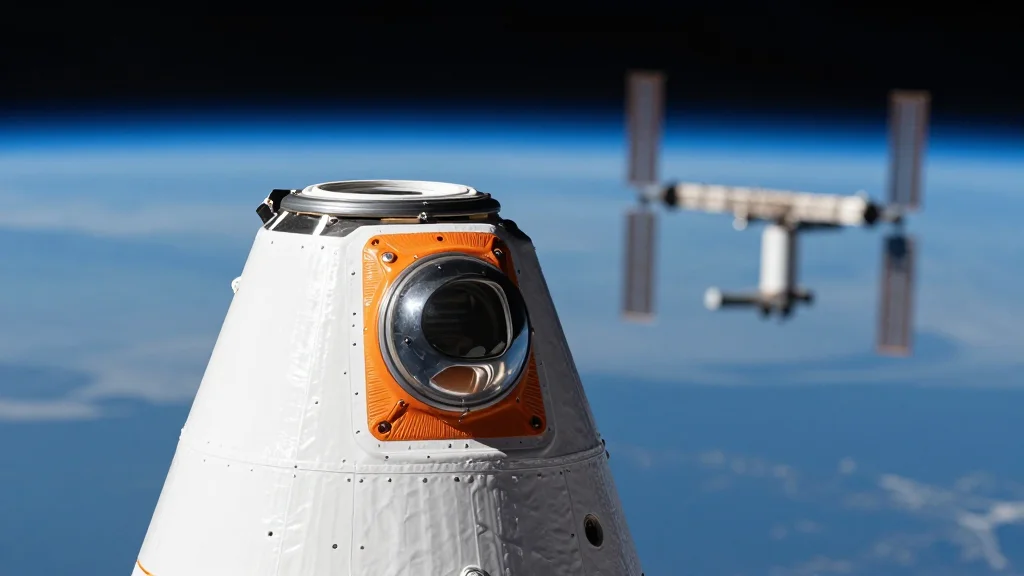
China Launches Shenzhou‑23 for Record One‑Year Stay on Tiangong

Companies Mentioned

NASA
SpaceX
Why It Matters
The Shenzhou‑23 mission is a pivotal proof‑of‑concept for sustained human presence in space, a prerequisite for any crewed lunar or Martian venture. By gathering long‑duration physiological data, China can refine life‑support systems, counteract bone and muscle loss, and develop psychological support protocols that will be critical for the harsh environment of lunar polar bases. Moreover, the mission signals Beijing’s intent to close the gap with the United States in deep‑space capabilities, potentially reshaping geopolitical dynamics in space exploration and commercial partnerships. Beyond the technical, the mission carries soft‑power weight. Li Jiaying’s historic flight from Hong Kong showcases China’s inclusive narrative of national unity, while the public enthusiasm among students reflects a growing domestic talent pipeline that could feed future aerospace projects. The success or failure of this year‑long stay will influence international confidence in Chinese space technology, affecting future collaborations and competition.
Key Takeaways
- •Shenzhou‑23 launched at 11:08 p.m. Beijing time on May 24, 2026, from Jiuquan.
- •Three astronauts – Zhu Yangzhu, Zhang Zhiyuan, Li Jiaying – will stay on Tiangong for a planned 365‑day mission.
- •Mission sets a new Chinese record; current longest stay is 204 days by Shenzhou‑21.
- •Experiments will monitor radiation, bone density, and psychological health to support a 2030 lunar landing.
- •Public engagement highlighted by Hong Kong students and Li Jiaying’s historic participation.
Pulse Analysis
China’s decision to push a single crew for a full year in low‑Earth orbit reflects a strategic shift from short‑term demonstration flights to sustained human‑spaceflight operations. Historically, the United States and Russia built long‑duration expertise during the 1970s and 1980s, establishing the physiological baseline for later deep‑space missions. China’s accelerated timeline—aiming for a crewed lunar landing by 2030—compresses that learning curve, relying heavily on the data from Shenzhou‑23 to validate health‑preserving technologies.
The mission also serves as a systems test for automated docking, a capability that will be essential for future lunar orbit rendezvous. Wu Weiren’s comments underscore that the same automation that enabled the Tiangong handover will be replicated for the Mengzhou‑Lan Yue lunar architecture. If the docking proceeds flawlessly, it will reduce reliance on manual piloting, lowering risk for lunar missions where communication delays are significant.
From a market perspective, the successful execution of a year‑long stay could unlock new commercial opportunities for Chinese firms in life‑support hardware, radiation shielding, and in‑orbit manufacturing. International partners may view China as a viable platform for joint research, especially as NASA’s Artemis program seeks global collaboration. Conversely, any health setbacks could raise concerns about the robustness of China’s astronaut training and medical monitoring, potentially slowing the lunar timetable and inviting criticism from rival spacefaring nations.
Overall, Shenzhou‑23 is more than a record‑setting flight; it is a linchpin in Beijing’s broader ambition to become a dominant player in deep‑space exploration, with implications for technology development, geopolitical influence, and the future commercial space economy.
China Launches Shenzhou‑23 for Record One‑Year Stay on Tiangong
Comments
Want to join the conversation?
Loading comments...