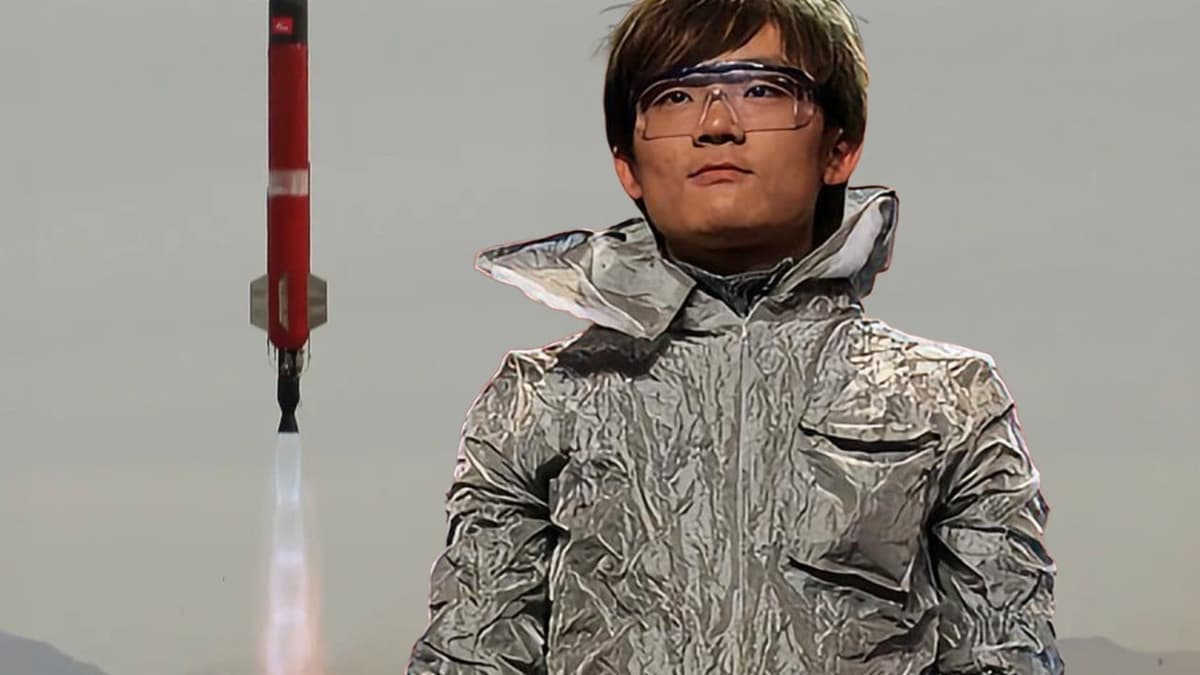
China ‘Madman of Science’ Believes Budget Space Travel Is Viable After Low-Cost Rocket Launch
Why It Matters
By slashing launch costs, Lu’s approach could democratize access to low‑Earth‑orbit services and challenge established players like SpaceX, accelerating China’s satellite network expansion.
Key Takeaways
- •Lu Yulong built a 12 m liquid rocket in 15 days with five
- •Launch cost per tonne of thrust is under $150, below industry norms
- •100 kg microsatellite launch priced at $50,000, five times cheaper than Falcon 9
- •Yulong Aerospace aims for commercial launches by 2027
- •Company’s electric flame stove patent valued at $220 million funds R&D
Pulse Analysis
Lu Yulong, a self‑taught chemist from Jiangxi, has turned personal tragedy into a launch‑pad triumph. In February his five‑person team in Shenzhen assembled the 12‑meter Shenzhen Pioneer rocket in just 15 days and sent it to a record 3,700 m altitude in Qinghai’s remote plateau. The vehicle, built with off‑the‑shelf components and a home‑grown liquid engine, demonstrates that sophisticated propulsion can be achieved without the deep pockets of state‑run programs. The launch signals a shift toward grassroots innovation in China’s nascent private space sector.
Cost is the centerpiece of Lu’s strategy. Yulong Aerospace claims its liquid‑rocket engines cost less than 1,000 yuan (about $150) per tonne of thrust, and a 100 kg microsatellite can be lofted for roughly $50,000. By contrast, SpaceX’s reused Falcon 9 still costs five times more per comparable payload. The dramatic price gap leverages China’s low‑cost manufacturing base, abundant raw materials, and a regulatory environment that increasingly tolerates private launch activities. If scalable, such economics could open LEO services to smaller firms and accelerate the country’s satellite constellation rollout.
Looking ahead, Yulong Aerospace plans a 100‑tonne engine test before year‑end and aims to begin commercial flights in 2027, supported by a $220 million patent on an electric flame stove that finances R&D. The timeline aligns with China’s broader ambition to establish a domestic LEO network rivaling Starlink. Success would not only diversify launch options but also pressure incumbents to further cut prices, potentially reshaping global launch economics. Investors and policymakers are watching closely, as a viable low‑cost model could spur a new wave of satellite‑as‑a‑service ventures.
China ‘Madman of Science’ believes budget space travel is viable after low-cost rocket launch
Comments
Want to join the conversation?
Loading comments...