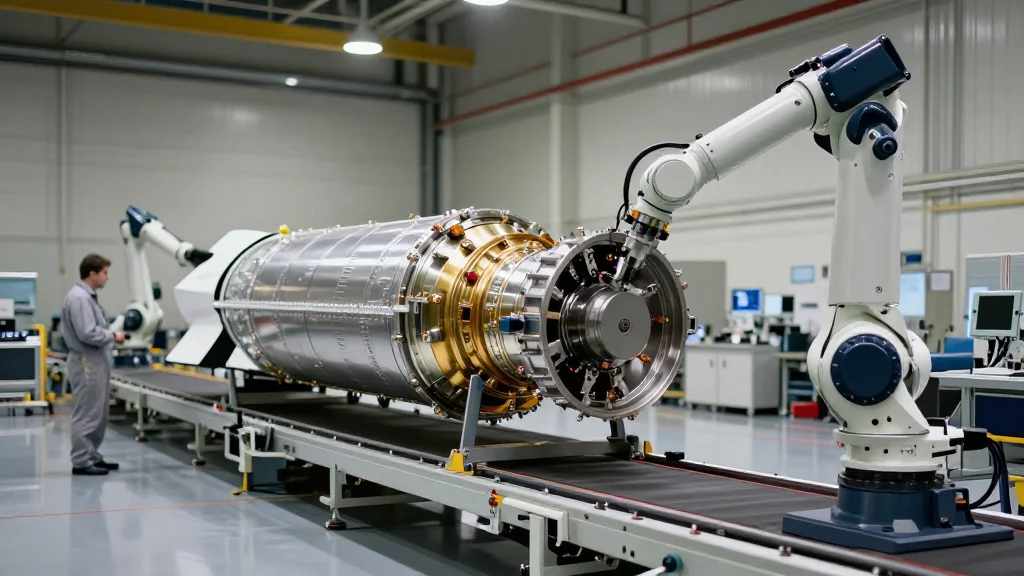
China Ramps Up Commercial Space Race with Lijian-2 “Super Factory”
Why It Matters
The factory accelerates China’s ability to offer frequent, low‑cost launches, reshaping global launch competition and attracting commercial satellite customers. It also underscores the strategic shift toward a commercially driven, state‑backed space industry.
Key Takeaways
- •Lijian-2 super factory completed in Shaoxing, boosting production capacity
- •Factory can assemble up to 12 rockets per month
- •Lijian-2 Y1 launch demonstrated rapid turnaround from factory to flight
- •China aims to capture 30% of global commercial launch market by 2030
- •State support and private investment accelerate technology transfer and cost reduction
Pulse Analysis
China’s new Lijian‑2 super factory represents a decisive leap from a historically mission‑oriented space program to a commercially focused launch ecosystem. Situated in the industrial hub of Shaoxing, the plant integrates advanced robotics, additive manufacturing, and a vertically integrated supply chain to churn out up to a dozen medium‑lift rockets each month. This scale‑up mirrors the production lines of SpaceX’s Starship and Blue Origin’s New Glenn, positioning Beijing to compete on both price and cadence for satellite constellations, Earth‑observation missions, and interplanetary probes.
The strategic timing aligns with a global surge in demand for launch services, driven by megaconstellations and data‑intensive applications. By lowering per‑kilogram costs and offering rapid launch windows, China hopes to carve out a sizable share of the market, which analysts estimate could exceed $15 billion annually by the early 2030s. Western providers may feel pressure to accelerate their own production efficiencies, while insurers and satellite operators will weigh geopolitical risk against cost advantages. The Lijian‑2’s liquid‑propellant architecture also promises higher payload flexibility compared with solid‑fuel alternatives, appealing to commercial customers seeking bespoke orbital insertions.
Looking ahead, the factory’s output could fuel a new wave of Chinese private space firms, fostering an ecosystem of launch service brokers, payload integrators, and downstream data analytics companies. Regulatory frameworks will likely evolve as the government balances national security concerns with commercial liberalization. If China meets its 30% market‑share target by 2030, the competitive dynamics of the global launch sector will be fundamentally altered, prompting a reassessment of supply‑chain resilience and partnership strategies across the aerospace industry.
China Ramps Up Commercial Space Race with Lijian-2 “Super Factory”
Comments
Want to join the conversation?
Loading comments...