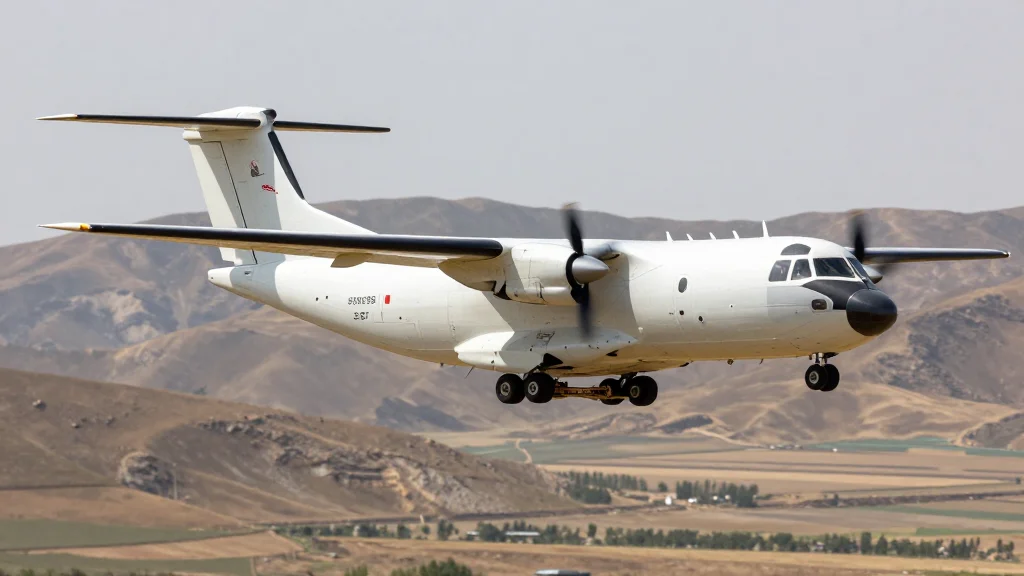
China's AVIC HH-200 Cargo Drone Completes First 1.5‑Ton Flight

Companies Mentioned
Why It Matters
The HH‑200 demonstrates that large‑scale, fully autonomous cargo aircraft can move from concept to flight, potentially redefining low‑altitude logistics. By offering a cost structure comparable to ground freight and the ability to operate from short, remote strips, the drone could unlock new supply‑chain routes in regions lacking robust airport infrastructure. For the aerospace industry, the flight signals a shift toward integrating AI‑driven autonomy into traditional freight operations, prompting competitors to accelerate their own unmanned cargo programs. Geopolitically, the drone aligns with China’s Belt and Road strategy, providing a technological lever to deepen trade ties with partner nations. If the HH‑200 proves reliable, it could become a visible symbol of Chinese aerospace capability, influencing procurement decisions in emerging markets and prompting regulatory bodies worldwide to confront the challenges of integrating unmanned cargo aircraft into civilian airspace.
Key Takeaways
- •AVIC Xi’an’s HH‑200 completed its maiden flight on April 15, carrying a 1.5‑ton payload.
- •The 55‑foot twin‑engine turboprop can cruise at 193 mph, range 1,466 miles, and operate from runways as short as 1,640 feet.
- •Manufacturer claims operating cost of 69 cents per metric ton‑kilometer (~$1 per short‑ton‑mile).
- •Design incorporates 20 % weight reduction via composites, targeting 50,000 flight‑hour service life.
- •U.S. cargo‑drone programs like Natilus N3.8T and Reliable Robotics remain in development, lagging behind China’s operational demo.
Pulse Analysis
China’s HH‑200 flight is more than a technical milestone; it is a strategic statement. By fielding a purpose‑built, high‑payload drone, AVIC sidesteps the incremental approach taken by U.S. firms that retrofit existing airframes or pursue blended‑wing concepts. The Chinese model leverages state‑backed funding and a clear policy agenda—namely, integrating unmanned freight into the Belt and Road network—to accelerate development timelines.
Historically, autonomous cargo concepts have struggled with certification and cost validation. The HH‑200’s claim of sub‑$1 per short‑ton‑mile operating cost, if substantiated, could tip the economics in favor of aerial freight for routes where ground transport is slow or terrain‑limited. This would force legacy regional turboprop manufacturers to reconsider their market positioning and potentially partner with AI‑flight providers to stay relevant.
Looking ahead, the key risk for AVIC is proving reliability at scale. The service‑life target of 50,000 flight hours is ambitious for an unmanned platform, and any high‑profile incident could stall regulatory acceptance worldwide. Conversely, successful commercial roll‑out could catalyze a new class of logistics providers, spur investment in autonomous air‑traffic management, and reshape global supply chains—especially in developing regions where infrastructure gaps are most acute. The HH‑200 thus sets the stage for a competitive race in autonomous cargo, with implications that extend far beyond the skies over Shaanxi.
China's AVIC HH-200 Cargo Drone Completes First 1.5‑Ton Flight
Comments
Want to join the conversation?
Loading comments...