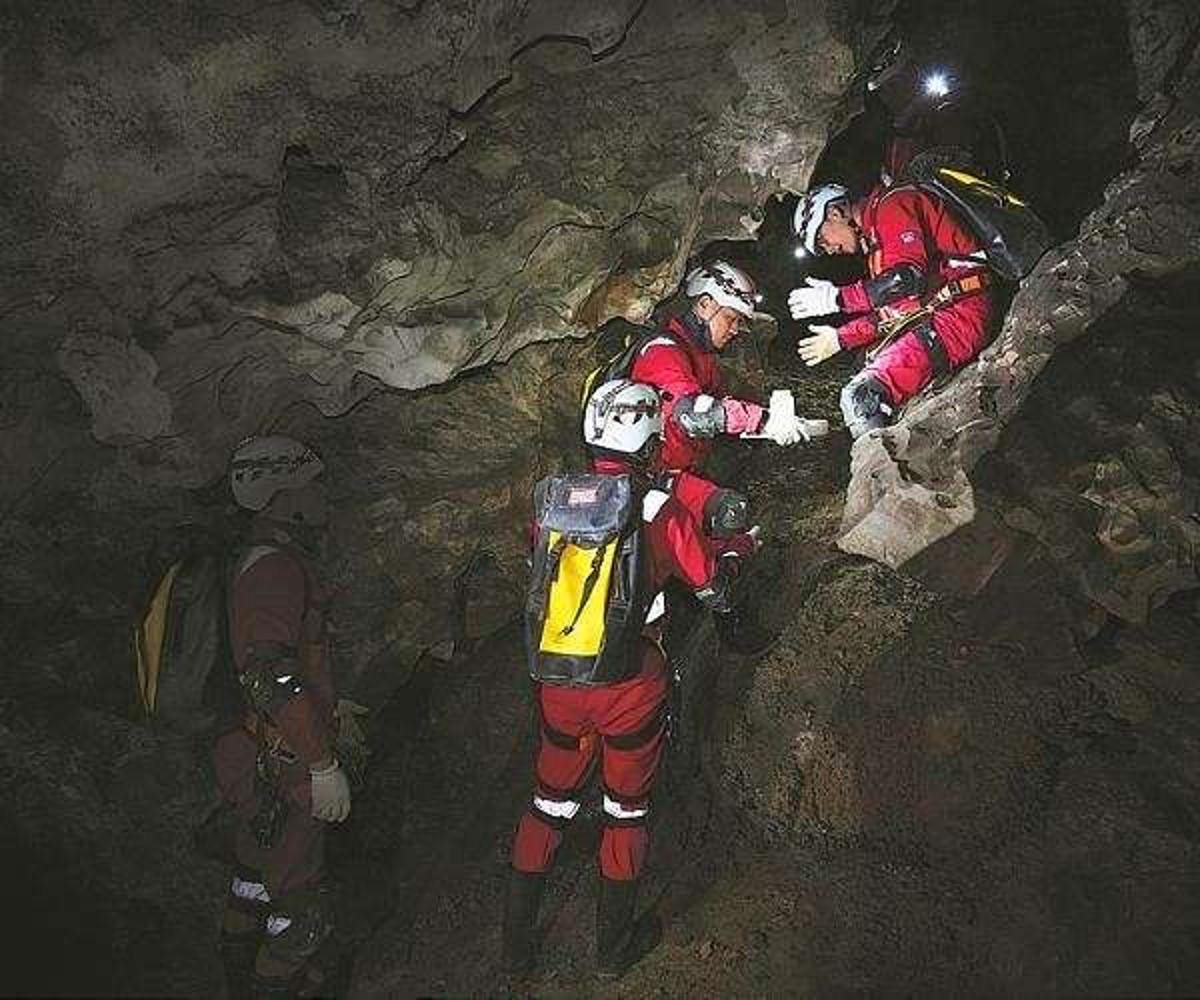
Chinese Astronauts Hone Extreme Cave Survival Skills
•March 5, 2026
0
Why It Matters
The training validates China’s capability to prepare crews for isolation and emergency scenarios, a prerequisite for long‑duration lunar and deep‑space flights.
Key Takeaways
- •28 astronauts completed month‑long cave survival program.
- •Training simulated isolation, darkness, extreme humidity, low temperature.
- •Focus on psychological resilience and emergency decision‑making.
- •Enhances readiness for lunar, deep‑space missions.
- •China will expand program to new astronaut recruits.
Pulse Analysis
Cave‑survival training has emerged as a high‑fidelity analog for the psychological and physical stresses of spaceflight. By immersing crews in near‑constant darkness, high humidity and sub‑zero temperatures, China replicates the sensory deprivation and confinement astronauts will face on lunar bases or deep‑space habitats. The program’s curriculum—spanning environmental monitoring, cave mapping and simulated ground‑control communications—provides hands‑on practice for mission‑critical tasks that cannot be fully rehearsed in a laboratory. This approach aligns with global trends where agencies use underground or underwater environments to test equipment reliability and crew coordination under duress.
Beyond the physical challenges, the Wulong exercise places a premium on mental resilience. Researchers note that prolonged isolation triggers stress responses similar to those observed during long‑duration missions, affecting decision‑making and team dynamics. By subjecting participants to sensory deprivation and uncertain risks, the training yields valuable data on coping mechanisms, enabling the development of targeted psychological support protocols. Such insights are especially pertinent as space agencies plan multi‑year missions to Mars, where crew mental health will be as decisive as propulsion technology.
Strategically, the successful execution of this program signals China’s intent to match, and potentially surpass, other spacefaring nations in comprehensive astronaut preparation. Integrating extreme‑environment survival skills—ranging from shelter construction to resource procurement—ensures crews can respond to off‑nominal scenarios, such as emergency landings in hostile terrain. As China accelerates its lunar gateway and crewed lunar lander projects, the cave‑training model will likely become a staple for new astronaut cohorts, reinforcing mission readiness and bolstering the nation’s competitive edge in the emerging era of deep‑space exploration.
Chinese astronauts hone extreme cave survival skills
0
Comments
Want to join the conversation?
Loading comments...