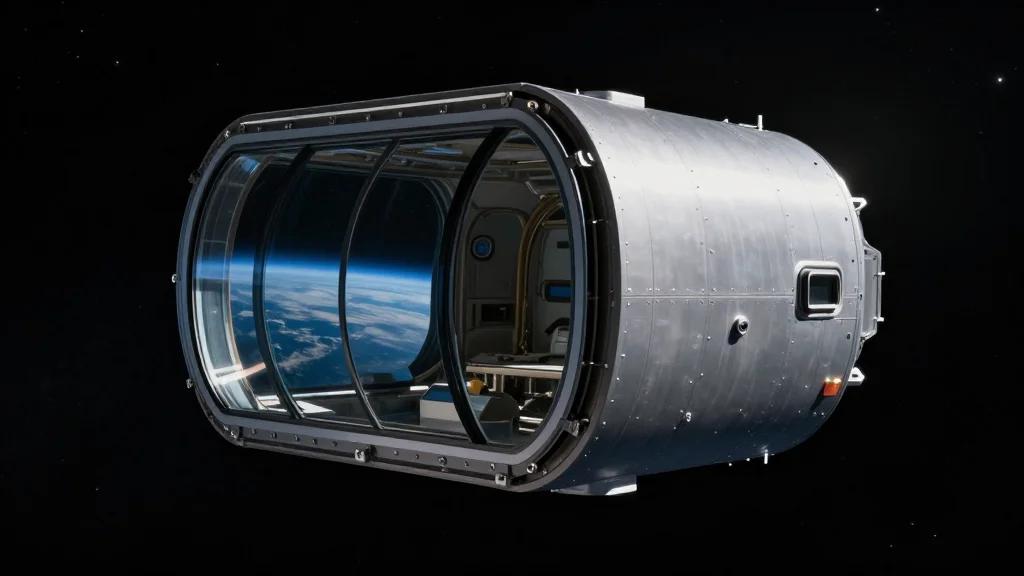
Commercial Space Station Developers Make Their Business Case to NASA
Why It Matters
The outcome will shape the future LEO economy, determining whether private stations become a sustainable revenue stream or remain dependent on government contracts. Investor confidence and the pace of commercial orbital infrastructure hinge on NASA’s policy direction.
Key Takeaways
- •Starlab’s payload space fully reserved three years before launch
- •Axiom plans fifth private‑astronaut mission to ISS in early 2027
- •Vast aims to launch Haven‑1 by Q1 2027 as a testbed
- •NASA budget allocates $1.5 billion for CLDs by 2031
- •Companies argue sovereign astronaut flights create a viable market
Pulse Analysis
The commercial space‑station sector is at a crossroads as NASA’s CLD (Commercial Low‑Earth‑Orbit Destinations) program undergoes a strategic review. Companies such as Starlab, Axiom and Vast have submitted extensive data packages—over 390 pages each—to demonstrate demand from sovereign astronaut programs, private‑astronaut missions, and dedicated payload customers. Their arguments pivot on concrete contracts: Starlab’s payloads are fully reserved years in advance, Axiom is gearing up for a fifth private‑astronaut flight in early 2027, and Vast is preparing Haven‑1 as a low‑cost testbed before scaling to Haven‑2. These milestones illustrate a growing pipeline of revenue that does not rely on speculative tourism or in‑space manufacturing.
NASA’s fiscal 2027 budget proposal signals a substantial shift, allocating $1.5 billion for CLD development through 2031 while pulling $1 billion from the winding down of ISS operations. This reallocation underscores the agency’s intent to nurture a commercial LEO market, yet the agency’s RFI reflects lingering skepticism about market breadth beyond government‑backed flights. The industry’s response emphasizes that the core market already exists—government and agency astronauts needing dedicated habitats—and that a modest share of NASA’s CLD funding (40‑60%) combined with a single six‑month mission per year could render stations like Vast’s profitable without ancillary revenue streams.
The broader implication for investors and policymakers is clear: the success of commercial stations hinges on NASA’s willingness to replicate the COTS model that catalyzed private cargo and crew services. If NASA commits consistent funding and contracts, the sector can achieve economies of scale, lower launch costs, and a diversified customer base that includes emerging spacefaring nations. Conversely, prolonged uncertainty could stall capital inflows and delay the transition to a vibrant orbital economy. Stakeholders are therefore watching the RFI outcome closely, as it will set the tone for the next decade of LEO commercialization.
Commercial space station developers make their business case to NASA
Comments
Want to join the conversation?
Loading comments...