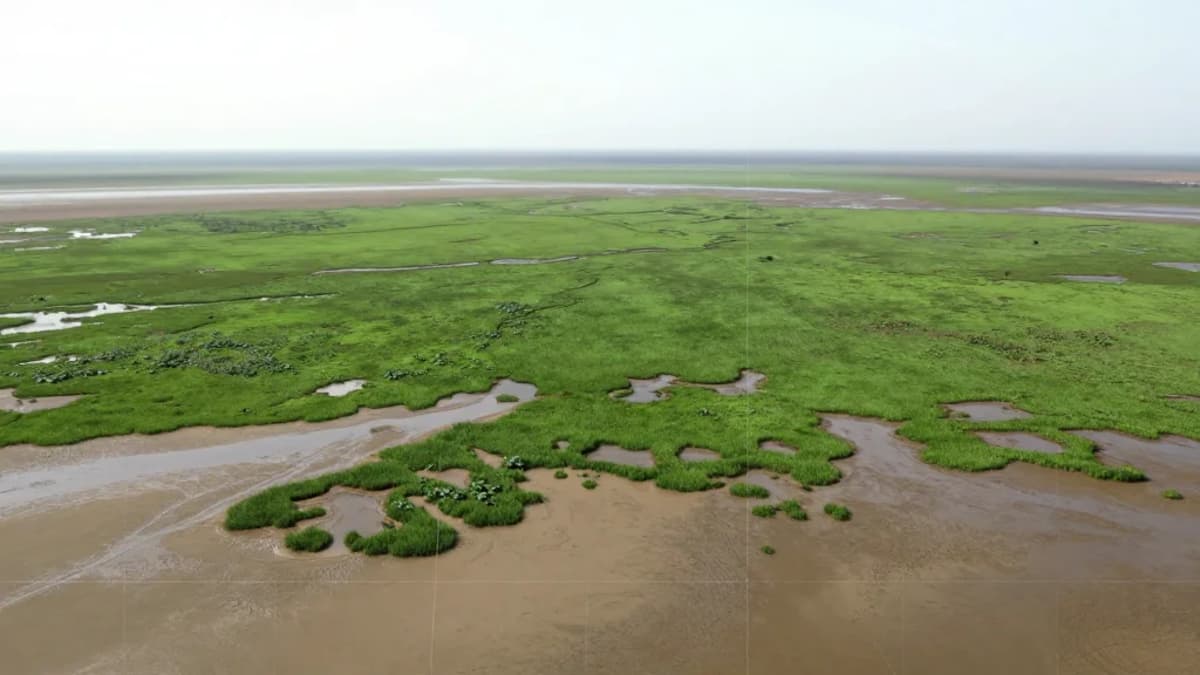
The wetland’s collapse would erode critical biodiversity corridors and diminish natural flood mitigation across Europe and Africa, underscoring urgent water‑resource governance. The satellite‑ML approach offers policymakers a real‑time, cost‑effective means to protect similar ecosystems worldwide.
Remote‑sensing technology has transformed how scientists track fragile ecosystems. ESA’s Sentinel‑2 constellation delivers high‑resolution, multispectral imagery that, when paired with machine‑learning algorithms, can differentiate water, vegetation and dry soil with unprecedented accuracy. This capability enables continuous, large‑scale monitoring of wetlands—critical carbon sinks and biodiversity hotspots—without the logistical constraints of field surveys, providing decision‑makers with timely data to assess environmental change.
Doñana’s decline illustrates the convergence of climate stressors and human water demand. Warmer temperatures and a decade‑long drop in precipitation have reduced inflow, while intensive irrigation and illegal wells deplete the underlying aquifer that sustains the marsh. As surface water recedes, the habitat that supports millions of migratory birds and acts as a natural buffer against floods and droughts is compromised. The study’s projections of a possible tipping point within a human lifetime highlight the urgency of integrated climate‑water policies.
The broader implication is a blueprint for proactive wetland stewardship. By automating water‑extent detection, the Sentinel‑2/ML framework can be deployed across Europe’s coastal and inland wetlands, informing groundwater regulation, restoration projects, and climate‑adaptation strategies. Policymakers can leverage these insights to enforce well closures, promote sustainable agriculture, and allocate resources for habitat rehabilitation, thereby preserving ecosystem services that protect communities and economies from extreme weather events.
By Samantha Mathewson · published 2 hours ago
One of Europe's most valuable wetlands is shrinking — and satellite views suggest it could disappear completely within a single human lifetime.
Doñana National Park is a vast wetland system in southwestern Spain that supports one of the continent's richest ecosystems and plays a critical role in European and African bird migration and breeding. Using high‑resolution data from the European Space Agency’s (ESA) Sentinel‑2 satellites, researchers found that the park’s marshland is steadily losing surface water — a trend that, if left unchecked, could leave the marsh effectively dry in about 60 years, according to calculations from a recent water‑resource monitoring study.
In the Sentinel‑2 orbital view, Doñana’s wetlands appear as shifting patches of dark blue and violet, signatures of shallow water spread across the park’s floodplain. When scientists examined how those patterns have changed over time, a clear decline emerged. Since 2005 the marsh has experienced a marked reduction in wet surface area, water volume and average depth, with losses accelerating after 2010 as regional temperatures rose and rainfall declined.
Image: Artist’s illustration of one of Europe’s Sentinel‑2 Earth‑observing satellites in orbit (ESA/ATG medialab).
Image: Views of Doñana National Park in Spain by Europe’s Sentinel‑2 satellites reveal the wetlands’ dramatic decline over time. Wet soil appears in dark blue and surface water is highlighted in magenta in these two images, captured in January 2005 (left) and January 2024 (right). The difference clearly shows how once‑extensive marshes are shrinking and drying (University of Seville).
The new study, led by scientists at the University of Seville, combined satellite observations with machine‑learning techniques to distinguish water from vegetation and dry soil. That approach allowed researchers not only to reconstruct how Doñana’s marsh has evolved over time but also to project its future under different climate scenarios.
In the most likely outcome, continued warming and drying would push the marsh past a tipping point within a few decades. The researchers estimate this could happen in as few as 45 years or as much as 175 years, depending on future temperature and precipitation trends and whether humans intervene.
That said, climate change is only part of the story. Doñana also depends heavily on groundwater, which has been increasingly depleted by intensive agriculture, ineffective wastewater treatment and reuse, and illegal wells in surrounding areas. As aquifer levels drop, less water reaches the marsh, compounding the effects of drought and heat. Even wetter years that temporarily flood the landscape no longer appear sufficient to reverse the long‑term downward trend seen from space.
The implications extend far beyond southern Spain. Wetlands like Doñana act as natural buffers against climate extremes, storing water during wet periods and releasing it slowly during dry ones. They also serve as biological hubs, supporting species that migrate across continents. Losing such a system would ripple through ecosystems far beyond the park’s boundaries.
“This technology not only identifies areas affected by drought or falling groundwater levels but also supports decision‑making for ecosystem conservation,” the study’s statement reads. “As a scalable and automated approach, the algorithm can be applied to other natural environments facing similar challenges, thus contributing to more efficient and sustainable water management.”
Researchers stress that Doñana’s fate is not sealed. Stronger groundwater regulation, the closure of illegal wells and more sustainable water management could slow or even partially reverse the marsh’s decline. However, the satellite data offers an unambiguous warning: even Europe’s most iconic wetlands are fragile, and their disappearance is already underway.
The new findings were published Dec. 2 in the journal Geographies.
Image: Samantha Mathewson
Samantha Mathewson – Contributing Writer
Samantha Mathewson joined Space.com as an intern in the summer of 2016. She received a B.A. in Journalism and Environmental Science at the University of New Haven, Connecticut. Previously, her work has been published in Nature World News. When not writing or reading about science, Samantha enjoys traveling to new places and taking photos. You can follow her on Twitter @Sam_Ashley13.
Comments
Want to join the conversation?
Loading comments...