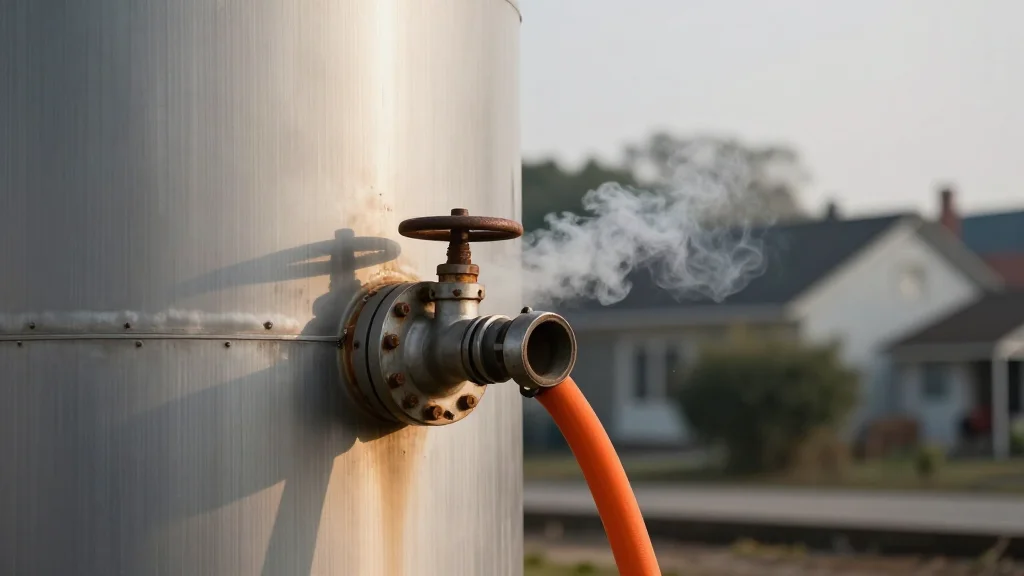
Crack Found in GKN Aerospace Chemical Tank Shifts Emergency Response for 50,000 Evacuees

Why It Matters
The incident spotlights the vulnerability of aerospace manufacturing facilities that store large volumes of volatile chemicals near residential zones. A failure at GKN Aerospace could have halted production lines for major aircraft programs, exacerbating existing supply‑chain constraints and inflating costs for airlines and defense contractors. Moreover, the emergency underscores the need for stricter safety protocols, real‑time monitoring, and clearer federal‑state coordination when high‑risk industrial assets are located in densely populated areas. Beyond immediate safety concerns, the crisis may trigger regulatory scrutiny of chemical storage standards across the aerospace sector, prompting firms to invest in redundant safety systems, remote monitoring, and alternative, less hazardous materials. The legal actions by displaced residents could also set precedents for liability and compensation in future industrial accidents, influencing how aerospace companies assess risk and engage with surrounding communities.
Key Takeaways
- •Potential crack discovered in 7,000‑gallon MMA tank at GKN Aerospace plant in Garden Grove.
- •Approximately 50,000 Orange County residents remain under mandatory evacuation orders.
- •Governor Gavin Newsom declared a state of emergency; federal assistance request submitted.
- •EPA Administrator Lee Zeldin warned of a likely low‑volume release but no toxic air readings yet.
- •Class‑action lawsuit filed against GKN Aerospace, citing property‑value loss and safety concerns.
Pulse Analysis
The Garden Grove incident is a textbook case of how a single point‑of‑failure in a high‑tech supply chain can cascade into a regional crisis. GKN Aerospace, a Tier‑1 supplier, relies on continuous production to meet tight delivery windows for OEMs such as Boeing and Airbus. A shutdown of its Garden Grove facility—even temporarily—forces downstream manufacturers to scramble for alternate sources, potentially inflating lead times and costs at a time when the industry is already grappling with labor shortages and semiconductor constraints.
Historically, aerospace firms have kept hazardous chemicals on‑site to streamline composite‑part production, but the proximity of such storage to residential neighborhoods is increasingly untenable. The crack discovery, while a technical reprieve, highlights a systemic oversight: the lack of redundant safety mechanisms like secondary containment or remote pressure‑relief systems. In the wake of this event, investors are likely to scrutinize other aerospace plants for similar risks, which could affect capital allocation and insurance premiums across the sector.
Regulatory response will be pivotal. If the EPA and California agencies conclude that existing storage standards were insufficient, we may see tighter permitting processes, mandatory real‑time temperature and pressure telemetry, and higher compliance costs. Companies that proactively adopt safer chemistries or invest in advanced monitoring could gain a competitive edge, positioning themselves as low‑risk partners for defense contracts that demand stringent safety assurances. For now, the immediate priority remains public safety, but the longer‑term narrative will be about reshaping risk management practices in an industry where a single tank failure can reverberate through global supply chains.
Crack Found in GKN Aerospace Chemical Tank Shifts Emergency Response for 50,000 Evacuees
Comments
Want to join the conversation?
Loading comments...