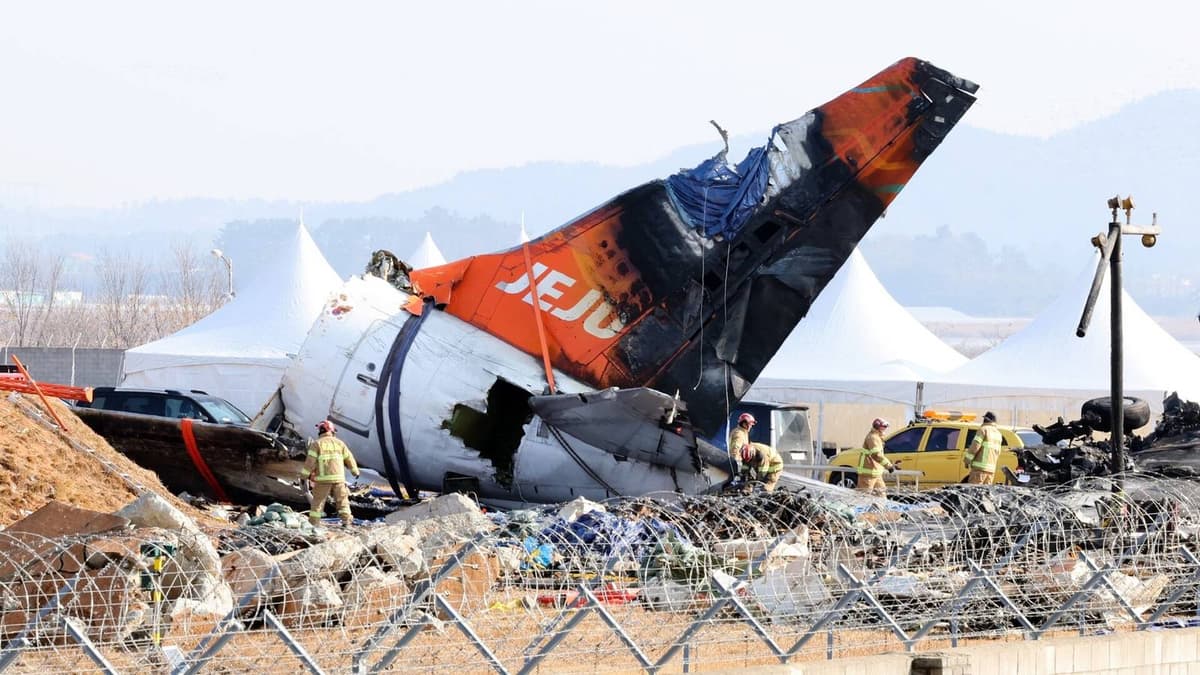
Deadly Design Decision Responsible For Jeju Air Disaster That Killed 179
•March 10, 2026
0
Why It Matters
The incident shows how cost‑driven infrastructure choices can magnify the lethality of otherwise survivable emergencies, prompting global scrutiny of runway safety standards. It forces airlines and regulators to broaden risk assessments beyond aircraft performance to include airport design.
Key Takeaways
- •Concrete runway mound added to cut construction costs.
- •Mound caused fatal impact during Jeju Air belly landing.
- •Simulations show crash would have been survivable without barrier.
- •Similar unsafe runway-end structures exist at 14 locations.
- •South Korea will replace barrier with safer design.
Pulse Analysis
The Jeju Air Flight 2216 tragedy underscores a rarely examined factor in aviation accidents: the physical environment surrounding the runway. While the immediate cause was a bird‑strike that forced a gear‑up landing, the concrete‑reinforced localizer mound—installed to reduce earthwork expenses—acted as a lethal obstacle. Such cost‑saving design decisions are not unique to Muan Airport; they reflect a broader pattern where infrastructure budgets outweigh safety margins, especially in rapidly expanding regional airports.
A structural‑engineering simulation commissioned by South Korean auditors revealed that, absent the mound, the aircraft’s belly‑landing would likely have been survivable, with the plane coming to a stop on the paved surface. This finding aligns with International Civil Aviation Organization (ICAO) recommendations for runway‑end safety areas (RESA) that call for clear, energy‑absorbing zones free of rigid structures. The presence of a concrete barrier violates these guidelines, raising questions about compliance monitoring and the adequacy of existing safety audits across the nation’s airport network.
The audit’s revelation of 14 similar non‑compliant structures at seven other airports has triggered a swift policy response. South Korea has announced a nationwide program to replace or redesign these barriers, emphasizing breakaway or frangible designs that mitigate impact forces. For airlines, the incident reinforces the need to factor airport infrastructure risk into operational planning and crew training. Globally, regulators may revisit cost‑benefit analyses for runway safety installations, ensuring that financial savings do not compromise the fundamental goal of preserving lives.
Deadly Design Decision Responsible For Jeju Air Disaster That Killed 179
0
Comments
Want to join the conversation?
Loading comments...