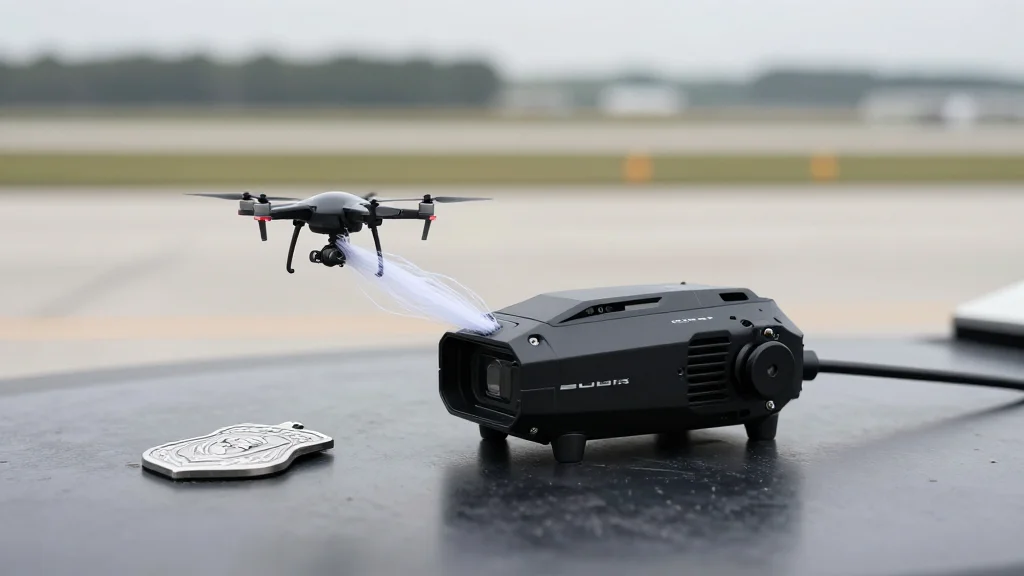
DHS S&T Highlights Counter-Drone Purchasing Tool to Support C-UAS Program Executive Office
Why It Matters
The tool gives agencies a data‑driven framework to avoid costly mismatches between technology and operational needs, accelerating the deployment of effective counter‑drone defenses as drone traffic surges. This directly supports national security and public‑safety objectives while maximizing federally allocated grant dollars.
Key Takeaways
- •Free DHS tool standardizes counter‑drone procurement for first responders
- •Scorecards match C‑UAS capabilities to mission terrain and budget
- •Aligns with FEMA’s $250 million FY‑2026 grant for host states
- •NUSTL offers training, technology guide, and documentation resources
Pulse Analysis
Drone usage in the United States has moved from hobbyist circles to critical infrastructure, commercial logistics and large‑scale public events, prompting a surge in security concerns. In response, the Department of Homeland Security created a dedicated Program Executive Office for Unmanned Aircraft Systems and Counter‑UAS, signaling a strategic shift toward coordinated, federal‑level oversight of both friendly and hostile UAV operations. This policy backdrop underscores why a standardized procurement tool is essential: without clear criteria, agencies risk acquiring mismatched equipment that fails under real‑world conditions, leaving gaps in airspace protection.
The C‑UAS Purchasing Tool offers a modular scorecard system that quantifies vendor offerings across detection range, tracking fidelity, identification accuracy and mitigation methods. Users input mission variables—such as urban terrain, budget constraints and local radio‑frequency interference—to generate a ranked list of solutions that best fit their operational profile. By aligning the tool’s rollout with FEMA’s FY‑2026 $250 million grant for the National Capital Region and FIFA World Cup host states, DHS ensures that federal dollars are directed toward technologies that demonstrably meet mission criteria, reducing waste and expediting acquisition cycles for frontline responders.
Beyond immediate procurement benefits, the tool sets a precedent for industry standardization. Manufacturers now have a clear benchmark to design products that satisfy the DHS‑defined metrics, potentially accelerating innovation in sensor fusion, AI‑driven threat classification and non‑kinetic mitigation. Coupled with DHS‑provided training modules, technology guides and documentation templates, the ecosystem fosters a more resilient public‑safety network capable of adapting to evolving drone threats. As municipalities and state agencies adopt the tool, the broader market is likely to see a consolidation around interoperable, mission‑focused C‑UAS platforms, driving down costs and enhancing overall airspace security.
DHS S&T Highlights Counter-Drone Purchasing Tool to Support C-UAS Program Executive Office
Comments
Want to join the conversation?
Loading comments...