Aerospace News and Headlines
  • All Technology
  • AI
  • Autonomy
  • B2B Growth
  • Big Data
  • BioTech
  • ClimateTech
  • Consumer Tech
  • Crypto
  • Cybersecurity
  • DevOps
  • Digital Marketing
  • Ecommerce
  • EdTech
  • Enterprise
  • FinTech
  • GovTech
  • Hardware
  • HealthTech
  • HRTech
  • LegalTech
  • Nanotech
  • PropTech
  • Quantum
  • Robotics
  • SaaS
  • SpaceTech
AllNewsDealsSocialBlogsVideosPodcastsDigests

Aerospace Pulse

EMAIL DIGESTS

Daily

Every morning

Weekly

Sunday recap

NewsDealsSocialBlogsVideosPodcasts
AerospaceNewsDriving Innovation at Airbus Helicopters
Driving Innovation at Airbus Helicopters
AerospaceAIRobotics

Driving Innovation at Airbus Helicopters

•February 10, 2026
0
Airbus – Newsroom
Airbus – Newsroom•Feb 10, 2026

Why It Matters

The strategy positions Airbus Helicopters at the forefront of military and civil rotorcraft evolution, delivering safer, greener, and more versatile aircraft for demanding operational environments.

Key Takeaways

  • •Automation cuts crew workload, enhances flight safety
  • •Crewed‑uncrewed teaming enables collaborative mission concepts
  • •Hybrid propulsion targets fuel savings and noise reduction
  • •Predictive maintenance leverages data for higher aircraft availability
  • •MUSHER demo proves interoperability with drones across platforms

Pulse Analysis

Airbus Helicopters’ innovation agenda is built on a clear three‑horizon framework that aligns technology development with market demand. In the short term, the company is deploying advanced flight‑control laws and next‑generation avionics to automate routine tasks, directly reducing pilot fatigue and improving safety margins. Medium‑term initiatives introduce disruptive capabilities to existing platforms such as the NH90, leveraging research projects that push the envelope of performance and mission flexibility. This structured approach ensures that each technological leap feeds into the next, creating a continuous pipeline of value for both military and commercial customers.

A cornerstone of the long‑term vision is crewed‑uncrewed teaming, a concept that transforms helicopters from isolated assets into nodes within a collaborative aerial network. The MUSHER programme, which integrated two helicopters with two drones, demonstrated seamless interoperability across different airframes and highlighted potential dual‑use scenarios, from NATO defence missions to forest‑fire suppression. By employing Lidar‑based environment sensing, Airbus aims to automate complex landings on rough terrain, while real‑time data sharing between crewed and uncrewed systems enhances situational awareness and threat detection. This synergy not only expands operational envelopes but also sets a new standard for autonomous rotorcraft operations.

Decarbonisation and predictive maintenance round out the strategic thrusts, addressing both sustainability and lifecycle cost pressures. Hybrid propulsion concepts, tested on the PioneerLab platform, promise significant fuel savings and reduced acoustic signatures, benefits that resonate across civilian air‑mobility and defense sectors. Simultaneously, data‑driven health‑monitoring systems enable early fault detection, boosting aircraft availability and lowering downtime. The quartet of test benches—Flightlab, DisruptiveLab, PioneerLab and RACER—provides rapid prototyping capabilities, allowing Airbus Helicopters to iterate quickly and bring cutting‑edge solutions to market. Collectively, these initiatives reinforce the company’s leadership in rotorcraft innovation and position it to capture emerging opportunities in a rapidly evolving aerospace landscape.

Driving innovation at Airbus Helicopters

Denis Descheemaeker, Head of Research and Innovation at Airbus Helicopters · Fri 01 Sep 2026 · 10:45

Airbus Helicopters maintains its technological leadership with products offering increased performance, enhanced mission capabilities, and ever‑higher safety standards.

“Our innovation roadmaps focus on developing the autonomy and interactive capacity of our aircraft, as well as improving performance, particularly in terms of energy efficiency. This enables our military customers to increase the capabilities of their helicopters in ever more challenging environments,” emphasizes Denis Descheemaeker, Head of Research and Innovation. “In today’s operational environment, helicopters are increasingly being integrated with interconnected systems. That’s why we are focusing our efforts primarily on technologies that enable collaboration between crewed and uncrewed systems.”

A comprehensive strategy

Airbus Helicopters’ innovation strategy covers short, medium, and long‑term objectives.

  • Short‑term: Promote automation of helicopters to reduce crew workload and increase flight safety. This includes new flight‑control laws and next‑generation avionics.

  • Medium‑term: Introduce disruptive features to aircraft such as the NH90, supported by more impactful research projects.

  • Long‑term: Develop innovative designs for next‑generation systems, with a major focus on crewed‑uncrewed teaming.

International teamwork

To showcase this capability, Airbus Helicopters participated in the international MUSHER programme last year, testing the integration of two helicopters and two drones of different categories.

“This was a joint project, showing that we can work with partners and even competitors to defend Europe and NATO,” explains Descheemaeker.

MUSHER is just the first step. Increased interaction with drones will eventually lead to a truly collaborative bubble involving players in the air and on the ground. Such teaming could also have dual applications in the civil sector, for example drone‑helicopter tandems for fighting forest fires.

“The quest for autonomy begins with understanding the environment surrounding the helicopter, with the initial goal of automating landings, including those on rough terrain, using Lidar,” notes Descheemaeker.

In the military sector, environmental monitoring could be used to detect moving objects, protecting helicopters from hostile drones. Automation also improves cruise control, providing better navigation for the crew, which enhances both flight safety and fuel economy.

Other focus areas

  • Predictive maintenance and the use of new materials.

  • High‑speed flight research, exemplified by the ENGRT (European Next Generation Rotorcraft Technology) project and the Racer demonstrator.

  • Decarbonisation, especially engine hybridisation:

    • Increase safety with electric assistance in case of failure.

    • Reduce noise during certain flight phases, offering clear dual‑use benefits for civil and military operations.

Airbus Helicopters’ four flying test benches for rapid research and development

  • Flightlab: a modified H130 used to test new equipment in flight quickly.

  • DisruptiveLab: a lightweight aircraft optimised for research into new engines.

  • PioneerLab: an H145 employed for research into advanced hybridisation and environmental awareness.

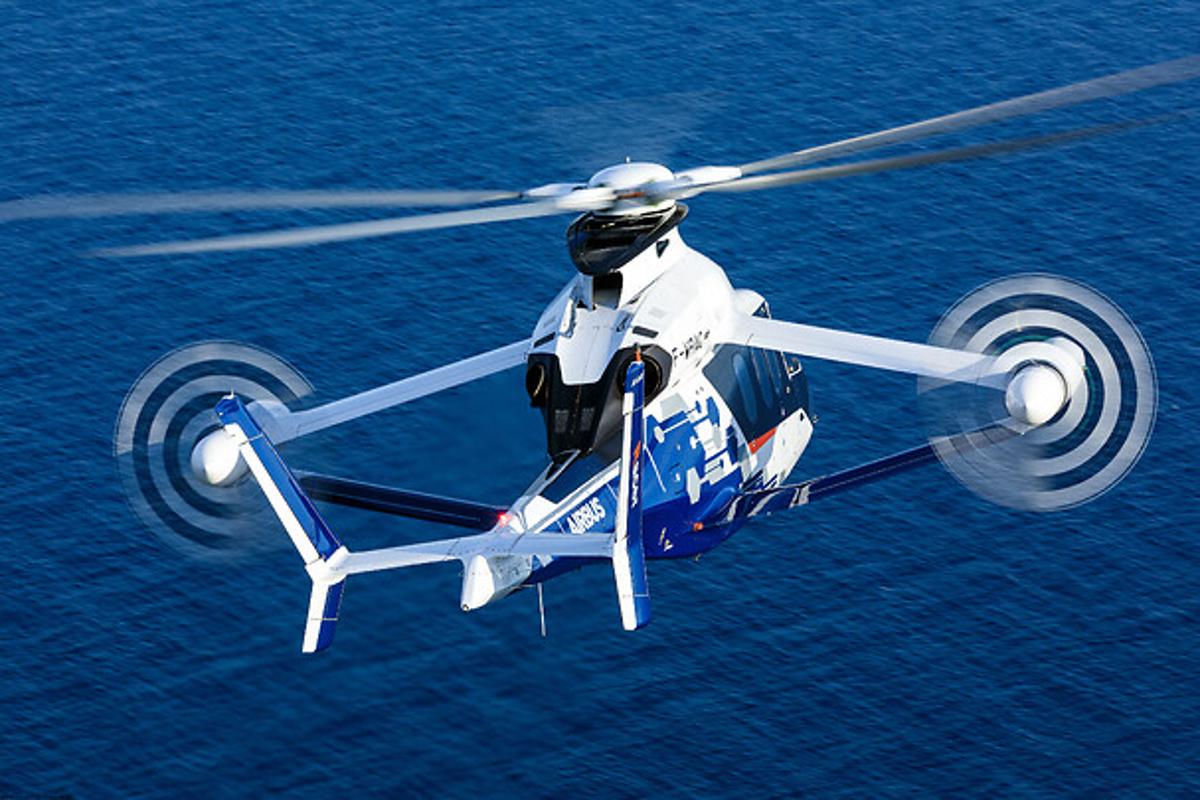
  • RACER: an aircraft designed to test a new helicopter configuration with wings and propellers capable of setting speed records.


Keywords: Helicopters, Innovation, PioneerLab, Racer, Airbus Flightlab, UAS, Crewed‑uncrewed teaming, NH90, Military Helicopters

Read Original Article
0

Comments

Want to join the conversation?

Loading comments...