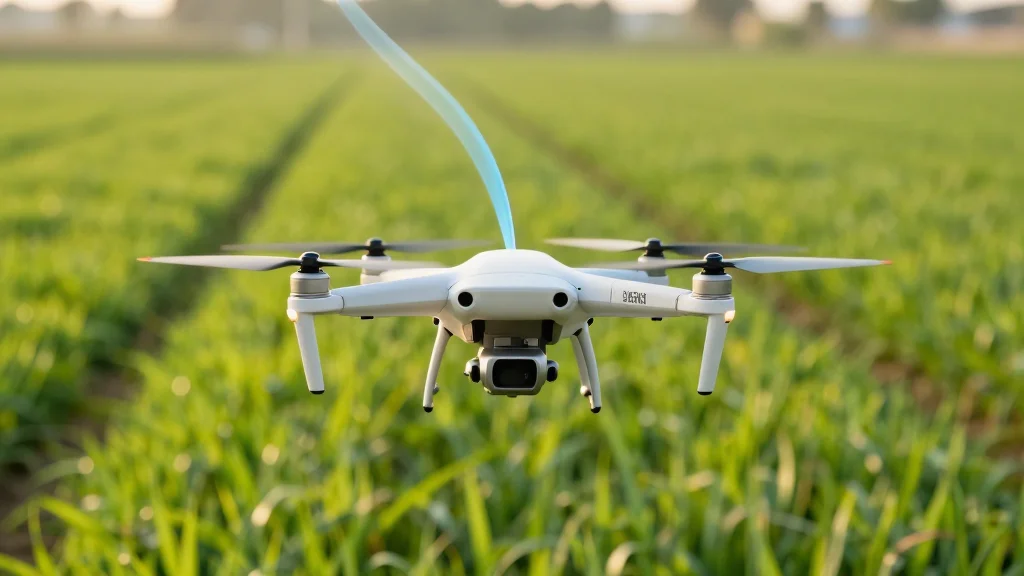
Drone Innovation Drives Precision Agriculture, Infrastructure Safety and Emergency Response

Why It Matters
The acceleration of drone adoption reshapes the aerospace supply chain, shifting demand from large, fuel‑intensive aircraft toward lightweight, software‑centric platforms. This transition promises lower carbon emissions and opens new market opportunities for manufacturers of UAV airframes, sensors and data‑analytics services. For farmers, utilities and first responders, the technology translates into tangible cost savings, enhanced safety and more resilient operations, directly influencing productivity and public welfare. Moreover, the broader diffusion of drones raises regulatory and air‑space management challenges. As UAV traffic grows in low‑altitude corridors, policymakers must balance innovation with safety, prompting updates to certification standards and the development of unmanned traffic management (UTM) systems. The industry’s response will shape the competitive landscape for aerospace firms seeking to dominate the emerging UAS ecosystem.
Key Takeaways
- •Professional drone systems cost far below that of manned aircraft, reducing capital outlay for farms and utilities.
- •Spot‑spraying drones cut pesticide use by applying chemicals only where needed, lowering environmental impact.
- •High‑resolution and thermal imaging enable early detection of infrastructure defects, preventing costly outages.
- •Lidar‑equipped drones complete topographic surveys in hours, accelerating construction planning and monitoring.
- •Rapid UAV deployment in disaster zones provides real‑time situational awareness, improving emergency response.
Pulse Analysis
The Jetstream report arrives at a tipping point for the UAV market. Historically, aerospace revenue has been dominated by large commercial and defense platforms; now, the low‑cost, high‑value segment of commercial drones is carving out a sizable slice of that pie. Companies that once focused solely on manned aircraft are either acquiring drone specialists or launching internal UAV divisions to capture this growth. The competitive dynamics are shifting from pure hardware manufacturers to integrated solution providers that bundle sensors, AI analytics and cloud services.
From a historical perspective, the transition mirrors the early days of satellite remote sensing, where initial high‑cost systems gave way to constellations of small, affordable platforms delivering richer data. Drones are following a similar trajectory, moving from hobbyist novelty to mission‑critical infrastructure. This evolution is likely to spur consolidation, as larger aerospace firms seek to bundle their legacy certification expertise with the agility of start‑up drone innovators.
Looking ahead, the next frontier will be autonomous swarm operations and real‑time data pipelines powered by edge AI. As regulatory frameworks mature—particularly around beyond‑visual‑line‑of‑sight (BVLOS) flights—operators will be able to scale missions across vast agricultural regions or utility networks without human pilots. The firms that invest early in UTM integration, secure air‑space rights and develop robust cybersecurity measures will command the most valuable market positions, while laggards risk being sidelined as customers gravitate toward turnkey, data‑centric UAV solutions.
Drone Innovation Drives Precision Agriculture, Infrastructure Safety and Emergency Response
Comments
Want to join the conversation?
Loading comments...