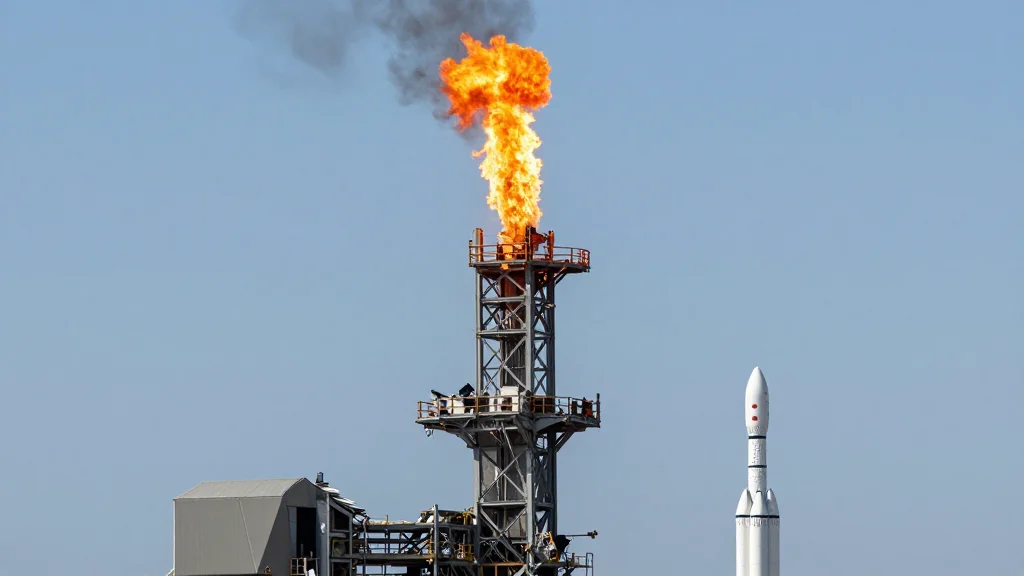
ESA Dismantles Russian Soyuz‑ST Tower at Kourou, Clearing Path for Maia Rocket


Why It Matters
The removal of the Soyuz‑ST tower not only ends a long‑standing ESA‑Roscosmos collaboration but also reconfigures the strategic balance of launch capabilities in the equatorial region. By reallocating the majority of the existing infrastructure to Maiaspace, Europe can accelerate the deployment of a domestically developed small‑satellite launcher, reducing reliance on external providers and strengthening its position in the rapidly expanding low‑Earth‑orbit market. For Russia, the loss of Kourou eliminates a critical launch site that offered a natural velocity advantage, potentially diminishing its competitiveness in commercial payload services. The shift underscores how geopolitical tensions can directly reshape the aerospace supply chain, prompting agencies and companies to reassess partnerships, asset utilization, and long‑term market strategies.
Key Takeaways
- •ESA detonated a directed charge to destroy the 52‑meter Soyuz‑ST service tower at Kourou on April 23.
- •The joint ESA‑Roscosmos "Soyuz at Kourou" program delivered 26 successful launches over 15 years before ending in 2022.
- •Up to 80 % of the remaining launch‑pad infrastructure will be transferred to Maiaspace, an Arianespace subsidiary.
- •Maiaspace’s Maia rocket, slated for its first flight in 2027, can lift 1.5 tonnes to sun‑synchronous orbit in expendable mode.
- •Maiaspace has already signed contracts with Exotrail (2025) and Eutelsat (2026) for satellite launches.
Pulse Analysis
The demolition of the Soyuz‑ST tower is a clear illustration of how geopolitical forces can accelerate the repurposing of legacy aerospace assets. Europe’s decision to hand over the bulk of the Kourou infrastructure to a private venture reflects a broader shift toward commercialisation of state‑owned facilities, a trend that mirrors the U.S. model of NASA partnering with private launch providers. By preserving 80 % of the existing pad, ESA minimizes capital outlay while granting Maiaspace a ready‑made launch environment, potentially shortening Maia’s path to operational status.
From a market perspective, the move could intensify competition in the small‑satellite segment, where launch cost per kilogram remains a decisive factor. Arianespace’s backing of Maiaspace gives the newcomer a credible supply chain and access to established launch‑site logistics, positioning Maia to challenge incumbents like Rocket Lab and even SpaceX’s rideshare offerings. However, the success of this transition hinges on technical integration—particularly adapting the pad’s fueling systems for methane‑oxygen propulsion, a departure from the kerosene‑based infrastructure that supported Soyuz.
For Roscosmos, the loss of Kourou is a strategic setback that may force a re‑evaluation of its commercial launch strategy. Without an equatorial site, Russia must rely on Baikonur, which adds logistical complexity and reduces the performance envelope for payloads destined for low‑inclination orbits. The broader implication is a further bifurcation of the global launch market along political lines, with Western entities consolidating capabilities in Europe and the United States, while Russian launch services become increasingly isolated. The upcoming hand‑over and Maia’s 2027 debut will serve as a litmus test for Europe’s ability to convert geopolitical disruption into a competitive advantage.
ESA Dismantles Russian Soyuz‑ST Tower at Kourou, Clearing Path for Maia Rocket
Comments
Want to join the conversation?
Loading comments...