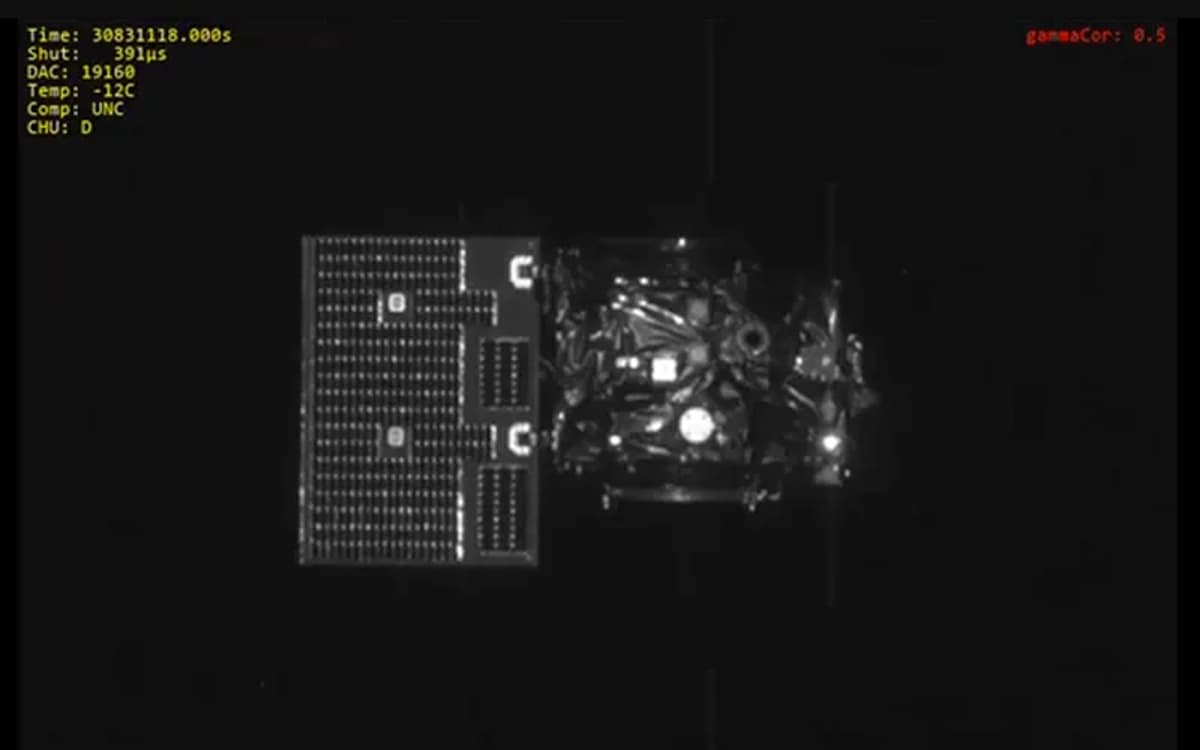
ESA Has Lost Contact With One of Its PROBA-3 Spacecraft
Key Takeaways
- •Contact lost with PROBA‑3 Coronagraph satellite.
- •Anomaly caused attitude loss, battery depletion, survival mode.
- •Mission cost €200 million, two‑year nominal lifespan.
- •ESA evaluating use of Occulter satellite for rescue.
- •Loss threatens artificial solar eclipse observations.
Pulse Analysis
PROBA‑3 represents a milestone in European space engineering, pairing two microsatellites to perform precision formation flying for solar research. The Coronagraph and Occulter work together to block the Sun’s bright disk, enabling the Coronagraph’s instrument to capture faint coronal emissions. Launched aboard an ISRO PSLV‑XL in December 2024, the €200 million program was slated for a two‑year science campaign, promising unprecedented data for heliophysicists and advancing ESA’s small‑satellite capabilities.
The February anomaly that knocked the Coronagraph out of attitude illustrates the fragility of tightly coupled satellite constellations. With its solar panels misaligned, the craft’s batteries drained rapidly, triggering an automatic survival mode that suspends communications. ESA’s current focus is diagnosing the root cause—whether a software glitch, hardware failure, or external disturbance—and determining if the healthy Occulter can safely approach to relay telemetry or provide a tethered rescue. Such contingency measures are unprecedented for formation‑flying missions and could set new operational standards.
Beyond the immediate mission risk, the incident reverberates across the broader space sector. PROBA‑3’s loss underscores the importance of robust fault‑tolerance in multi‑satellite architectures, influencing future ESA and commercial projects that aim to replicate formation‑flying techniques for Earth observation or deep‑space interferometry. The scientific community also faces a gap in coronal data, potentially delaying insights into solar wind origins and space‑weather forecasting. How ESA resolves this challenge will shape confidence in small‑satellite constellations and inform investment decisions in next‑generation solar missions.
ESA Has Lost Contact With One of Its PROBA-3 Spacecraft
Comments
Want to join the conversation?