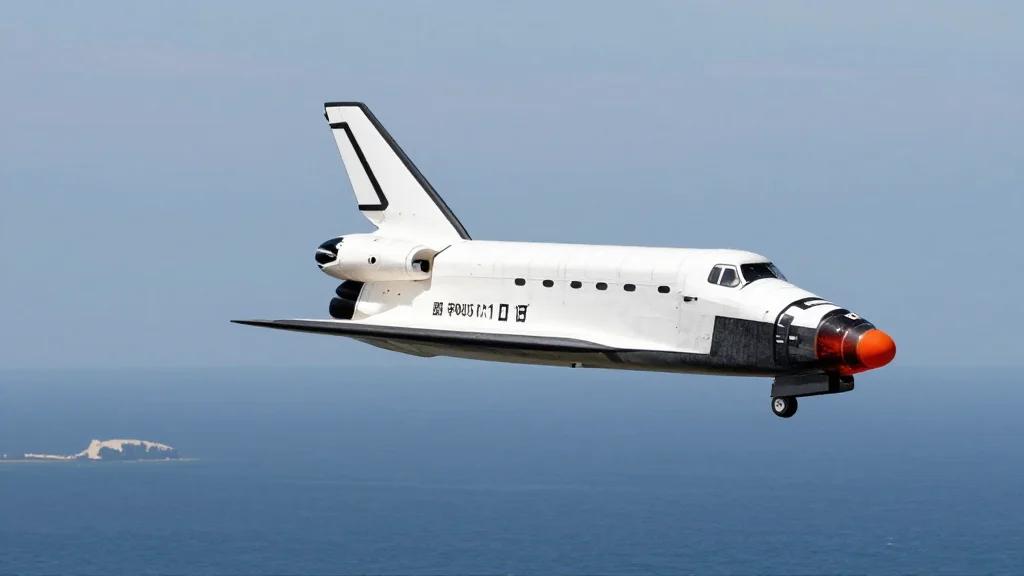
ESA's Space Rider Clears Thermal Test and Drop‑Model Assembly, Paving Way for First Flight

Companies Mentioned

Why It Matters
Space Rider’s milestones signal Europe’s commitment to reusable spacecraft technology, a domain long dominated by the United States and emerging Asian players. By mastering autonomous parafoil landing and robust thermal protection, ESA can offer a unique, runway‑compatible return service that reduces turnaround time and operational costs for scientific and commercial payloads. The program also strengthens Europe’s strategic autonomy in space, ensuring that critical research and technology validation can be conducted without dependence on external launch or recovery services. If successful, Space Rider could catalyze a new market segment for short‑duration, high‑value cargo return missions, encouraging investment in European micro‑gravity research and fostering partnerships with private firms seeking reliable, low‑cost access to orbit. The technology could also feed into future crewed or deep‑space missions, where precise, reusable return capabilities are essential.
Key Takeaways
- •ESA completed a thermal protection test exposing Space Rider to re‑entry heat above 1,500 °C.
- •A full‑scale drop‑test model, including autonomous parafoil control, is now assembled.
- •Space Rider will land on a runway using a steerable parafoil, unlike traditional splash‑down capsules.
- •First orbital flight is targeted for 2029‑2031, with a two‑month low‑Earth‑orbit mission profile.
- •The program aims to provide Europe with an independent, reusable cargo return capability.
Pulse Analysis
Space Rider represents a strategic pivot for ESA, moving from a historically launch‑centric posture to a full lifecycle logistics provider. The thermal protection success eliminates a major risk factor that has plagued earlier reusable concepts, while the parafoil landing approach offers a distinct operational advantage: runway recovery simplifies ground handling and shortens turnaround, potentially lowering per‑mission costs compared with ocean splash‑down recovery. This could make Europe more attractive to research institutions that value rapid data turnaround.
Historically, Europe has relied on partnerships with NASA and Roscosmos for cargo return, limiting its ability to dictate schedules and payload specifications. Space Rider’s autonomous capabilities also reduce the need for extensive ground support, aligning with the broader industry trend toward higher automation. However, the program faces stiff competition from commercial players offering reusable cargo capsules with proven flight heritage. ESA will need to demonstrate reliability and cost‑effectiveness to capture market share.
Looking forward, the success of the upcoming drop‑test will be a litmus test for the vehicle’s overall viability. A smooth parafoil deployment and precise runway touchdown could accelerate certification, while any anomalies may push the launch timeline further out. In either case, Space Rider’s progress underscores a growing diversification of reusable space technologies, and its eventual entry into service could reshape the European space economy, fostering new commercial opportunities and reinforcing strategic autonomy.
ESA's Space Rider Clears Thermal Test and Drop‑Model Assembly, Paving Way for First Flight
Comments
Want to join the conversation?
Loading comments...