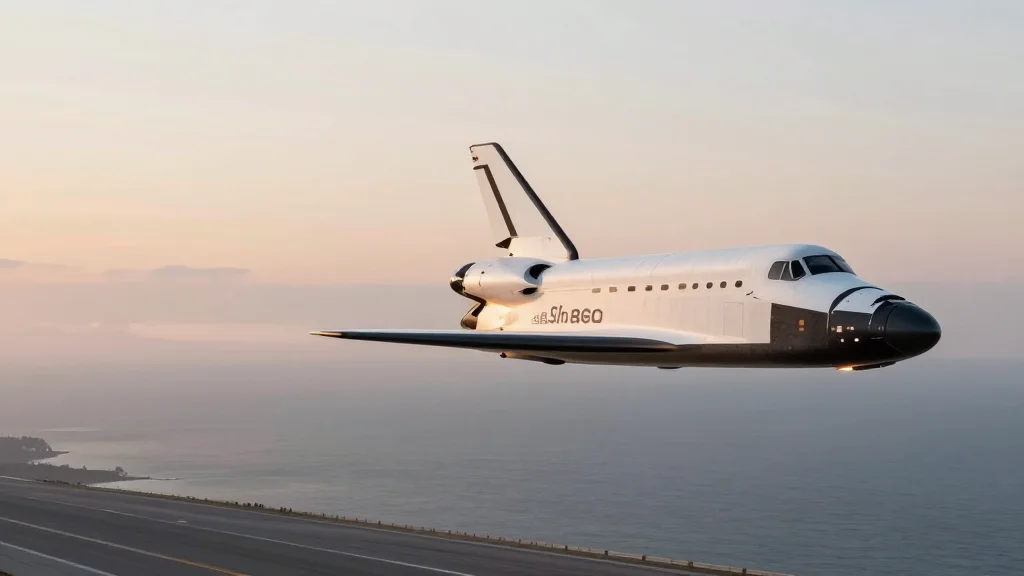
ESA’s Space Rider Passes Critical Hurdles on Path to Spaceflight
Companies Mentioned
Why It Matters
By proving reusable launch and recovery capabilities, Space Rider could reduce European launch costs and strengthen ESA’s independent access to orbit, challenging the dominance of private U.S. providers.
Key Takeaways
- •Space Rider completed thermal protection tests for reentry heat
- •Autonomous guidance system achieved sub‑meter landing accuracy in simulations
- •ESA targets first orbital flight by 2028 for commercial payloads
- •Reusable design could lower launch costs by up to 30% versus expendable
- •Space Rider will operate from ESA’s Guiana Space Centre launch site
Pulse Analysis
Europe’s push for reusable launch vehicles has gained momentum with ESA’s Space Rider program, the continent’s answer to SpaceX’s Falcon 9 reusability model. Unlike orbital crew capsules, Space Rider is a small, unmanned vehicle designed to ferry payloads to low‑Earth orbit and return them safely to a runway. Its development reflects a broader strategic goal: to secure sovereign access to space while fostering a domestic market for satellite operators and research institutions.
The recent milestones focus on two of the toughest engineering challenges: surviving reentry heat and achieving a pinpoint landing. In a series of ground‑based and flight‑like tests, the thermal protection tiles endured temperatures exceeding 1,600 °C, confirming the heat‑shield design can protect critical systems during atmospheric descent. Simultaneously, the autonomous guidance, navigation and control suite demonstrated sub‑meter landing accuracy in simulated runway approaches, a precision level comparable to commercial cargo drones. These successes reduce technical risk and bring the program within striking distance of a full orbital demonstration slated for the late 2020s.
If Space Rider reaches operational status, it could reshape the European launch ecosystem. Its reusable architecture promises up to a 30 % reduction in launch costs versus traditional expendable rockets, making it attractive for small‑sat constellations, Earth‑observation missions, and microgravity experiments. Moreover, the vehicle’s ability to land on a conventional runway simplifies payload recovery and turnaround, opening new revenue streams for ESA and its industrial partners. In a market increasingly dominated by private U.S. firms, Space Rider offers a home‑grown alternative that bolsters strategic autonomy while expanding commercial opportunities for European space companies.
ESA’s Space Rider Passes Critical Hurdles on Path to Spaceflight
Comments
Want to join the conversation?
Loading comments...