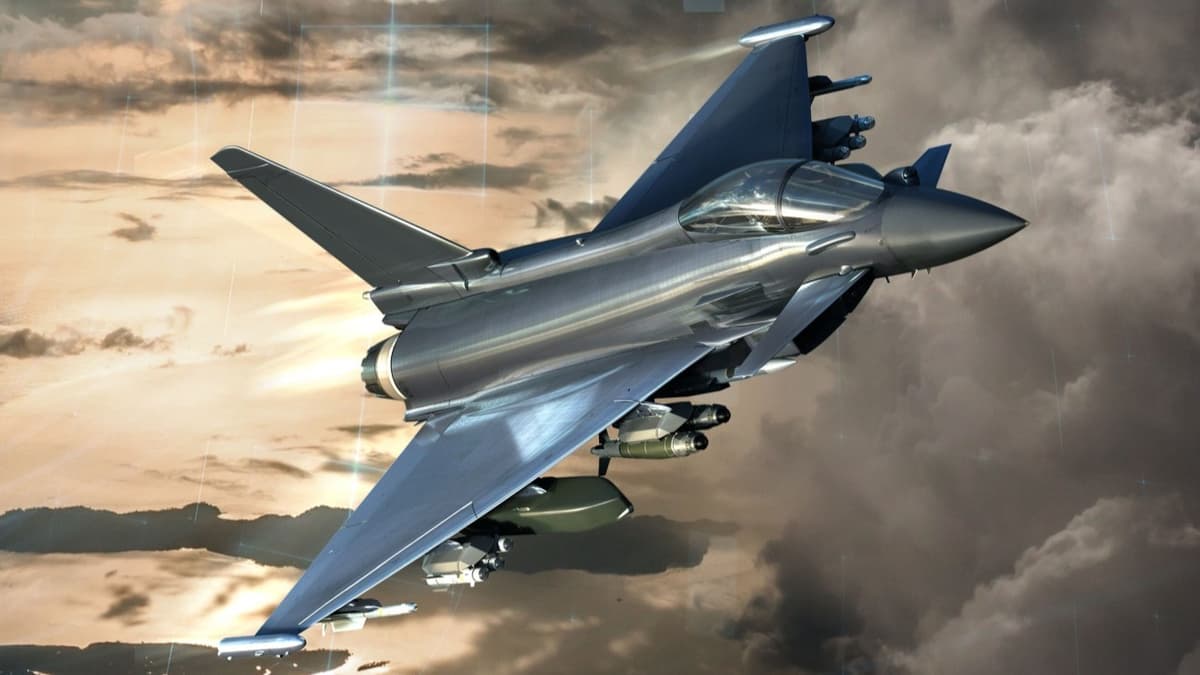
Eurofighter and NETMA to Resume Working on Aerodynamic Modification Kit
•February 5, 2026
0
Key Takeaways
- •Contract revives Aerodynamic Modification Kit for Typhoon.
- •AMK boosts lift, turn rate, and payload capacity.
- •Enables integration of anti‑radar missiles and advanced weapons.
- •Supports Eurofighter Phase 4 Enhancement and Tranche 5 upgrades.
- •Strengthens NATO air defence through German EK SEAD variant.
Summary
Eurofighter and NATO’s NETMA have signed a contract to revive the Aerodynamic Modification Kit (AMK) for the Typhoon, restarting development, testing and certification after its 2015 flight‑test campaign. The kit reshapes airflow with new strakes, leading‑edge extensions and larger flaperons, promising up to 25% more wing lift, higher turn rates and increased maximum take‑off weight. It also prepares the platform for rapid integration of anti‑radar missiles such as the AGM‑88E and future standoff weapons, aligning with the Typhoon’s Phase 4 Enhancement (P4E) and Germany’s Tranche 5 order. The effort underpins the Eurofighter’s role as Europe’s long‑term air‑defence backbone into the 2060s.
Pulse Analysis
The renewed Aerodynamic Modification Kit represents a strategic inflection point for the Eurofighter Typhoon, a platform already central to European air‑defence. By re‑engineering the fuselage strakes, leading‑edge root extensions, and flaperons, the AMK reshapes airflow to delay separation, delivering a reported 25% lift increase and double‑digit gains in roll rate. These aerodynamic gains translate into tighter turning radii and higher angle‑of‑attack margins, directly enhancing survivability in contested environments where modern threats demand rapid, high‑G manoeuvres.
Beyond pure performance, the AMK serves as a modular gateway for next‑generation weaponry. Its design accommodates anti‑radiation missiles like the AGM‑88E AARGM and future standoff munitions, streamlining certification pathways for new external loads. This flexibility dovetails with the Typhoon’s Phase 4 Enhancement (P4E) roadmap, which includes advanced AESA radar, automated sensor‑management, and upgraded cockpit interfaces. By integrating these capabilities, operators can field a more lethal, network‑centric aircraft without awaiting a clean‑sheet replacement.
Strategically, the AMK aligns with Germany’s Tranche 5 procurement and the development of the Eurofighter EK SEAD variant, positioning the Typhoon as a bridge to the Future Combat Air System (FCAS). The upgrade not only extends the service life of existing fleets into the 2060s but also reinforces NATO’s collective security posture amid evolving air‑defence challenges. As European allies seek cost‑effective modernization, the AMK offers a proven, incremental path to maintain air superiority while capitalising on existing industrial partnerships across Airbus, BAE Systems, and Leonardo.
Comments
Want to join the conversation?