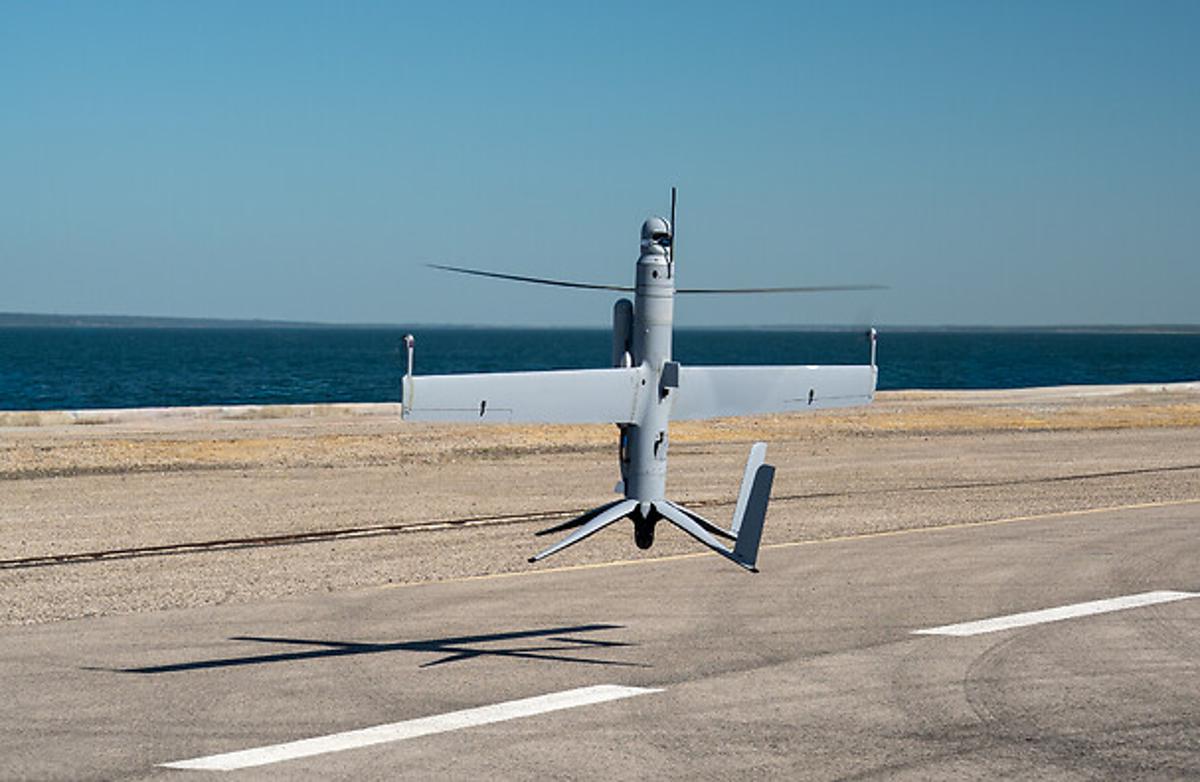
European Maritime Safety Agency Selects Airbus Flexrotor Drone for Maritime Surveillance Missions
Companies Mentioned
Why It Matters
The contract enhances EU maritime domain awareness, reducing response times to illegal activities and emergencies while showcasing European drone capabilities in critical security roles.
Key Takeaways
- •€30 million contract for EU maritime surveillance
- •Flexrotor offers 12‑hour endurance, VTOL capability
- •Data streamed live to EMSA RPAS Data Centre
- •Supports search‑and‑rescue, fisheries, environmental protection
- •Operations can run parallel in any EU member state
Pulse Analysis
The Airbus Flexrotor represents a significant leap in maritime ISR capability, marrying vertical‑take‑off‑and‑landing flexibility with long‑duration flight times. Weighing just 25 kg, the system can launch from a 12‑foot square, making it ideal for ship‑board or remote coastal deployments. Its modular payload architecture supports high‑resolution electro‑optical, infrared, and radar sensors, delivering persistent coverage over vast sea lanes where traditional manned aircraft are costly and limited.
For European coast guards, the Flexrotor contract translates into faster, data‑rich situational awareness. Live streaming of EO/IR and radar imagery to the EMSA RPAS Data Centre enables national authorities to monitor illegal fishing, smuggling, and environmental incidents in near real‑time. The ability to run two parallel operations from any participating nation reduces logistical footprints and accelerates response, while the optional third and fourth year extensions provide scalability as maritime threats evolve.
Strategically, the deal underscores the EU’s commitment to indigenous drone technology and autonomous surveillance. By integrating a French service provider, Extensee, the program supports local aerospace jobs and aligns with broader European defense autonomy goals. As other regions explore similar VTOL UAS solutions for maritime security, the Flexrotor’s success could set a benchmark, prompting further investment in high‑performance, low‑signature drones for a range of civil and security missions.
European Maritime Safety Agency selects Airbus Flexrotor drone for maritime surveillance missions


Comments
Want to join the conversation?
Loading comments...