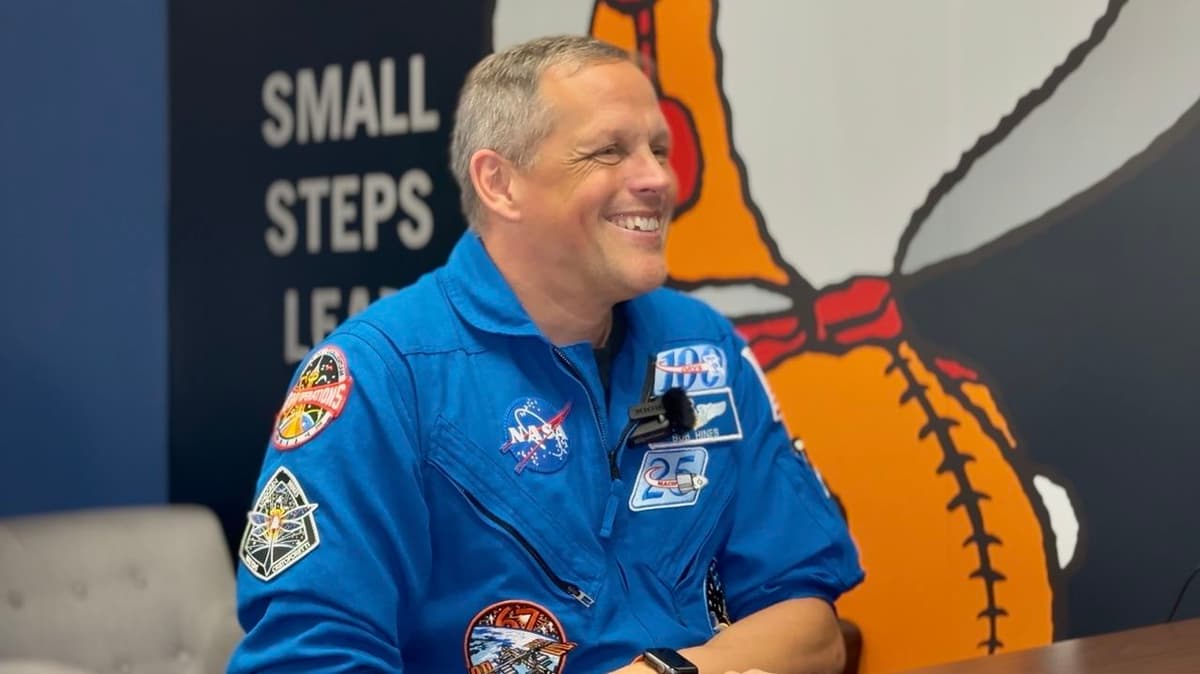
Ever Have a Scary HR Meeting on Your Calendar? That's How the Artemis 3 Crew Found Out Their Assignments
Companies Mentioned


Why It Matters
The crew announcement accelerates NASA’s timeline to return humans to the Moon, highlighting the agency’s reliance on commercial lander partners and a compressed training schedule that will test operational readiness. Success will reinforce U.S. leadership in deep‑space exploration and shape the next wave of lunar missions.
Key Takeaways
- •NASA announced Artemis 3 crew on June 9 at Johnson Space Center
- •Backup astronaut Bob Hines learns crew assignment via surprise calendar meeting
- •Mission targets launch in late 2027, cutting training time in half
- •Orion will dock with both SpaceX Starship and Blue Origin Blue Moon landers
- •Backup must train for all primary roles, ready to substitute anytime
Pulse Analysis
NASA’s Artemis 3 crew reveal underscores a pivotal moment in America’s return to the Moon. By selecting a mixed team of seasoned veterans and a dedicated backup, the agency signals confidence in its human‑spaceflight architecture while acknowledging the high‑stakes nature of lunar operations. The unconventional announcement—delivered through a mysterious calendar invite—mirrored the surprise and urgency that characterize the program’s evolving schedule, as NASA aims for a late‑2027 launch that compresses training timelines compared with Artemis 2.
The mission’s technical complexity is amplified by the need to rendezvous with two unproven commercial landers: SpaceX’s Starship and Blue Origin’s Blue Moon. Both vehicles have experienced development delays, forcing Orion to serve as the testbed for docking, navigation, and compatibility checks in low Earth orbit. Meanwhile, backup astronaut Bob Hines must master the full spectrum of primary crew responsibilities, a demanding approach that ensures mission resilience but adds to the training burden for the entire team.
Beyond the immediate operational challenges, Artemis 3 carries strategic weight for U.S. space policy. A successful demonstration will validate the public‑private partnership model, bolster confidence in the SLS‑Orion stack, and set the stage for Artemis 4’s historic lunar landing. The crew’s preparation and the program’s timeline will be closely watched by industry stakeholders, as they influence future contracts, technology investments, and the broader commercial space ecosystem.
Ever have a scary HR meeting on your calendar? That's how the Artemis 3 crew found out their assignments
Comments
Want to join the conversation?
Loading comments...