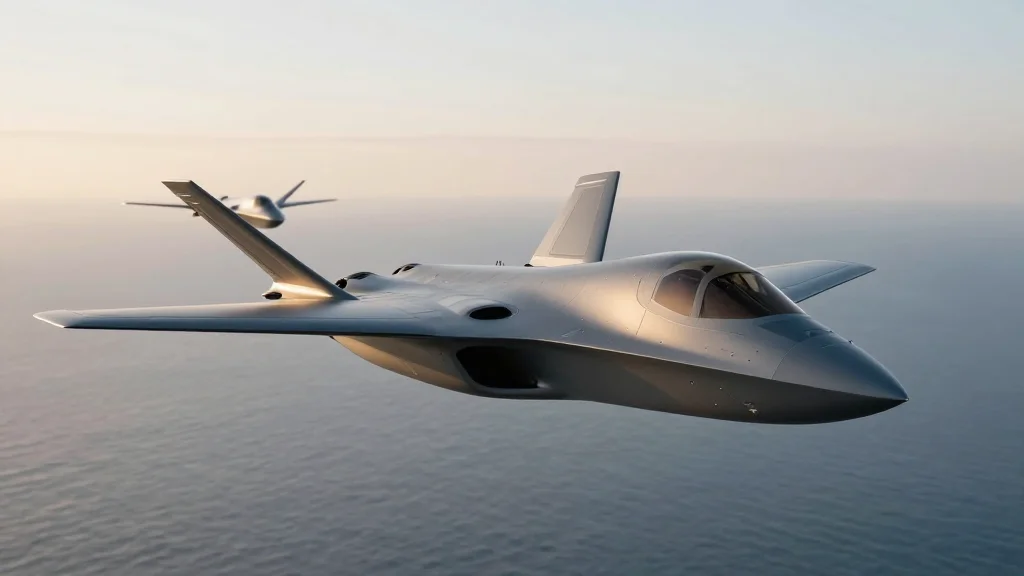
Everything You Need to Know About Uncrewed Collaborative Combat Aircraft
Companies Mentioned
Why It Matters
UCCAs give air forces a scalable, cost‑effective force multiplier that enhances survivability and accelerates decision‑making in contested airspace, reshaping modern air combat dynamics.
Key Takeaways
- •Airbus aims to field UCCA with German Air Force by 2029
- •UCCA acts as autonomous “loyal wingman” extending Eurofighter reach
- •MARS mission system provides open‑architecture, software‑defined defence for rapid updates
- •Kratos XQ‑58A Valkyrie serves as cost‑effective baseline platform
- •UCCAs reduce pilot workload and increase combat mass at lower cost
Pulse Analysis
The rise of uncrewed collaborative combat aircraft reflects a broader shift toward autonomous, network‑centric warfare. By pairing a manned fighter with one or more loyal wingmen, militaries can multiply combat density without proportionally increasing pilot risk or procurement costs. These platforms are designed for contested environments, capable of operating in GNSS‑denied zones and executing high‑tempo missions such as radar jamming, ISR, and precision strike. As adversaries field increasingly sophisticated air‑defence systems, the speed and flexibility offered by UCCAs become decisive factors in achieving air superiority.
Airbus is spearheading Europe’s entry into this arena through a phased program that leverages the XQ‑58A Valkyrie, a proven low‑cost demonstrator from Kratos Defense. The integration of the MARS (Multiplatform Autonomous Reconfigurable Secure) mission system provides an open‑architecture backbone that can be rapidly re‑programmed to meet evolving threat sets. Initial flight tests are scheduled for late 2025, with operational trials slated for 2029. Parallel development of a heavier‑weight European UCCA will broaden the payload envelope, enabling more sophisticated sensor suites and larger munitions, while maintaining the same autonomous collaboration model.
Strategically, the deployment of UCCAs positions Europe to retain a technological edge in multi‑domain operations. The software‑defined defence paradigm reduces lifecycle costs and shortens upgrade cycles, ensuring that platforms can be patched as quickly as adversary capabilities evolve. For defense contractors, the shift creates new markets for mission‑system software, AI‑driven autonomy, and modular airframe designs. For policymakers, it offers a path to bolster deterrence without the political and financial burdens of expanding traditional fighter fleets, reinforcing NATO’s collective air power for the next decade.
Everything you need to know about uncrewed collaborative combat aircraft
Comments
Want to join the conversation?
Loading comments...