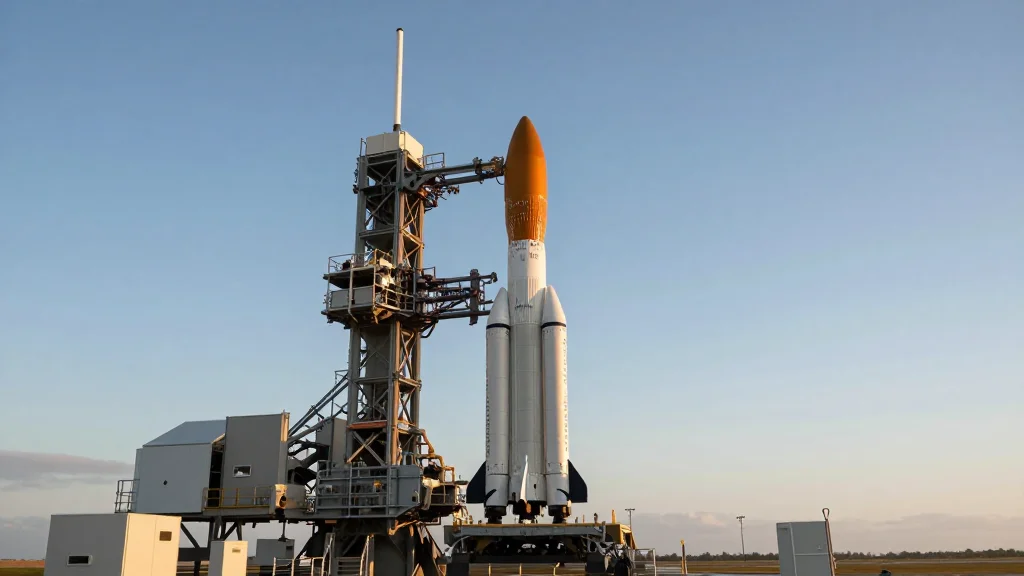
FAA Clears Blue Origin’s New Glenn for Flights After April Upper‑Stage Failure

Companies Mentioned

Why It Matters
The FAA’s clearance removes a regulatory bottleneck that threatened to delay Blue Origin’s entry into the heavy‑lift market, a segment critical for large satellite constellations and deep‑space missions. By resuming New Glenn flights, Blue Origin can compete more directly with SpaceX’s heavy‑lift offerings, potentially driving down launch costs through its reusable architecture. The incident also highlights the importance of upper‑stage thermal management, a technical hurdle that, if solved, could improve payload capacity and mission reliability across the industry. For commercial customers, the episode underscores the value of insurance and risk mitigation in launch contracts. AST SpaceMobile’s loss was financially absorbed by its insurer, demonstrating that robust insurance structures can cushion the impact of launch failures, encouraging continued investment in high‑value payloads. Regulators, meanwhile, gain a clearer view of how emerging launch providers address anomalies, informing future certification processes and safety standards.
Key Takeaways
- •FAA cleared New Glenn for flight on May 24, 2026 after an April upper‑stage thermal anomaly.
- •The anomaly caused one of three upper‑stage engines to under‑perform, burning up the AST SpaceMobile satellite.
- •Blue Origin’s booster stage was successfully reused and landed on a drone ship for the second time.
- •Company aims to launch up to 12 New Glenn missions by the end of 2026.
- •AST SpaceMobile’s insurance covered the lost satellite, limiting financial fallout.
Pulse Analysis
Blue Origin’s path to a viable heavy‑lift service hinges on turning the New Glenn program from a series of milestones into a predictable launch cadence. The FAA’s clearance is a regulatory win, but the real test will be whether the corrective measures eliminate the thermal‑condition risk that caused the April failure. If Blue Origin can demonstrate consistent upper‑stage performance, it will unlock a pricing advantage: reusing both booster and upper stages could drive launch costs below those of Falcon Heavy, especially for customers needing payloads in the 30‑to‑45‑tonne class.
Historically, heavy‑lift providers have struggled with reliability and turnaround time. SpaceX’s rapid‑reuse model has set a new benchmark, forcing competitors to accelerate their own reuse strategies. Blue Origin’s successful booster recovery shows progress, yet the upper‑stage issue reveals a gap in its technology stack. Solving this will require not just engineering tweaks but also rigorous testing regimes that satisfy both the FAA and risk‑averse commercial clients.
Looking forward, the market’s appetite for large‑scale satellite constellations and lunar logistics missions suggests a growing demand for reliable heavy‑lift capacity. Blue Origin’s ability to meet its 12‑launch target could position it as a key supplier for NASA’s Artemis program and private lunar ventures. However, any further anomalies could erode confidence and push customers toward more proven alternatives. The next New Glenn flight will therefore be a litmus test for Blue Origin’s competitive viability and for the broader industry’s confidence in emerging reusable heavy‑lift systems.
FAA Clears Blue Origin’s New Glenn for Flights After April Upper‑Stage Failure
Comments
Want to join the conversation?
Loading comments...