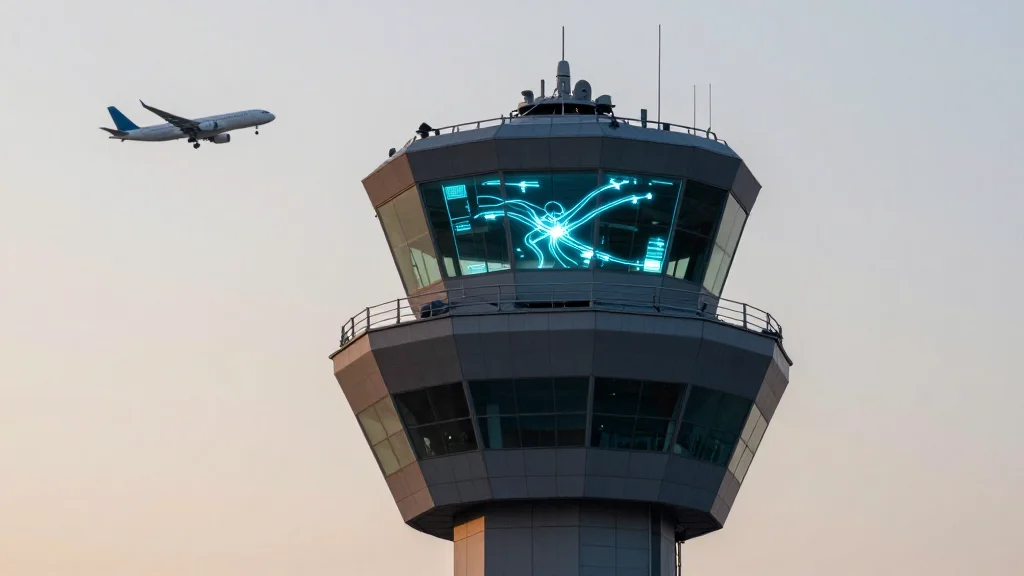
FAA Launches Gamer Recruitment Drive and AI Bids to Modernize Air Traffic Control

Companies Mentioned
Why It Matters
The FAA’s initiatives address two intertwined challenges: a looming controller shortage and the need for smarter, more resilient air‑traffic management. By tapping into a demographic accustomed to high‑speed decision environments, the agency hopes to replenish its ranks with candidates who can adapt quickly to the pressures of modern airspace. Simultaneously, integrating AI-driven predictive tools could reshape how controllers prioritize and resolve conflicts, potentially reducing delays and enhancing safety margins. Together, these steps signal a broader shift toward a more tech‑savvy, flexible aviation ecosystem. If successful, the gamer recruitment model could inspire other federal agencies to modernize their hiring outreach, while the SMART system may set a benchmark for AI adoption in safety‑critical infrastructure worldwide. Conversely, any shortfall in training throughput or AI performance could exacerbate staffing pressures and erode confidence in the FAA’s modernization agenda.
Key Takeaways
- •Over 6,000 video‑gamer applications received in the first 12 hours of the FAA’s new recruitment campaign.
- •FAA reports a shortfall of roughly 3,500 air‑traffic controllers, a gap that has widened over the past decade.
- •Three firms—Palantir, Thales and Air Space Intelligence—are bidding to build the SMART AI system for traffic management.
- •SMART is part of a $32.5 billion modernization program that also includes radar replacements and staff expansion.
- •An update on the AI bids and recruitment pipeline is scheduled for April 21.
Pulse Analysis
The FAA’s simultaneous push on talent acquisition and automation reflects a pragmatic response to a structural workforce deficit that cannot be solved by hiring alone. Historically, controller shortages have been mitigated through incremental staffing increases, but the pace of retirements and rising flight volumes now demand a more aggressive approach. By courting gamers, the agency leverages a cultural shift toward digital fluency, potentially shortening the learning curve for complex multitasking tasks inherent in air‑traffic control.
However, the true test lies in the integration of AI tools like SMART. If the system can reliably predict conflicts well ahead of time, it could dramatically reduce controller workload, allowing a smaller, highly skilled workforce to manage a growing traffic load. Yet the technology must prove its reliability in a safety‑critical environment, where false positives or algorithmic opacity could introduce new risks. The FAA’s decision to open the bid to established defense and data analytics firms suggests a desire for proven expertise, but the rapid development timeline—operational by year‑end—leaves little room for iterative testing.
In the broader aerospace sector, these moves may accelerate industry‑wide adoption of AI for airspace optimization, prompting airlines and airports to align their own systems with FAA standards. The outcome will likely influence future policy on automation in other transportation domains, setting a precedent for how regulators balance human expertise with machine intelligence in high‑stakes operations.
FAA launches gamer recruitment drive and AI bids to modernize air traffic control
Comments
Want to join the conversation?
Loading comments...