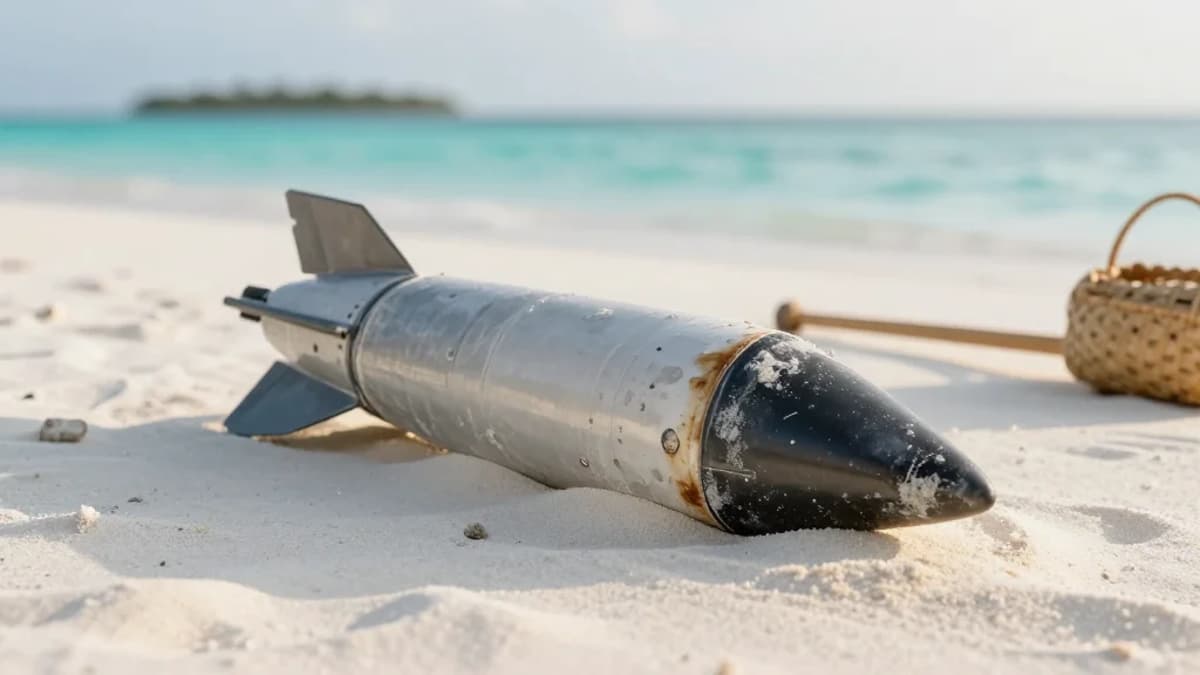
Fairing From India’s Bahubali Rocket Launched in December Found in Maldives
•February 16, 2026
0
Why It Matters
Unrecovered fairing debris highlights gaps in India’s post‑launch debris mitigation, potentially affecting ocean ecosystems and regulatory compliance.
Key Takeaways
- •Fairing debris from LVM3 launch recovered in Maldives
- •Similar fragments found earlier on Sri Lankan island
- •Debris likely drifted south‑west over two months
- •Highlights gaps in Indian fairing recovery practices
- •Raises concerns about marine pollution and tracking
Pulse Analysis
India’s LVM3, nicknamed Bahubali, lifted AST SpaceMobile’s sixth Bluebird satellite from the Satish Dhawan Space Centre in December. The vehicle’s payload fairing, a protective shell designed to separate once the rocket exits the atmosphere, is traditionally jettisoned and expected to fall back to Earth. In this case, fishermen in the Maldives discovered sizable pieces that match the LVM3’s composite fairing geometry, confirming that the component survived re‑entry and entered the ocean.
The debris trajectory suggests a south‑west drift from the launch site, carried by monsoonal currents for roughly sixty days before reaching the Maldives, with a prior sighting on a Sri Lankan island. Such prolonged oceanic residence raises environmental red flags: fairing materials can release resin fragments and metallic particles, potentially harming marine life. Moreover, the incident exposes a tracking blind spot in India’s launch operations, where precise re‑entry footprints are not publicly disclosed, complicating international debris monitoring efforts.
SpaceX has set a benchmark by routinely catching and refurbishing its fairings, turning a once‑disposable element into a reusable asset. India’s lack of a similar recovery infrastructure not only incurs higher launch costs but also amplifies space‑related pollution. As the global space community pushes for stricter debris mitigation standards, India may need to adopt fairing capture technologies or collaborative ocean‑cleanup initiatives to align with emerging sustainability expectations.
Fairing from India’s Bahubali rocket launched in December found in Maldives
0
Comments
Want to join the conversation?
Loading comments...