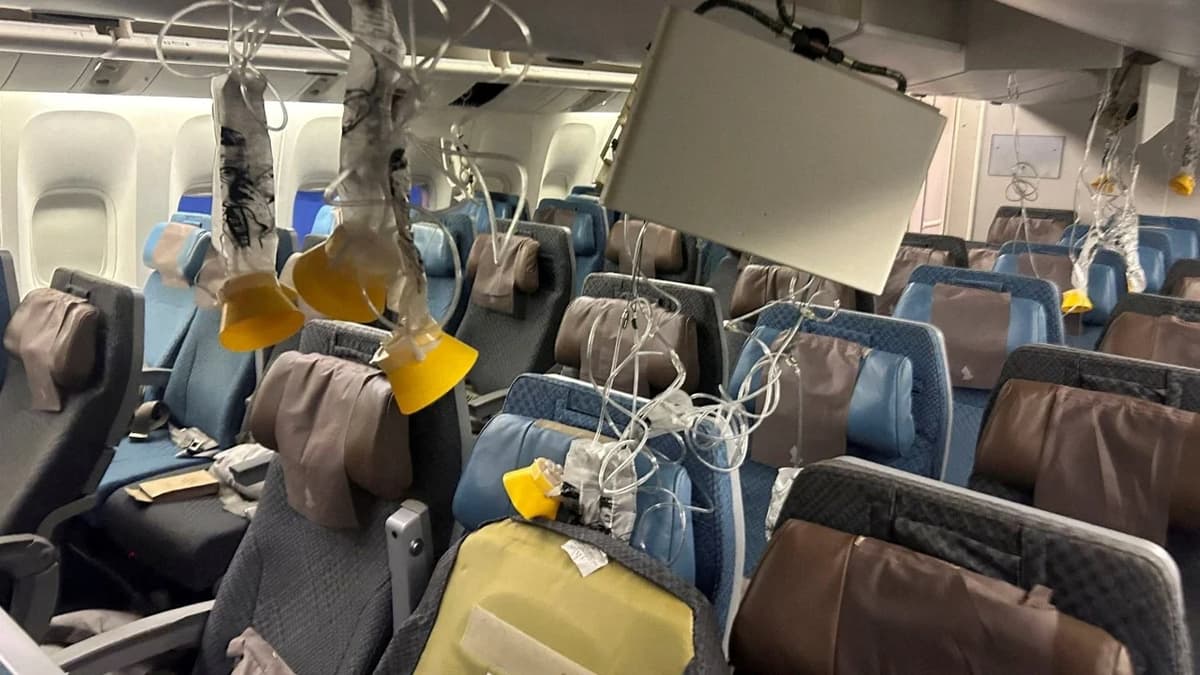
Final Report Reveals Truth Behind Deadly Singapore Airlines Flight SQ321 Turbulence
Companies Mentioned
Why It Matters
Understanding that convective turbulence, not clear‑air turbulence, caused the SQ321 disaster reshapes risk assessment for long‑haul routes over tropical regions, prompting airlines to refine forecasting and crew procedures.
Key Takeaways
- •TSIB identified convective turbulence, not clear‑air, as cause
- •Storm cloud tops rose from 27,500 to 40,000 feet in ten minutes
- •Turbulence can occur kilometers away from visible storm cells
- •Incident forced diversion to Bangkok, prompting medical treatment for dozens
Pulse Analysis
The final TSIB report on Singapore Airlines SQ321 underscores a pivotal shift in how the aviation industry perceives turbulence risk. While clear‑air turbulence has long been blamed for sudden jolts, the investigation revealed that the fatal event stemmed from convective turbulence generated by rapidly intensifying thunderstorm cells. By pinpointing a cloud whose summit ballooned by over 12,000 feet in ten minutes, investigators highlighted the violent vertical motions that can extend far beyond visible cloud edges, catching even seasoned crews off guard.
Convective turbulence differs fundamentally from its clear‑air counterpart. It originates from strong updrafts, downdrafts, and outflow winds associated with storm development, and can persist several thousand feet above or laterally from the cloud mass—sometimes up to 20 miles away. This makes detection challenging for pilots relying on visual cues or conventional weather radar, which may not capture the full extent of the turbulent zone. The SQ321 incident illustrates the need for enhanced onboard sensing technologies, such as LIDAR and predictive turbulence models, to provide real‑time alerts and allow crews to adjust altitude or route before encountering hazardous air.
The broader industry impact is likely to manifest in updated flight‑planning protocols and regulatory guidance for routes traversing tropical corridors. Airlines may invest in higher‑resolution satellite data and collaborate with meteorological agencies to improve convective storm forecasts. Moreover, pilot training programs are expected to incorporate scenario‑based drills focused on recognizing indirect signs of convective activity. As airlines adopt these measures, the goal is to reduce the frequency of surprise turbulence events, safeguarding passengers and crew while maintaining operational efficiency.
Final report reveals truth behind deadly Singapore Airlines flight SQ321 turbulence
Comments
Want to join the conversation?
Loading comments...